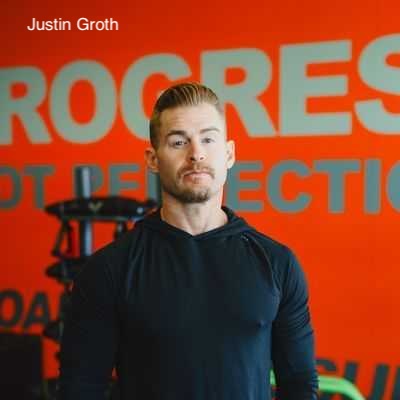


















































"How can you create a transformation in others if there's no transformation in yourself?" Join Greg Favazza podcast host and creator discuss with Paul Fritsche how Krav Maga principles can be translated into problem-solving techniques and used for critical thinking habits.
Support the show
PODCAST INFO:
Podcast website: https://ytspod.buzzsprout.com
Apple Podcasts: https://apple.co/3Rr4bVm
Spotify: https://open.spotify.com/show/2mqAuY1Rn7JEtovDLL6ukM
RSS: https://feeds.buzzsprout.com/2242998.rss
YouTube: https://www.youtube.com/@YTSpod
SUPPORT & CONNECT:
- Check out the sponsors below, it's the best way to support this podcast
- Outgrow: https://share.outgrow.biz/YTSpod
- Quillbot Flow: https://try.quillbot.com/YTSpod
- LearnWorlds: https://get.learnworlds.com/YTSpod
- Facebook: https://www.facebook.com/ytsthepodcast/
- Instagram: https://www.instagram.com/ytsthepodcast/
- TikTok: https://www.tiktok.com/@YTSthePodcast
- Twitter: https://twitter.com/YTSthePodcast
Welcome to your transformation station. Date Socrates once wrote the secret of change is to focus all of your energy, not on fighting the old, but on building the new it's time to rediscover your true identity and purpose on this planet together, we can transform our community one topic at a time from groundbreaking performing. Making their elixir, your dose of reality, your transformation arc. This is your transformation station. And this is your host, Greg Favazza
Gregory Favazza:welcome. This is episode nine. I got to sit down with Paul Frichy. He is the lead self-defense instructor at Midwest problem. Now there are tons of Kravmaga organizations.
Paul Fritsche:However,
Gregory Favazza:men was Krav Maga has its own hybrid system where they're incorporating different styles of fighting and applying it into one well-rounded system. The system respects the fact people have these fears of walking into the gym. Being afraid of getting hit in the face, being afraid of
Paul Fritsche:the what if,
Gregory Favazza:but when you go here, when you attend to Midwest crop, you honestly, I really just don't want to spoil it for you guys. Paul, I appreciate you coming on to your transformation station. How you doing? I'm doing well,
Paul Fritsche:man. How are you? Thanks for having me.
Gregory Favazza:How are things going with the business with this whole pandemic going on? It's definitely an interesting time. Jim is basically closed for the most part. We have, uh, we're still running small classes. You'll have one or two people jump into a class maybe once or twice a week. We're running the online classes as well for our members. Um, every day we do a fitness class every day at noon, and then we do, uh, our regular classes, like our self-defense or our sparring classes. Uh, we stream those online every year. Um, as well as our jujitsu classes, but again, you know, it's just, it's just a different way to train. Definitely has an effect to try and find out, uh, what can you focus on now? You know, what can you bring to your members to keep them training, to keep them engaged? And that's kind of what we're focusing on is things that we can do. If you focus on the things you can't do right now, um, you're gonna drive yourself crazy, you know, and things may never go back to the way they were. So we have to learn to adapt. We have to. You know, be ready to go when things open back up and, you know, try and be a leader because there's a lot of uncertain type things right now. Whereas, you know, if we can be that one little spot of certainty in someone's life, like, Hey, look, I, you know, I know they're going to be there every day at noon, they're going to run a class for me at noon. They're going to run a self defense class every evening. They're going to run a sparring class every evening. It gives some type of structure to where some people can follow that. And that's kind of what people are looking for. They're looking for good advice. They're looking for some structure. They're looking for a little bit of certainty right now. And right now it's really uncertain. It's an uncertain time just trying to be consistent. Um, and this environment is kind of my biggest goal and being consistent on focusing on things that I can do and what are things that I can do to improve my gym during this time. So I run a gym for a long time, and there's always things that I'm trying to improve or work on. And this has given me an opportunity to. Redo my website, um, redo my customer retention software, redo my ability to communicate with my students. So setting up a new email program, uh, so things like that on the back end, that when we do open up and we do start to bring in new members that we're just more efficient at doing it more efficient at communicating with our members, more efficient at running programs, they'll just look into improve the things that I can during this time. And then. Train my members the best way possible during this times where they get the most out of their membership, a lot of cleaning of the gym and a lot of online classes. That's what we're doing as well as behind the scenes as well. We're doing a lot of work. So that's kind of what we're doing right now. The impact has been pretty significant, I think, for any small business, um, not just myself, you know, I mean, there's, there's people that own restaurants, you know, that are struggling. There's people that have. Cleaning companies like right down the street from us. There's one of the cleaning companies that they go around and clean people's houses. Well, nobody wants you in their house right now. So it's hard for a lot of people to make money. So, um, that's basically how it's affecting us. I really do appreciate you taking your time just to give us this interview. Let's zoom out a little bit. What got you into self-defense in the first place? I remember when you first stood up, I was one of your dudents out of the group that started up and you played enormous impact in my life.
Paul Fritsche:Yeah. Well, I appreciate that. And hope it was a positive impact. Um, what got me started into it was honestly, um, I'd always been into athletics, uh, played sports growing up, you know, it was never the best, most dominant athlete was never the worst, you know, kind of middle of the pack. Um, you know, we all know work pretty hard, um, lifting weights. Cause that was kinda my thing. After high school sports, I got into bodybuilding, like lifting weights, a lot of working out and I was at the gym one day and a buddy of mine, I was working out with. Problem. And this was probably thousand six, 2007. And we were at the gym working out one day and then he did this defense. I was like, oh my goodness. I'm like, that was pretty impressive, pretty athletic and always lift the weights. I was pretty strong guy. Um, even with that, like being a pretty strong guy and being, I'm pretty confident in my physical abilities, I was never confident in like a violent encounter or a physical encounter. So I always had that like, Nervousness about those situations. Um, like the fear of just fear of physical confrontation, physical confrontation, you know, you're going into the bars and you're constantly seeing people getting in fights and you know, things like that. And that's about the age I was 21, 22 and I'm like, I just don't feel real confident in myself. Um, so when he started showing me that stuff, I asked him where he was going, found out where it was going, went down, took one class and I was hooked. And then unfortunately that gym closed down like two weeks later after I signed up. Um, and then another place opened up and I started training there. Uh, that was gateway Krav Maga. And, um, Stan started underneath the individual named Samsung. Uh, former Israeli, IDF soldier, uh, learned a lot underneath him. Uh, and that's where it all started, man. That's how it all got started. So that was it. Basically, it was at the gym one day working out lifting weights, but he showed me a choke defense and I was like, wow, went and checked it out. And I was hooked.
Gregory Favazza:That's amazing. How just that one event. Played a key factor in your life's transformation. Yeah, absolutely. So if we were to explore the background, can we talk about your credentials
Paul Fritsche:a little bit? I mean, sure, absolutely.
Gregory Favazza:So as far as you're a black belt and
Paul Fritsche:crop Mcgon that's right. Fit to fight crime, the God black belt. So if it defined is an affiliation, um, kind of like there's, and that's the thing there's so many affiliations. There's Krav Maga worldwide. Club chroma God global. There's an international chronograph Federation. There's Krav Maga Alliance. There's just so many, so yeah. Yeah. I'm a fit to fight prominent black belt. And how long did that take you to get to that? Well, I started training in 2007. I got my black belt in 2012 and that's training, basically everything. So I train every day, you know, I'm not, I'm not to where I train once or twice a week. I teach every day I train every day, the only day I take off the Sundays. Um, so it's not just like I was going two days a week doing two hours a week. And I got my black belt in five years. Um, it was an everyday thing hours a day. And still to this day, right now I'm still training hours a day, um, working out physically and then just teaching technique, drilling technique. I'm still looking at probably one to two to three hours every day of physical act.
Gregory Favazza:So if we were had somebody look at it from the outside, looking in, how can somebody start implementing a routine to become good at something I understand the underlining factor is consistency, but what was the driving motivator to make you want to
Paul Fritsche:learn? I wanted to be more competent in my physical abilities to handle myself. Whether or not it'd be for me or to help someone else. That was my number one driving thing. And then after years of training, like, you know, four or five years of. And I really started to see the benefits, you know, just by training with other people, um, going hands-on with other people, being able to, you know, hold my own against people that I know were maybe bigger, faster, stronger. Um, I mean, I'm gonna hold my own. I started to realize, okay, you know what, I, I do have an idea what I'm doing here. Uh, I'm pretty proficient at it. I feel like I can deliver it in a certain manner. Um, and so that's kind of what led me to. Start teaching. Um, but the underlying desire to get started training was simply, I wanted to feel more confident in a physical confrontation. However, that transition to, Hey, look, I learned this. It's had a tremendous impact on my mental wellbeing. My, my, my mental preparedness, um, And so that's when I started wanting to teach other people because I could see the profound effect that it had on me. Um, and I wanted to help other people have that same thing that, that, that, that same boost of confidence, that same increase in their physical ability, you know, being able to throw a proper punch, um, a proper strike, you know, that's, that's, uh, to see that happen. Like when you see the average person come in, They can't, they wouldn't be able to punch themselves on a wet paper bag. And after, you know, a six months to a year of training to see someone throw a, an educated right hand, um, it's, it's pretty, actually, that
Gregory Favazza:sounds very satisfying. Just how you described that. That's what I miss about the military is watching my soldiers grow right in front of me. I'm sure let's go into the philosophy and understand the guiding principles of chronic.
Paul Fritsche:To be honest with you. Um, we have, we, Matt can speak on that. Okay. Um, but our, our system, and we can talk about this a little later, if you want, our system is more of a, a hybrid chronic McGaw system. So we incorporate a lot of other techniques from other systems. So we do a lot of rustling, a lot of clench fighting. A lot of hand control and grip control. But as far as like the underlying principles of what we would consider, you know, Krav Maga is really self-defense, um, you know, what they, what they market, what they, what they promote is it's for the streets. It's for a real life violence. It's, um, you know, it's a lot of. It's a, it's a lot of, you know, great marketing. What I mean by that as defend as you are, excuse me, attack as you defend simultaneously. Um, but the truth is. If you're, if you're, you know, as far as our underlying philosophy, it's, it's the, it's the end, the fight as quickly as possible is to defend and attack at the same time. That's what you're always going to hear, like at cross McGaw schools. Okay. And the threat as quickly as possible, what should be anyone's goal on a self-defense situation, um, you know, attack while you're defending. And, and things of those situations. Um, so those are the main principles that you're going to hear from a lot of crime McGaw schools, you know, and there's all kinds of neat slogans and sayings and, you know, things like that, that people put on t-shirts that make people feel good about themselves. And, um, but for me, uh, my underlying principles for what the, what we teach here is number one, if you can avoid bad places, don't. Okay. If you can avoid bad situations, don't go. Um, if you find yourself in a altercation with someone let's just remember that 99.99% of all situations have some type of pre-contact dialect with them. People don't typically. No jump out of a Bush and start attacking you. Right? Not saying it never happens, but it's very rare. So number one, can I stop myself from being put in those bad situations? Number two, if I am, can I use verbal communication to deescalate the situation? If I can, if not, then I need. I need to go as early as possible, which means either escape as early as possible to try to escape. Um, if I can escape trying to escalate, I can't deescalate. I need to maintain distance. And then if I have to go first, I need to go first. Whether that's a groin kick, whether that's a right straight, whatever it is, I need to go first. Um, and those are the principles, um, that we're teaching here basically is, you know, keep yourself out of bad situations. If you get no one, can you verbally deescalate or can you run over? If you can't run away, do you have the ability to maintain the distance, keep separation, meaning that, can you keep someone at least our length away? Because for someone who attack you, they have to get close. Okay. So can you do those things? If the physical, if it becomes physical, if you can't deescalate, you can't walk away. You go first and then it turns into a physical altercation. But then the, then the principles of your training should be not so much collecting techniques, but understanding what happens, what are the things that are happening in a fight. So what are the things that are happening there pushes in their poles? So someone's going to either going to push on you or they're going to pull on you for the most part. Okay. So can you read an energy, can you read a push or a pull pain, number two, how to create angles? Okay. So can I create angles? Meaning get my hips facing the. The other hips facing away, right. Are their hips facing away? Can I, we call it the elbow rule here. Can I get outside? Someone's elbows, don't stand in between their elbows. Um, and the third one is, is just winning small moments in time. So fights do not happen. You know, a, B, C, D E F G like in a linear progression. So if you train in that way, so that every time this happens, you do that. Um, You're going to find yourself in a lot of trouble. With the first time you try and do something. The other guy doesn't give you that exact energy that you're used to. So that comes back to being able to read energies, be able to create angles and be able to win small moments in time, back to back to back. Those are the underlying principles that we teach here as far as the physical part of fighting. Um, but as far as the underlying principles of chroma guides, defending counter, um, and things like that. The mentality would be
Gregory Favazza:a never back down mentality.
Paul Fritsche:Well, no, no. That's ego, right? That's ego when you're facing to an altercation. Also, if I'm faced doing altercation and some guy wants my wallet and I can give him my wallet and walk away with my family intact, why would I say I'm not giving you my wallet. That's just terrible at that. That's an ego. Okay. It's an ego. It's the same thing. A guy puts a gun on him. And tells me he wants my wallet. Am I going to do a gun defense? If it's just me, it's just me. I don't have my kids, these not trying to take me anywhere. He's not trying to take my kids anywhere. He just wants my car. He just wants my wallet. He just wants this. Give him what he wants. Okay. There's a lot of, there's a listen. There's a lot of bullshit in this. There's a lot of instructors running around and tactical pants and all kinds of silly garb wearing shirts that say lions and wolves and all kinds of silly things like that. Okay. And it's all the prop up these prop up these egos, you know, like you go to most in the gospels and like people talk about their instructor. Like they're a super. No, they're not, they're just an average person. There's better ways to handle a lot of situations than just smashing someone in the face. So if I can deescalate again, if I can deescalate it again, everybody always thinks it's going to be, this is how it's going to go. If you're out with your family and some guy walks up on you and it's real easy to say, I would just do this. I would just do that. How many times have you been in a situation where you're fighting for your life and your kids and your wife are 10 feet away? Never. Most people never. So to sit here and say, this is how you'd handle it, or I would just punch this guy in the face or my favorite, I would just shoot him. Okay. That's just not realistic. Okay. So no, there's not there's there's I don't believe in the never back down. Mantra. There are times when I'm going to back down and go home and be safe. The goal is to go home safe. The goal is not to go around, smashing people.
Gregory Favazza:That's very intelligent. That's powerful. And that's the right way to think. Now let's compare crime guy with other martial art practices. Sure. What's the difference? The mindset, the application, all the fundamental principles.
Paul Fritsche:I don't know. I can't speak intelligently enough on all the other martial arts. Okay. Um, to me fighting is fighting. There's no, there's no superior. Okay. Um, systems and that's hard for some people to hear, especially people in the judicial community. Okay. Cause jujitsu is really big right now and it's awesome. And I love it. It's super fun, but you'll hear people say, oh, this is the best martial artist. That's the bar's martial art or jujitsu's this, or did you, did Sue's dad or, you know, things like that. I love jujitsu. I do it. It's fantastic. Um, but I also do a little bit of wrestling and I think that's fantastic. And I think that boxing is fantastic. And I think movie Ty is fantastic. I definitely think there's arts that are more proficient in street fighting or self-defense than some, but you also have a lot of arts that have been practiced for thousands of years. And, you know, I don't know the lineage of them, but you hear about how they've been watered down. Like for example, TaeKwonDo, great martial art teaches you how to use your body really well, teaches you how to. Move your body, how to kick get you. Great flexibility, great mobility. Um, but I wouldn't suggest teaching that for a re you know, a self-defensive. Um, you're using too many kicks. Your hands are typically down at your, at your chest, the face level. Um, you're in a bladed stance. Uh, so it's just a lot of things that don't work well for a fight in, you know, for like an MMA fight or a real fight, because it's just too dynamic. TaeKwonDo fighters are really good at fighting other TaeKwonDo fighters. Jujitsu fighters are typically really good at fighting other jujitsu fighters, wrestlers with wrestlers. So for me, I don't think there's a superior martial art. That's just my opinion. Um, there's no, I don't have anything to back that up. Um, but I don't think systems when fights. Okay. I think people win fights. So, you know, if, you know, like we always say always here to say grappler versus striker, striker versus grappler, blah, blah, blah. It's the person, it's the person in. The fight that's going to make the difference. Um, if there was one superior martial art, then every organization in the world that has fighter fighting. So Ryzen, UFC, Bella tour, they'd all their, all their champions would be one style of martial art. Like that would be the pro. That would be it. You don't have that. Um, in fact, if you want to argue that point, I would say that wrestling. Is the most dominant martial art. Why? Because if you look at the champions across most organizations, a majority of them come from a wrestling background. And why are they so good? Because a lot of these kids have been wrestling since they were five years old. So they've been feeling someone else's pushes and pulls their whole life. So their ability to read and react to those energies is far superior than the average. So now you have, so now you take a kid who's been doing this his whole life, and now you start to teach him striking jujitsu. Um, and these guys had these strong bases, uh, wrestlers have phenomenal, usually have phenomenal work ethics. So there are so their ability to take that drive that they developed in wrestling and the way that they drill in wrestling, he, they can take that template and put it to any other martial art and they learn it really, really well. Um, look at the UFC, right? 1 25 pound champion. If they even have one. I can't remember if they do or not. A 1 35 pound is two Hutto wrestler, 1 45. I'm not sure if he was arrested or not more. I know he played rugby a 1 55 Khabib wrestler, one 70 oosten wrestler. 180 5 is who's 180 5 out of Sonia. So phenomenal. High-level Stryker. Um, Great wrestling take down defense and you have John Jones at 2 0 5 wrestler heavyweight. Steve bay is a boxer wrestler background. So I mean, if you want to say that, what martial artists superior probably wrestling, but again, I'm not going to tell you that it's the end all be all. It's a great skillset to have. And I think all martial arts, each of them. Have great skillsets that will blend together. So, and that's kind of what we do here, meaning that whether it comes from Moya, Thai wrestling, boxing, kickboxing, and that's kinda what we do as fit to fight as a, um, this rectified organization is basically a well-rounded hyper. Self-defense system that teaches some boxing, some kickboxing, some boy tie, some wrestling, some take downs. I'm really big on grip control, create angles, reading pushes and pulls. Um, so just a well-rounded self-defense system without having to have some type of attachment to a lineage from. Whether it's crowd myGov being a hundred years ago or TaeKwonDo being 2000, I could care less about how EME taught self-defense and world war II. Israel. I could care less, you know, it doesn't translate to how we fight here today. You know, what, what you see in a battlefield over in the middle east or wherever from a hundred years ago is nothing like you'll see in a bar fight down on mainstream. You were saying
Gregory Favazza:to have a generalist mindset versus to specialized?
Paul Fritsche:Absolutely. If all you have is a hammer and this is, this is a great analogy I got from Ryan Hoover. If all you have is a hammer, everything you see is a nail. Okay. So if I'm a grappler and all I do is grappling everything I see has a chance to grapple. Okay. So when you are, when you never defend strikes, okay. When you never defend strikes and all of a sudden you're grappling with somebody, whether it be stand-up grappling. You know, what would they call rolling in Brazilian jujitsu and someone gets to start punching you in the face, the entire game changes. Okay. So what I mean by that is Brazilian jujitsu. Again, it's fantastic. Martial art. Um, the guard in jujitsu, if we're just energy Jitsu tournament. And I ha I'm the one utilizing my guard. I mean, I'm on my back. You're in, you know, you're either, you're trying to get past my legs, whatever, how you want it. I am in an advantageous position. If all we're doing is grappling. So if I can get you into my guard, get my guard closed, start working my submissions, breaking your posture down, you know, things like that. And start looking to establish my grips and started working my game that I'm in the dominant position. Okay. I'm in the more offensive. But if you're in my guard and you can start dropping elbow is on my face and punches. Now you're in the better position. Okay. So yeah, absolutely. There is no, if you are really interested in learning self-defense you would probably be best to train multiple systems. Um, for me, if someone said, what are the systems you want to train and to be. You know, proficient at fighting. I would tell you boxing wrestling, Muay Thai, and Brazilian jujitsu. So if you had to take four combat sports, those are the four that way. And be sure to link
Gregory Favazza:that in the show notes. What's the process like to gain started from Krav Maga.
Paul Fritsche:Uh, I mean you have to go find a gym, a training center, um, but be careful. There's a lot of really bad stuff out there. There's a lot of schools that are really good at marketing. They're really, really good at marketing and they make you feel good. Why they make you feel good? Because everybody wants to hear. All you have to do is this. This is all you gotta do. If someone chokes you, all you have to do is this, um, cause it makes us feel good. We like that makes us feel safe. It's not real. There's no such thing as all you have to do is when someone's got their hands around your throat or someone's trying to crack your skull with an elbow or a pipe or, or, or anything else. There is no, all you have to do is okay. So first off go find a school that. You feel comfortable with that aligns with your, your goals in self-defense? Um, you know, what are your goal? What's your philosophy? Um, go to a school where they're open to questioning, you know, uh, they're not panning you an 800 page manual and say, here, look, this is how you learn Krav Maga. Make sure you can do all these, you know, techniques. On-call no, you go in, you train, uh, you get hands-on, uh, you find a school that again is safe, you know, uh, you don't want to go in and get. Your first day. Um, so you want to go in and go to a place that has a good sparring program to get you involved in sparring, because that can be really daunting as well, walking into a kickboxing or boxing gym and seeing people get punched in the face. So you just want to program that will slowly, slowly bring you into the system. Um, you know, kind of progressively nodulate you into, you know, physical confrontation, because if, if someone's never had never even been in a fight, um, And then you ask this person to come into your gym. That right there is intimidated enough. Okay. Like even walking in the door is intimidated enough. Um, so now you want to walk that person in the door, make them feel. You know, um, there's so much bad stuff out there with like chroma guy, like the screaming into your students, like yell and tell him to go, go drive pound that pad. That's great stuff. Get your heart rate up. It's really good. Um, but you know, as far as, as far as finding a school, find a school that you feel comfortable at when you walk in, uh, find a school that is. Find a school that has a schedule that fits what you can do. Find a school that's close to you because if the first couple of things, for example, if the schedule doesn't fit, if it's not close to you, then you're not going to go. So find those things. First school that's closed a schedule. You can make, go in and check out some classes. If you liked the classes and you like the people there, you know, maybe you continue training or maybe you go check out somewhere else. But as far as just getting started,
Gregory Favazza:Just to wrap things up a little bit. I just have some personal questions. What holds you accountable every day? What's your primary driver, your inspiration to be in the man you are today?
Paul Fritsche:I mean, I think it's a combination of things, you know? Um, you know, I mean, first and foremost, I just, I just want to be a good person, you know, regardless of the interactions I have with people, whenever someone walks away from me from, you know, an interaction that I have, I want them to be glad that they had that interim. So that's, you know, that's one thing I want to set an example for my daughter that hard work pays off, discipline pays off, you know, to get what you want. It takes drive. It takes, you know, it takes focus. It takes having a vision, writing those goals down and then taking the steps necessary. So, you know, throughout your day, you know, what do you do throughout the day that helps you get to where you want to be? You know, do you, or are you just waking up going through the motions? And, uh, for a long time, that's what I did. I would get up and I would react to the day or is over the past, you know, year. And like you fall on and off of your, you know, sometimes we'll waiver and, you know, I'm really focused on trying to get back to where I was, but yeah, I mean, you just want to set an example for your kids, set an example for, you know, the kids that I teach. So like my members, the youth students that I have, so I just try and be consistent. Uh, I try and try and be a good person. I want people. To value my relationship with them. Um, and so those are the things that motivate me to do what I do. What are some good advice
Gregory Favazza:to follow?
Paul Fritsche:I'm always looking for new challenges, you know, uh, growth is in discomfort. Now that's a really big saying if at the fight, um, you know, you are going to stay the same person. So these things that you're afraid to do, go do them or else you're just going to stay the same person. So like I have, you know, I have students who could be phenomenal instructors and they're absolutely terrified of standing in front of the class and I'm like, Just, you know, again, it's different for everyone, but you just stay the same person that you are. Okay. Unless you can go out and make changes to get outside, you know, your little comfort zone, your, your, your little circle, you know, growth is outside that circle. So if you can, you know, for me personally, I grew up with a terrible speech impediment. I stuttered all the time. I was afraid to teach people at first because. I stuttered so bad. And it's teaching that got me over stuttering. So yes, I get it. Things can be scary. You know, it's kind of funny because these are what we're talking about right now with the kids, our kids. We're focusing on courage right now, you know, and we talked to the kids about what courage is and they tell me what courage is. And I ask them for examples and, you know, they give me examples. And you know, the question we had last night was, is courage the same for everybody. And they're like, no, you know, at first were like, yeah. And then a couple of them were like, no, it's not. And so we just kind of explained. Courage is different for everyone's. For some people coming in this door takes a lot of courage for some people, it doesn't, they walk right in, they fit right in, they hop on the match, they go and they start learning for other people coming through that door is traumatic. So courage is different for everyone. So that's just basically, um, you know, kind of the things that we've focused on, I can definitely relate
Gregory Favazza:to be one of those individuals. It took a lot of courage for me to come through this door. Every time I came in. With some bad advice
Paul Fritsche:to avoid that advice. I mean, it's different for everyone, but I would say one of the things that I hear all the time that people tell people is you're fine. Just the way you are. That's not true. Okay. If I'm, you know, a drug addict that I am nonresponsive in my close relationships, and I have no connection to anybody in my life, you are not fine. Just the way you are. You know, if I'm 300 pounds overweight, I've got type two diabetes. And the doctors telling me that I've got a month, a year. You're not fine. Just the way you are, you know, if you, so, so that's, to me, you hear that all the time because people don't want to hurt people's feelings. Um, but he, I think that's really bad advice you're you're cutting out can be really bad advice is you're fine. Just the way you are. I appreciate
Gregory Favazza:that. What's an action item piece of homework that our listeners. Can take and start implementing today to start surpassing the expectations and start their transformation,
Paul Fritsche:greed, read, um, read that's the number one thing like, or, you know, I mean, there's lots of things you can say read. Um, I can say start making positive changes in your day. So for me, an action that you can take is sit down, take 20 minutes, get good on a piece of paper, get on a word document or whatever the case may be. And write down 10 to 12 things that you need to do on a daily basis to put structure into your life. Okay. Without structure, you you're there's, there's no successful person in the world that doesn't have a schedule. So if you're not scheduling out your week, okay. And these are things that like I've learned before, again, didn't implement for awhile and now I'm coming back to implement them again. So you have to have a schedule. So that means, you know, once a year you plan out your quarters at the beginning of the quarter, you plan out your month. At the beginning of the month, you plan out your weeks at the beginning of the week, you plan out your days at the beginning of the day, you review your day. So every morning when I get up, I get free. If you go to my house, I have a list, a daily list, and it's everywhere in my house. It's literally on my garage door, front and back. It's on my pantry. It's on my refrigerator. It's on my bedroom door. It's on my closet door. It's on my bathroom mirror. It's on my bedroom mirror and it's just a list of 10 or 12 things. You know, and it's, some of them are as simple as make your bed, uh, meditate equally, uh, be careful on what you focus on. Right? So all these people right now that get online and they get into their echo chambers and they get on their Facebooks. And it's my side versus your side and my political side versus your political. That's just eaten you up, man. And it's just, you know, so, so be careful on what you focus on. Okay. So that's another one of mine. Um, I journal no, and that's a struggle for me as well. Sometimes I don't make it. And that kind of is frustrating. Um, I make sure I work out every day. I, you know, I put, you know, so those are action things. Those are things that you can do. Um, as far as action, is it get some structure, get a daily schedule, weekly, monthly schedule. And that's basically you'll for me, that's that's as far as action items, that's, that's kinda how I got started was just getting yourself on a schedule, uh, scheduling out times to do things, you know, and it'll make your life a lot better when you start living by a schedule, you will start learning that. Okay. Look, I have plenty of time. Um, I have plenty of time, so learn how to block time, you know, time out for certain things. Um, so just follow a schedule. That's what I would tell you is number one, action item. And read, read as much as you can. There's lots of great information out there. Lots of great books on communication and talk, you know, language and you know, uh, how to structure your day and things like that.
Gregory Favazza:Great information. I'll be sure to link that in the show notes. How can our listeners get in touch with you if they want to learn more about,
Paul Fritsche:uh, I mean you can check out our website, it's MW, Krav maga.com. Um, you can also email me at info at Midwest. Dot com. Um, and you can find me on Facebook, Paul Frichy, um, I'm on Twitter at MW Krav Maga, and then Instagram as well. Midwest Krav Maga. All I really
Gregory Favazza:appreciate your time
Paul Fritsche:today, man. I had a great time. Thank you. Thank you.
Intro/Outro:You've been listening to your transformation station, rediscovering your true identity and purpose on this planet. We hope you enjoyed the show and we hope you've gotten some useful and practical information. Join us weekly on Monday for the YTS challenge and biweekly on Wednesday for the exclusive interviews at 8:00 PM central time. In the meantime, connect with us on Facebook and Instagram. Y T S the podcast we'll be back soon until then this is your transformation station signing off.