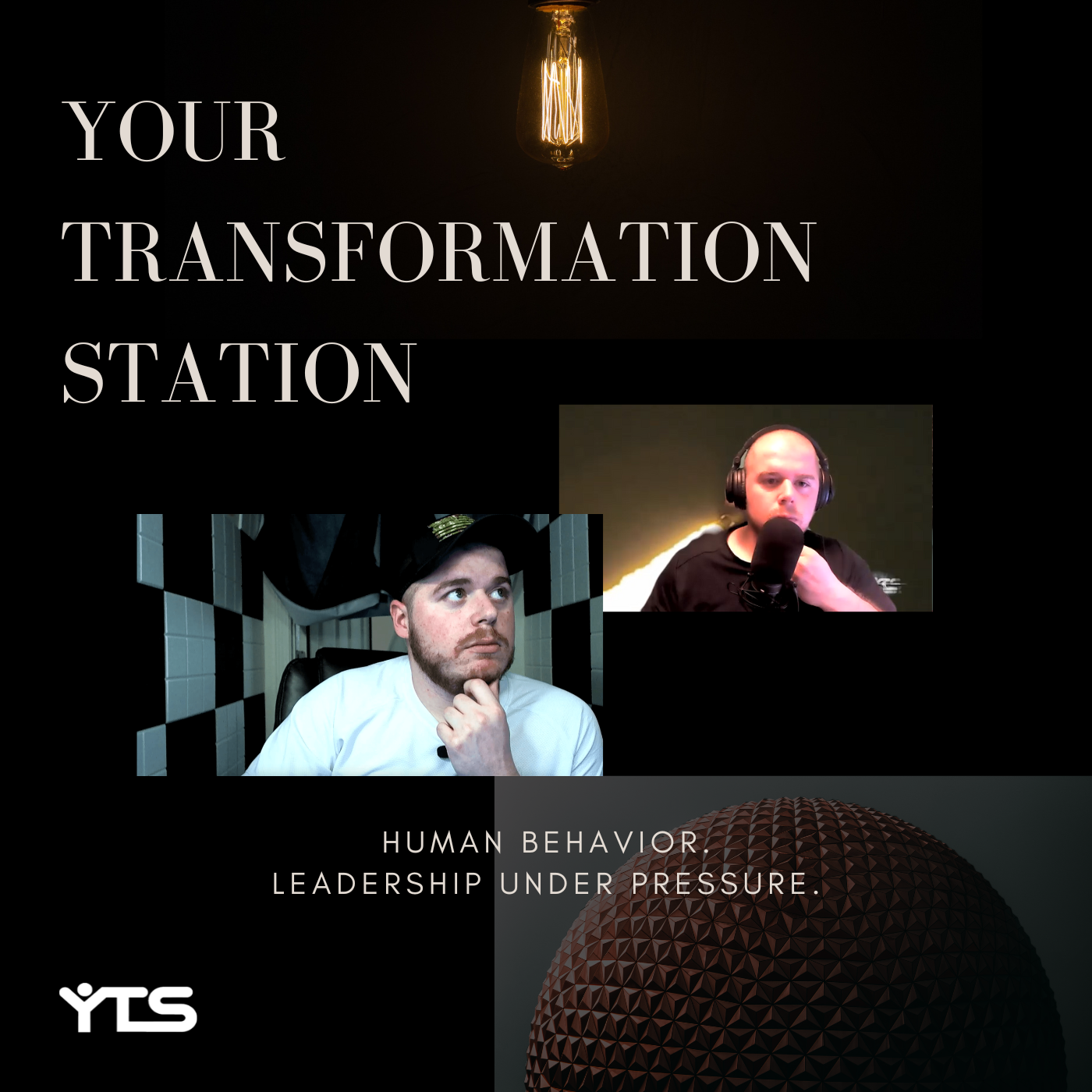


















































Join me for an enlightening conversation with organizational culture expert, Dan Freehling. Through our discussion, we dissect the crucial distinction between leaders and followers - or rather, team members - and spotlight the importance of self-awareness in maneuvering within various organizational cultures.
Transcripts: https://www.buzzsprout.com/2242998/13532422
EPISODE LINKS:
Dan's Linkedin: https://www.linkedin.com/in/danfreehling/
Meet Dan: https://www.contempusleadership.com/about
OUTLINE:
The episode's timestamps are shown here. You should be able to jump to that time by clicking the timestamp on certain podcast players.
(00:00) - Leadership and Organizational Culture
(10:37) - The Importance of Intentional Organizational Culture
(22:19) - Privacy and Coaching in the Workplace
(39:21) - Career Development in a Changing World
(55:58) - Importance of Organizational Change and Leadership
PODCAST INFO:
Podcast website: https://ytspod.com
Apple Podcasts: https://ytspod.com/apple
Spotify: https://ytspod.com/spotify
RSS: https://ytspod.com/rss
YouTube: https://ytspod.com/youtube
SUPPORT & CONNECT:
- Check out the sponsors below, it's the best way to support this podcast
- Outgrow: https://www.ytspod.com/outgrow
- Quillbot Flow: https://ytspod.com/quilbot
- LearnWorlds: https://ytspod.com/learnworlds
- Facebook: https://ytspod.com/facebook
- Instagram: https://ytspod.com/instagram
- TikTok: https://ytspod.com/tiktok
- Twitter: https://ytspod.com/x
I can't fucking give that to you Now. It's rehearsed and I don't want to give you a rehearsed answer.
Dan Freehling:Right, that's the whole point, right. What's really? Why does this matter to you?
Greg Favazza:It matters to me because this organization represents my identity, and what I want to illustrate is authenticity embracing vulnerability in its finest, especially under fucking pressure.
Your Transformation Station:We're listening to a podcast that encourages you to embrace your vulnerabilities and authentic self. This is your Transformation Station and this is your host, Greg Favazza.
Greg Favazza:Dan Freelin, welcome to your Transformation Station. How you doing.
Dan Freehling:Thanks, so much. Thanks for having me, greg. How are you?
Greg Favazza:I'm doing all right, I can't complain. At this very moment I was looking into your background and I just got my Bachelors of Science in Organizational Leadership and I've noticed you have a Masters of Arts in Organizational Leadership. So literally, this conversation is going to take a lot of twists and turns from different perspectives.
Dan Freehling:The art and the science of it.
Greg Favazza:Yes, yes, indeed. Now you just released a book. We're going to go into that, but not right off the bat, because this is where I like to pick your brain and see what kind of an organic conversation we can get into. You okay with that?
Dan Freehling:Let's do it. I much prefer that.
Greg Favazza:Beautiful. Now to start things off, a common question that a lot of leaders will be asked is what's actually the difference between a leader and a follower, and what comes first?
Dan Freehling:So, as you probably are aware from your Bachelor of Science studies, there's a big literature on followership. I think it's misnamed, I think it sounds nobody wants to be a follower, nobody wants to be considered not a leader. I'm a follower. But being a follower in the context of followership is super important. I've long thought that we should change it from being followership to being a good team member, and I think there's the difference of beating and being a good team member is much easier for people to get their head around. So there'll be times when somebody is going to be the captain of the team and that's the leader, and they're calling the shots and they're bringing others along toward their common vision, common objectives. And then there's being a good team member where you're not going to be changing the direction of where things are headed. Your job is to really slot in, bring your A game to it and help to achieve the leader's objective. So in that sense I think it's something that is much more easy to grasp for people. I think when it's this strange leader follower dynamic, it gets a little weird, you know, get people bought into it.
Greg Favazza:It's mutually constructive. The leader reacts to and is energized by the follower, why the followers respond to and are directed by their leaders.
Dan Freehling:Totally. It's a process and it's an interaction and a relationship there and I think that's critically important to keep in mind you can't lead in a vacuum. Leadership's about people. It's about bringing people together towards something, and it requires that buy-in from the followers as well.
Greg Favazza:Interesting. I like to look at leadership and leaders kind of as a cultural teacher per se. With today's organization, the big focus is establishing a healthy culture within the organization. Can you talk about that a little bit, yeah?
Dan Freehling:So I was just talking to a former classmate in Fred DeVyde about. He has a concept that he's coming up with a book on soon, on growing a culture rather than constructing a culture. So it's an idea that you, as a leader, you don't get to just say this is the culture. The culture is something that's organic, that comes up and is expressed in the day-to-day interactions of people. There's a phrase I don't know who said it, but there's an expression of culture is what you tolerate. Culture is what is allowed to happen In the organization. It's not this aspirational place to get to, it's what, on a day-to-day basis, is rewarded, is accepted, is expected at the organization. So that's how I like to look at it.
Greg Favazza:Interesting. So the context of the expectation is based on values behind their behavior.
Dan Freehling:Right, exactly that. What is the vibe of this place where you're working and what are the unstated assumptions of how you're going to work together and what's accepted, what's tolerated? All of that goes into it.
Greg Favazza:So for somebody that understands understanding themselves, how would you explain to someone what they need to know to have a good handle on understanding one's behavior?
Dan Freehling:Understanding one's behavior in the context of culture or in general.
Greg Favazza:Correct, correct.
Dan Freehling:I think, in the context of culture your job as someone who is strategic about their own career, strategic about where they want to bring their leadership to is this a culture that I can get behind? Is this culture the tier, something that will elevate what I bring to it? Will it allow me to be my best self? Will it allow me to do my best work? Will it allow me to have these relationships, these connections? There are all kinds of different cultures. I think that's another myth out there that there's a good kind of culture. Everyone should do this culture that this famous CEO put out in this book, and that's the one culture that is correct. I tend to look at it more like looking at different kinds of restaurants, for example. So it's kind of a funny analogy for it. But it's like saying that the best restaurant is this fancy steakhouse and you think about that for a little bit. You're like, oh, that does seem to make sense. They have a really elevated standard and you know exactly what you're getting. But then you're like, wait a second, that cheap pizza place down the street is really great for what it is and sometimes you want that instead of that fancy steakhouse. Sometimes you want the Chinese restaurants. Sometimes you want that Italian food and it's going to be different depending on what you're looking for at that time. What's going to satisfy you at that time? I think organizational cultures are similar. There's so many different ways that it can work and there's so many different ways it can go bad, and it's all about figuring out really what you're going to want at that point.
Greg Favazza:You brought up some interesting points. I want to go a little more deeper into like with having this set of values and a standard, but do they actually believe in it as the real question? When you talk about culture inside an organization, is it a learning organization? Are they up to date? Is it a psychologically safe work environment? How are the leadership styles? Are they autocratic or are they laissez-faire? Will we go into communication and the communication channel? That's the biggest key for employee disengagement, don't you think?
Dan Freehling:This all of us is spot on. I think there are some key elements. While there's differences, obviously, between and among organizations, there's some key elements that are really critical to be a solid culture. I think a psychological safety is a big one, like you mentioned.
Your Transformation Station:Is it okay?
Dan Freehling:to not even okay? Is it encouraged to have real conversations where you can voice different opinions, where you can feel heard, where you won't be railroaded for bringing up a divergent point of view? Then there's that culture fit element of it too, which is that some people are more comfortable working in more of a hierarchical culture. You know what you're getting. I know you have a military background too. Sometimes there is an element of this more rigid, more structured environment that might be good for some people. They might be looking for that. Sometimes people might be looking for that, like Silicon Valley freewheeling, we're not going to have any levels of hierarchy Everyone's coming at the same place. I know Zappos, the shoe company, has this holacracy concept, this idea that there's no titles and positions. Everyone's basically the same exact level coming in. Interesting. There's that element of it too. It's going to be like. Really, where do you fit along that there's also this element of culture at. So not just slotting into an existing culture, but what will you joining that organization bring to it that will enhance, grow, change, shape that culture in a positive direction?
Greg Favazza:Okay, I think that would come down to understanding expectation management within ourselves, but also looking at the solutions for employee disengagement. When an employee is disengaged, exactly first off, who is really the one that's disengaged? Is it the leader or is it the follower? And then, if it is the leader, then obviously that is rippling out to followership. And what are some factors that leaders can start implementing to start eradicating this employee disengagement?
Dan Freehling:What a great question. Again, there's an element of being intentional with culture. As a leader Of, what culture are you trying to foster, and having a culture that has certain people disengaged with it is not the worst thing. If you have a strong culture, you're going to get some people who are fully bought into it. You're going to get some people in the middle. You're going to get some people who are really turned off by it. As long as you're intentional with it and upfront with people on it, I think it's fine to have almost whatever kind of culture you're going to lay down, as long as it's not crossing these lines of being abusive or dangerous to be a part of or hostile to be a part of. So there might be. I know the head of Netflix released a book on their very specific Netflix culture and it's very different than a lot of organizations. They pay people a lot of money and they give people a lot of freedom and they expect people to perform at this super high level and they're very fine with firing people and they do it all the time. It's a really strange concept for people. A lot of people don't want that, and under very understandably, so I wouldn't want to be part of something like that, but where they do it intentionally and very upfront, that actually turns into being a strong organizational culture. Even if you might not want to be part of it yourself, there's going to be people who are attracted to that. I think where leaders run into issues is when they allow the culture to not be intentional. They allow it to be just kind of the survival of the fittest. These people have their strange little fiat's over here where they have this really toxic environment and they're stepping on people and it's just not a great place to be. Or there's just this bland generic culture that doesn't inspire any camaraderie, doesn't inspire any loyalty, is replaceable with any other corporation.
Greg Favazza:So, thinking about that, the Netflix, that kind of culture where you're getting fired, I can understand that because it's kind of making you feel like you're a part of something greater and that's kind of establishing that flow state to challenge you. Now, I don't know exactly the pressure that's being applied, but understanding the situation as a leader, it takes listening. That's all I ever had to say about me. How would a leader actually like? What are some like key aspects that a leader can do? As far as listening, I know you got to be present. Minimize distractions, give cues that you are, ah, yeah, agree. What do you hear? Yeah, and direct statements into questions Like could you go into that for us?
Dan Freehling:Yeah, so there's some tactical elements of this, so a lot of the ones that you mentioned. I'm a coach. I come from a coaching background. So, there's a number of tactical elements that you can bring to have a coaching mindset and skill set as a leader. So, basically, you know, listen more than you speak. Ask for the second and third and fourth levels behind what somebody is saying. Establish that environment of trust and safety so people feel comfortable sharing with you, not letting a comment pass without interrogating it. So if somebody says something, you know, ask what's behind that. You know. What do you mean by that, what does this mean to you? What's important to you?
Greg Favazza:What would the why like the why statement be? More it will establish more emotions behind it, and that's what you don't want to do right.
Dan Freehling:So there's a debate on asking why questions, as I'm sure you're alluding to here. So yes. There's never an absolute in a coaching conversation, so occasionally there will be a moment where why makes sense and is a good question to ask. The reason that you don't want to lead with, why a lot of the time is that it puts people on the defensive, so you don't want to be viewed as an interrogator right. Yes.
Your Transformation Station:Why do?
Dan Freehling:you do that. You know what's wrong with you, but occasionally someone will say something in the context of a coaching conversation or as if you're a leader or supervisor and having a conversation with someone using coaching skills. That a simple why might be the best question you can ask there. But generally, you want to start with generally what questions? And the idea is actually that you want to get below the surface level of what somebody is saying, so they'll lead with what you call the story right. So, it'll be working on this very kind of tactical level goal thing, or I'm having this problem with this person there. So they're so stupid they don't understand what we're supposed to be doing right, and it's really digging under to like what is behind this, what's this person's values, what is important to them, and by doing that that's how leaders can really cultivate this culture of people speaking up, and I mentioned that, the sort of tactical elements of this purposely and I think it really comes down to very simply being interested in people and being able to have strong relationships with the people you're leading and we can get lost in a lot of tactical level issues of you know how do you structure questions and what's the best way to approach this and all of that. I think, if you care about people and lead with that, that solves a lot of the challenges with communications.
Greg Favazza:Oh good, I'm ready to challenge that now. Wouldn't you think like, wouldn't like somebody like you want to portray to me? That I feel like that's portraying this identity, that you are putting people first, when naturally, wouldn't you just want to ask yourself am I the fucking problem, am I?
Dan Freehling:the problem? It's a great question, so I think. So the way that I define leadership is that it's enabling people. So you have this like first element of it, and this combines a lot of the different leadership theories into one. So there's this enabling people it starts with people, but there's the two. What are you enabling people to do? And that's to advance your common purpose. So it's both right. There's the you have to deliver, you have to bring people together towards something. But there's always that element of you're not just enabling people, you're not just like loving everyone around you for no reason as a leader, right. It's all toward that hopefully positive common purpose that you're all working together on. So I think that part of it is just key. We can't get lost in the things that sound too good to be true of just, we want everyone to be wonderful and a part of this, and for no other reason than to just have that.
Greg Favazza:It just came back to me when I was asking you a question, two questions back. I got caught in a moment. I couldn't recall it, then took it to one direction. Now it's here. But when we look at the hierarchical view of the organization, some people like that. Now we're talking about the social indifference between individuals. Did I say that right? We're personalities and it's like looking at it through an individualistic lens. There is certain types of people that prefer it and certain people that don't. Well then, if I'm the dude that's in charge of a team and I'm trying to motivate whatever style that I'm using, that is either autocratic, transformative, servant style, and it's not working. When do I decide? What the fuck am I doing wrong?
Dan Freehling:So there's a concept called full range leadership development that I really like a lot. I'm not sure if you've come across that. It's Biololio. He's one of the people that was part of the transformational leadership and in the 90s and then he's since expanded that, incorporating parts of authentic leadership and incorporating other elements into this full range leadership development model. I highly recommend people look up. But what it does, which I think is brilliant, is it puts various kinds of leadership behaviors on a scale of effectiveness. So there's the four elements of transformational leadership that everyone is accustomed to in the leadership development space, but then there's also those transactional leadership, the nuts and bolts of how do you work with people, how do you engage with people that are not great to use too frequently, but sometimes you're going to have to use them, and it's thinking of it in. At what point is this the appropriate leadership style to use to accomplish my goals and to maintain relationships with the people I'm working with and to grow the relationships with people I'm working with? It's not part of this exact model. There's another article that I think has a good analogy for leadership, which is on thinking of it as a golf bag. So much less of I lead in this one style, and more of what style should I use at this moment?
Greg Favazza:Okay, I'm pausing you right there. You brought up, you're a coach, and now I'm recalling the hybrid model. Now, right when we came back to work, there is huge disengagement and if we look at gender specifics, I need to say it, but the female has gone down as far as not feeling appreciated. Now I'm not picking on women, that's literally what the statistics say. I have sources that I will link into the show notes. But if we go deeper, do you think the reason behind that is it's a transactional leadership, when you are at home and he is at home and you're not understanding their own environment that they're in?
Dan Freehling:Yeah, do you mind expanding on that a bit? I'm not sure if I'm fully grasping.
Greg Favazza:Sure, sure. So, with how things are going, with disengagement and people that are applying, are working, the hybrid work models. Now, the context that leaders are not taking into account management people that are in charge of a team is the fact that their home, that they're living in, is now their work. So that is another context that you're going to have to automatically apply and that comes with understanding who your people are knowing about their personal issues. Now, when do you draw the line? Do I not need to know? You're experiencing some medical shit. Are we allowed to? To understand that? Where does HIPAA come into play? I need to know, but when do I not need to know?
Dan Freehling:Yeah, I think you're getting toward the level of. So there's so many questions in this. I think there's part of it. That's the level of control that you feel comfortable with as a manager, as a leader. I think we're moving broadly away from control being an effective leadership component and toward that enablement being the effective component. So, in a situation like this, my recommendation to a team leader would be get to know your people individually and understand how obviously you're not going to want to violate HIPAA or some other. There's these hard red lines that you can't cross and you shouldn't cross. But there's also these nuances in here that are this person and I know this from working with them very closely and asking questions, what I'm interacting with them and being genuinely interested in their life is a little more reserved, doesn't want to share a lot of personal details, and I'm going to respect that and I'm going to work with them in a different way than I would work with this other person who loves sharing these kind of details Again, as long as they don't cross those red lines that are out there. But this person wants more of a hands-on approach from me. They want me to ask how their weekend was, where they went with the kids, how that, how so-and-so's sports game went, or something. So it's really that figuring out who each individual person on your team is and how you best work with them that's key. So there's a lot.
Greg Favazza:I want to go into with just this hybrid shit, the fact that if you're not on these Zoom meetings or these video calls and you're responding with email I'm horrible with emails. I wish I could just stare at my computer and tell it exactly what I want the message to say and it would come across exactly as I say it. But for some reason it still does not portray me because it does not catch the inflection, the tonality, and it comes off very dry and you can't tell if I'm pissed off or if I have no idea what I'm saying. So how do we Literally I don't how do we understand the situation of hybrid as people and what can we? Ah, damn, now I got another question. That's going crazy. So the fact that with mental health, all right, if I'm having issues, now they're like hey, we have free counseling. Well, now, if I take that up, that's going to be in the system. And now are they going to use that shit against me? And does that go to third-party stuff? Like, I want it to be open, but where's this line where you're not going to turn it and use it against me?
Dan Freehling:It's a really steep point that I think there's certain bad actors, either organizations themselves or within organizations, that are using all of this technology and resources that we have available against people and so I think, there's the level of being an organizational leader, like an executive level. First, just stop with the nanny state. I'm going to monitor and track everyone and insist on them doing things in a certain way. I think that just breeds resentment among your workforce, it breeds distrust, it ruins psychological safety From the maybe middle management, team leader level or just even the employee level for this kind of thing. I think it's really up to you to interrogate how comfortable you feel with your organization. Is this an organization you can trust? Is this a leader you can trust? For that example of, like taking them up on a mental health resource that's going to be so situation-specific? Do I think this company is going to try to use this against me in any way? And it might be a point to zoom out and just think more broadly if I think they might do that. Is this the environment for me? Should I start looking elsewhere?
Greg Favazza:Good save, yes, I agree. Now let's look into your coaching skills a little bit and open up your book. You have this understanding with millennials. Now dissect me. I'm a millennial. What can your specialty help me with in applying towards the podcast, towards the shows individually? However, just your broad understanding of me.
Dan Freehling:Yeah. So I think the benefit of coaching is that you don't work in generalities. You would work together. I say that we partner with top-rising talent. So this idea that it's not me, as the coach, being an expert in all these different facets of leadership and management and my job is to say, greg, this is what you need to be doing to lead your team better, you should go and do that now. Fuck.
Greg Favazza:No, you apply it yourself first and then let me see the results.
Dan Freehling:Exactly right you get that kind of an internal pushback right. As a coach, your job is to create the container that is so rare in our society now, where you get generally an hour you can do all different kinds of time but to work with that person and you, as the client, bring what you want to focus on to the conversation, and then my job as a coach is to ask you questions, hold that space for you to really think through what it is that's going on, what you want to do about it, what insights you've learned from it, and it gives you that space to think both strategically and deeply personally about the issues. And it's not this sort of, you know, I'm going to give you what I think you should do here and you should go and do that because you get exactly that. It's not your idea, you don't have ownership of it, you get pushback. And that's what's beautiful about coaching.
Greg Favazza:Interesting. So like, let me be the guinea pig. Like, what, if I wanted to illustrate this podcast is a learning organization. How would I? How would I illustrate that?
Dan Freehling:What is it about a learning organization that you'd want to illustrate?
Greg Favazza:That we are adapting to technological advances in the pod. Well, the audio industry and we are staying up to date with the latest trends, fashion and information sources and experts to deliver to the audience in a timely fashion every Monday.
Dan Freehling:What is it about demonstrating that that's important for you?
Greg Favazza:Demonstrating that would be no. It's connecting the clarity inside. I can't give that to you Now. It's rehearsed and I don't want to give you a rehearsed answer.
Dan Freehling:Right, that's the whole point, right. What's really what does matter to you?
Greg Favazza:It matters to me because this organization represents my identity and when I want to illustrate is authenticity, embracing vulnerability in its finest, especially under fucking pressure.
Dan Freehling:What's led you to want to do that?
Greg Favazza:I would say childhood issues.
Dan Freehling:So this is also a great illustration of where the limits of coaching are. So when you're getting into the childhood issues and digging into the past and all of that, that's definitely the realm of mental health professionals and therapists and all of that kind of stuff. And it's a great point of pausing at that moment and seeing if that's probably a better medium for that, where the way to look at it is basically, if you're looking back and digging into trauma and uncovering that, that's definitely the realm of mental health professionals. And then if you're starting from here and looking at what you want to be doing differently, that's definitely the realm of coaching and they work really well hand in hand and what I've noticed is a lot of clients will work with both simultaneously. So they'll be doing their own self-interwork on past trauma and dealing that and they'll be looking forward.
Greg Favazza:Now why stop the conversation if I'm being that open to begin with? I mean we are making progress. I mean, was it the intent at the very beginning to the question? No, because now we're actually digging deeper. That's linking to the question and why I can't understand the question in the first place. It's true, mother fucker.
Dan Freehling:No, it's exactly. It's a really interesting observation, right? It's just that that's such a fraught space to be walking without the specific training that the mental health profession has.
Greg Favazza:Interesting yes.
Dan Freehling:I wouldn't want to be presenting myself as able to do that and I wouldn't want to be doing unintentional damage to you as a result of having that conversation. So that's an important safety line in the coaching space is when it's getting at something that might be better addressed by that, that we would encourage you to seek out people who are really qualified to do that.
Greg Favazza:I like that, that you're willing to admit that out loud, and that would illustrate that my psychological safety is number one, which is great to know.
Dan Freehling:Thank you for sharing it and taking it in that way. That's the way I definitely intended and that's the point of doing that. The whole coaching only works when there's psychological safety and trust. And if you can't be fully authentic as a coach as to what your limitations are, then how do you ever expect the client to do that?
Greg Favazza:Yes, if you don't play devil's advocate like well shit, you don't have the certification that you suck, right, you're right, exactly so.
Dan Freehling:There's certain things that are going to be better done with a therapist, with a psychiatrist, with a mental health professional, and there's going to be certain things that some people use their mental health professional for, like a lot of people do career strategy and stuff with their therapist, and I just think that doesn't make a ton of sense. That's not their specialty, that's not their training. It can work, they're a person who can help you do that, but that's really where working with a coach is key, because that's a lot of what people who specialize in career coaching or leadership coaching do is that career strategy and that career thinking of you know from here looking forward what's my big vision. What do I want to accomplish with this? What do I want my impact to me, what's important to me with this? Those kind of questions are really the realm of coaching.
Greg Favazza:So here's a weird question, like the fact that people sharing their thoughts and their career paths with their therapist. Now I understand that coaches, therapists, counselors have ethics that are linked to each other and those professions. So I wonder the key questions that are being asked are bringing up this theme, that it relates to their occupation? Yeah, can you say more about?
Dan Freehling:them.
Greg Favazza:Yeah, I've dissected counselors and their ethics, that they have to keep their questioning around and same with therapists and coaches and also psychologists. It revolves around a certain God I had it now. It revolves around key questions and key terminology that's being used to draw out this information from an individual and I feel like this unsatisfied feeling is coming from work related, which is why that gets drawn up and brought into these conversations, regardless of the specialty or specialist that we're referring to.
Dan Freehling:Yeah, and I think it speaks to the complexity of being a human right. There's not going to be a one specialty. That's going to be the only path to your advancement as a person, right? So, figuring out what you need to heal up, where you need to be going, what you want to be doing it's going to be drawn on a bunch of these, and I would personally encourage people to figure out what specialties they want to be pulling in people from and going out and doing that. It'll often be working with more than one type of person at a time and, just as a pullback example, you might be working with a personal trainer or something on your fitness routine. It doesn't mean you don't have to then see a dentist too, right?
Greg Favazza:There's all these different elements You've got to get some teeth in on Tuesdays.
Dan Freehling:Exactly right. Yeah, exactly. Tuesdays are molar days, yeah, but there's all these different areas that you have to pull, and it's part of being a well-rounded person that you're going to be drawing on different specialty strengths, and I think it's important for professionals in these different areas to not overstate their expertise, to really be open to having conversations, but to not cross these lines where they're out of their depth and they're not the correct person for it.
Greg Favazza:Yes, otherwise it turns into like a pharmacy or like a pharmaceutical commercial. Oh, I guess you are bipolar, because we just somehow linked to that and now I need to surprise them, Right exactly. I'm talking about Dr Obama, no, so like what you were illustrating, though, it sounds like this is part of your book with the career like tools that we need to know. Go into that and tell me a little bit about it.
Dan Freehling:Yeah, so the purpose of the book is particularly for millennials, also for the incoming Gen Z workforce. It really applies to everyone too. But we're at this point in our careers where making a lot of these career decisions.
Greg Favazza:Yes, if you're old, you're fucked. All right, just when you're already down with your career, so you don't need it.
Dan Freehling:So it is like totally universally applicable too, so like you can be even in retirement and these things all still apply. If you're interested in it, my target demographic for coaching the people I work most closely with in coaching are fellow millennials and it's coming to a point where we're still making these career shaping decisions a lot of the time and it's just particularly relevant for it. But there's this big sweep of that I mentioned earlier of we're moving away from this industrial era mindset and economy into what the future holds. So a lot of the sort of low hanging fruit of you know. I know what we have to do as an organization. I already know, as the leader, what it's going to take to accomplish that and my job is to say okay, go do it. I'm going to divide up the work in this way. I know my standards. You're going to meet them. You're going to not meet them. End of list. It worked great for earlier on when you were building a Ford factory. Right, and it was going to be. I know exactly where we're going to put out and your job is to do it. My job is to enforce compliance. Now we're moving into this world of unknown, of complexity, of innovation. Of you know it wouldn't matter how well run a magazine was in 1995 if they didn't see the internet coming.
Greg Favazza:Let me ask you this real quick so what you're with the tools that you're giving us is it's like what I've forecast for the future is it's similar to the industrial view, where we all have to choose a job, choose a profession. If you don't, you're already making a choice by not making a choice and with that, you become an expert. Now we go forward 20 years. Whatever is past digitalization, we, I imagine we have to take these, these malleable concepts that you're teaching us, and not just apply to one specific thing like a job. Now it's becoming more things where everybody's establishing a following to be an expert, and just the thing on the side, but then also the thing for the job, and then the thing for something else, because inflation is going to fuck us and now we need to make more money. And now everything's digital. And now what the fuck am I doing with my life? I don't even need to leave the house because I just put on this headset and I'm somewhere in Europe when I haven't left.
Dan Freehling:It's all on that, playing into it, right? So, like what I say is we know now that you have to be more adaptable than ever, right? So all of this stuff that you just talked about is happening and you can't just be stuck in one place or one mindset of my job is to do X. You got to really be super adaptable. There's this flip side to that, too, where you can't just be a replaceable cog who has no unique skill sets. You're talking about the getting followers right, and the only way to do something like that is to put out. Not the only way. The best way to do something like that is to be unique, to have a different perspective, a different voice, something that's uniquely you. And the challenge for our generation and the following ones is going to be how do I both be more adaptable than ever and more of myself than ever? And that's how you succeed in career development.
Greg Favazza:It's not fucking multitasking, that's for sure.
Dan Freehling:It's not multitasking, right, and you don't want to be, and that's the thing. It can really be something where it feels pointless to people, right, there's so much change, so much disruption. My whole industry is going away, my company is doing a ton of layoffs. It's pointless. I don't even know what to do. I'm just going to not do anything or I'm just going to let the cards fall where they might. And a lot of purpose of my book is to help people with a very approachable way to think strategically, to think what do I actually want and how can I start moving in that direction without this idea of what I actually want? Is this particular job 20 years from now? And I'm going to take all the steps that I need to do to move in that direction, because that very one might not exist.
Greg Favazza:Interesting. So yes, when I was looking into If I go 10 years back, I had this understanding where I wanted to do law enforcement. So it's like, all right, I'll do the military and then I'll do two years at a community college and then transfer that over to a university, and I didn't plan on being online. And then I also didn't plan on not changing my major fucking three to four different times. And then now all of a sudden I got organizational leadership. But for some reason I can look back all those choices that I planned on but then took a turn equals up to support this identity that I have created for myself.
Dan Freehling:It's so well said and the idea so like what would be a specific position in law enforcement, that you would have thought that you wanted way back then.
Greg Favazza:It would be SWAT, definitely one just to get indoors.
Dan Freehling:Right. So say back then and this might not be the best example of exactly what it is for people, but I think it's less important to say you know, way back then, okay, I want to be on a SWAT team and that's the only thing I want to do. And if I don't do that, then it's not worth it and I'm going to take every single specific stuff to get to that space. I think it's much better and more essential now to approach it, as I think that's something I want to do. What is the general, what are the general characteristics of why I want to do that? How can I move in that direction? And you're going to be shifting and changing along the way and you might end up doing a podcast on your organizational leadership. That wasn't something you could have ever thought of 10, 15 years ago, right?
Greg Favazza:No, like literally. All I understood was there was probably 10 to 30 jobs that I'm aware of. Everything else does not exist. It's just a postman, a cop, fucking, teacher, banker, that's it. There's nothing else in the world.
Dan Freehling:It's exactly right and that was largely the way it was, even in corporations for so long, as you know. So like there'd be, okay, I get, there's a limited number of corporate jobs I can have, I can be this and they're going to be interchangeable and you generally know the steps you have to take to do that. And, like I was saying on the magazine example, that would be a really terrible career strategy if you were back in the 90s saying okay the best way to be to advance my career is to become the senior editor of whatever, whatever. You have to be building these kinds of skills to move you in a direction that's adaptable, but it's still you.
Greg Favazza:Interesting. Now, if I wanted to, let's put your work to the challenge here. Sure, let's say I've gotten the experience. I got in the degree. I have little self-taught. I got situational knowledge. I got previous experience. I got academic. Am I qualified and what am I qualified? What do I deserve and how should I be valuing myself and not shoot myself short?
Dan Freehling:So I think that's a lot less clear than it used to be right. There used to be these check I got the degree check. I've got this position check, I've got this. How I define career advancement in the career design map is confidence in yourself and from relevant to others. So it's a combination, it's both. Am I doing the work to put myself out there to build up all of these skills, to get this education, all of this kind of stuff? That alone is not enough, because it requires you putting yourself in a position where the other people around you who are important to your career advancement will recognize that as something that's value add for their organization.
Greg Favazza:So the problem is that I'm seeing we all have the access to the information. So if I rehearse and regurgitate, does that make me an expert and that's why I deserve the job over somebody else who has his desserts or has his something, because I can say anything per batem. What the fuck are we doing?
Dan Freehling:Yeah, but I think it's much less of this industrial era mindset of checking boxes now, of this job requires these certs and then you've got them, and now it's much more nuanced. Where it's am I putting myself in positions where I'm going after what I want and are the people around me going to take the holistic view of everything that I've done or what I'm putting out to them and say this is adding value and I want Greg on my team, for example?
Greg Favazza:Oh yes, indeed. Well, now let me ask you this what about these gatekeepers or people in this position? What requirements should they have to represent today's industries? I know there's so much technological advances. I mean, where is the standard in digitalization? What knowledge should we already have? I mean, back then you needed to have Microsoft Word. That was it. Now you need the fucking suit, you need Adobe, you need to have a mixed martial art background, you need to have everything. So where's the standard lie today?
Dan Freehling:Yeah, so I push you on the standards again. So I don't think there's going to be this idea of standardization being as common as is in your questions alluding to this right. Yes, it's not going to be something where it's very simply, you need this degree and these four experiences and the certification and then check your blessed to be this position. It's going to be much more so. If you're the gatekeeper, you're the person who's the hiring team, the hiring manager. First thing you should do is what is actually moving the needle in this role. What is something that we actually need, not what is a proxy for what I think we should need. What is something that HR has in their standard job description for this? It's like, really, what do we need in this position? And then go out and really look at your applicants, look in your networks, look at other people who will be able to do that, and understand that it's going to be in different ways.
Greg Favazza:But there's basic questions that they'll ask you. You know how to utilize fucking PowerPoint and a lot of people can say yes, but now we're in this virtual environment. Do you know how to edit audio? Do you know how to create graphics and put them on overlays so you can give presentations that are far more advanced than our competitors? Well, no, I don't know. I didn't take a content creation class, so now all my degree doesn't mean shit because I can't make pictures.
Dan Freehling:And what can be taught on the job Right Developmental role right yes. Exactly. Should you be screening people out for that? Probably not. Probably not for something like that where you could learn it in a few days at a basic level. You know it's going to be much less of like setting arbitrary standards and excluding people than it's going to be about. What do we really need in this? What can be learned on the job? What can people have brought in from other life experiences and in the realm of people we could hire for this? In the realm of vendors we could hire. In the realm of tools we can use, is this person the best bet? And flipping that from a job seeker or a career advanced perspective, that's what smart companies and organizations and hiring managers are really asking themselves. It's much less of do you check the boxes? It's much more of do I think this person has what it takes to succeed?
Greg Favazza:Now teaching on the job. Do you think it should be a? I get it's a developmental role, but are we developing people in a way to handle the job by memory, or are we teaching them critical reasoning, to look at their position in a cross culture way, but also as in a individualistic way, but also the perception of how others would perceive it, whether it's as the corporate entity or whether it's as just a consumer? I mean, there's various understandings you need to have when you uphold a position. Are we teaching people how to critically reason and apply so they can move on to something greater? Excuse me, or are we just telling them, hey, read the fucking manual and just memorize everything and then you'll come naturally. Otherwise we're firing you.
Dan Freehling:This is exactly the shift that's happening, right. So, it was a lot of the time in this industrial mindset. How do we use training to impart? The discrete skills that we think are required for this particular role. And now it's much more of that holistic. Yeah. How do we develop critical thinkers? How do we reward people for their intercultural competence? How? do we make sure that people are communicating well with each other, so there's just so much more that smart organizations are shifting to now. That is so much less of this rigid training mentality and much more of that developing people who can be adaptable and agile.
Greg Favazza:You said smart, are we mean learning organizations or just?
Dan Freehling:I think the learning organization concept is key right. So that's coming in and that's in my mind. That's going from something that's really wonderful and nice to have to something that's wonderful and nice to have, and if you don't develop that as an organization, you're at a distinct disadvantage.
Greg Favazza:Yeah, because I think that illustrates the culture. I mean that illustrates the leadership, that illustrates the identity, the values. I mean it all is an encompassing saying are we a learning organization or not? Then how do we define ourselves as that way?
Dan Freehling:Yeah, yeah, and it's just not. It's not a perk to be a learning organization anymore. It's something where, if you're not this, then you're not going to be having the kind of people in your organization who can allow you to take advantage of technological disruption, aren't able to innovate, aren't able to lead and are just able to be cogs and machine, which is not what you need now.
Greg Favazza:That's true, that's very true. So I'm going to ask you just a couple more questions, then the floor is going to be open. What about addressing barriers for change? If we're trying to establish change, whether it's in behavioral modification or social stratification or just organizations in general, how do we do that?
Dan Freehling:It's a million dollar question. There's so many change management theories and frameworks, as I'm sure you're more aware than anyone Like. There's a million of these right and everyone says theirs is the one that breaks through with actual causes organizational change. I think you can't separate organizational change from culture, from leadership. It has to be something that is part and parcel of the way that your organization operates, that it embraces change, that's moving toward this new direction that you want to go to. It's not something you can outsource and say we're going to go through a nine step change management process and then we're going to be changed as an organization. This has to be something that leadership is bought into. It has to be something that the organizational culture will support. It has to be something that you can get the staff excited about and they can be part of it, and unless it really has those elements, then it's not going to work.
Greg Favazza:Fascinating. No, that's really interesting. Thank you, take it away If you want to share something about your book you want to share. How can our audience get in touch with you if they want to learn more about you?
Dan Freehling:Yeah, so the book is called the Career Design Map. It's really short and it's purposely short so that people can actually read it and actually use it. I've stripped out any of the extraneous, you know, personal stories and all of that, which is all nice to have, but this is really designed to be something that you can read in an hour, really put into practice, see yourself on it. So if people want to check that out, they can buy that on Amazon. They can order it from their local bookstore. I have a free quiz that goes along with that. It's called the Career Design Quiz, so you always love the free quiz, right? And it lets you see where you currently are on this map and where you think you want to go. And I can talk about the little, the distinct elements of the map too, if that would be helpful. But it lets you see basically where you are, where you want to go and the general strategic direction that would move you in that desired direction. So people can go to careerdesignquizcom and take that and then by coaching practice it's called Contempus Leadership, so they can visit contempusleadershipcom to check that out.
Greg Favazza:Beautiful and yeah, give us a little snapshot of it. I know there's the God. I gotta get this thing tighter. It's always in the way. Contributor GoGitter, expert and Executive right.
Dan Freehling:Yeah, exactly. So there's think of it as those two axes that I talked about earlier. So basically, the X axis, left to right, is career advancement. So that's that enabling, that's the confidence in yourself and from those around you. So if you're way too low on self-confidence and confidence from those around you, you're in what I call the dangerous sea. So there's these four dangerous seas of invisibility. So this is when you're not putting yourself out there, you're feeling dejected. People around you are not noticing you. That's a. That's what I mean. That's too low on career advancement. Moving further in from that, there's the. I call it the career.
Greg Favazza:Then it sounds like you need therapy. If you're too low, that's what you need.
Dan Freehling:But, again.
Greg Favazza:I don't want to.
Dan Freehling:I don't want to imply that that is what anyone would do Bingo yeah. What it goes into is something that you definitely want to make sure you're understanding yourself and, you know, is this something that would make sense for it? There's the contributor, which is one of these meaningful for career types, but I have said, this is basically when you want to be a team player, when you want to be you know, working to live, not living to work. And you're doing enough where you're part of a team and part of organization, adding value, but you're not like going way above and beyond on career. You're not going way above and beyond being a leader. Here along is the experts. This is when you're like pretty advanced in your career, your value for your skills and contributions to what you can bring and you can be making a lot of money in this. This is something where, like you're, there's a real expertise there, and then when you're actually too far on career advancement, it's something I call arrogance. So this is another one of these dangerous seas. Think of like the, you know the rock star that hasn't put out a good album in years, because they're just surrounded by yes, met all day right and they're like, oh, here's music, it's amazing, and they're not in there doing the work.
Greg Favazza:Yeah, or you're just too old and the book doesn't apply for you.
Dan Freehling:Again, I've had my. So my, my parents are in a pickleball league and they're, you know, they've been, they've been giving it out to people there and a lot of people who are, who are retired or loving it, they're saying, wow, this is, this is actually really amazing. So I want to remove the remove the ageism implications from this. This is this is broadly applicable and it's and it's especially written for people at our age range.
Greg Favazza:I like that.
Dan Freehling:Yeah. So then, leadership is the other axis here. So this is that enabling people to achieve a common purpose. If you're too low on leadership, you're in the danger of disengagement. So this is when you're you don't really care about what the organization is doing, you don't feel like you're part of it. You're, you don't feel like you want to be leading, you don't want to be enabling a team to achieve a common objective. That's disengagement.
Greg Favazza:That's a fair style. It sounds like.
Dan Freehling:That's a fair style, exactly so, and that's, as you know, the least effective. It's not even technically a leadership style. Right, it's, it's so. It's the lack of leadership.
Greg Favazza:It's like their friend, pretty much getting paid as a leader.
Dan Freehling:Exactly and that that obviously does not work well. And yeah, that's definitely in that too. I think disengagement can also be when you're an employee or a team member and, like you were mentioning earlier, with like is my organization going to dig me for like, accessing these resources or something right, and that can be like I don't trust this organization, I'm not part of it, I don't feel like they get me, I don't feel like they're looking out for me at all, so I'm just going to not, I'm not going to be part of this team, I'm not going to really do anything, go beyond for this dangerous place to be, for both leaders and for subordinates to be in that place. If you go further up on the levels of leadership there's, there's basically one called go get her. This is a one of the meaningful for career types. This is when you're really hungry. You're getting after it, you're going above and beyond, and this is a transitional state where you have to really decide. There's very few people who are in that like hungry. You know I'm going to go above and beyond improve myself state for too long, and that's where you have to really decide. Do I want to become an expert? Do I want to pursue expertise? Do I want to go back to being just a contributor and work might not be the most important thing for me or do I want to go to this final meaningful for which is executive? So this is when your career is advanced and your leadership is advanced and you're leading an organization and you're requisitely specialized in getting the the. The benefits come along with the.
Greg Favazza:Oh, I want to caveat that. So if we go back down to the the third one, I'm imagining me just grinding it out for 14 to 18 hours a day and not even taking care of my own health. So I probably could do that two days, maybe three days. By the fourth day I literally going to go into a coma for two days and then have to reset, and so I'm understanding that that's probably where we need to establish a life balance. And then the the fourth one is where we would have to look at working on the business, rather in the business.
Dan Freehling:Exactly, that's a great way to put it. With executive, you presage the final dangerous C, which is actually called burnout. And this is when you're you're too high on on leadership, and that's something that people can bulk out a lot of the time of. Like what do you mean too high on leadership? I don't do going to be too high on leadership, exactly what you just said. Right, you can do that for two days, three days. You're doing that four days, five days, six days, seven days a week, 20 hours a day. You're trying to put the whole team on your back and carry this organization forward. That's when people run into issues with burnout and it's something that is. It's it's something that the culture doesn't talk about enough of. there's this idea that like leading more is always good and you should always. Just you know, winter's never went, winter's never quit, just lead, lead, more and more, and we're seeing this epidemic of burnout in organizations now, and a lot of that is that people are trying to really pull together the aims of the organization themselves at an unsustainable clip.
Greg Favazza:Okay, all right, here comes another food for thought kind of a approach what if they are pushing themselves constantly because they're running from something that they haven't addressed and they feel that if they consistently push themselves, that it would magically disappear? And that's why the specialist that was referring to earlier are having these ethics and approaches with the questioning to draw out the real issue, which is actually mental health.
Dan Freehling:It's all I think you might have it. You're pulling. You're pulling it together. No, I tend to agree. I think it is a lot of the time linked and there there is a mental health component and it's a growing. Whether that's there's more mental health issues coming up in society, whether people are more open at actually looking at them and sharing them, I don't know, but I think it is. It is something that is definitely all linked and if you're feeling like that's something that would be useful for you, I'd encourage you to definitely look into those resources. And it's not something that's going to be solved by getting that promotion. It's not something that's going to be solved by getting that next million dollars. It's going to be something that is best addressed with the requisite professional support.
Greg Favazza:Yeah, Just stopping and smelling the roses is an old cliche saying. But or just dealing with your shit? Yeah, both yeah.
Dan Freehling:The smelling components on both. Yes, Beautiful.
Greg Favazza:I mean I feel like we hit a lot of great stuff. I mean, do you have anything else you want to add, Because I feel like we really touch a lot of great stuff? Dan, I don't know what else to ask you.
Dan Freehling:No, you've had some amazing questions, greg, and thanks for being so open from your end and asking these. These are so thoughtful and it's obvious that you give this a lot of care and attention and thoughts, so just thank you so much.
Greg Favazza:No, definitely. So I will say this and I will leave you Dan, I appreciate you for coming on your transformation station. I take it to heart, especially from an individual that has focused their attention on understanding organizational leadership. I love that. That is, that is great, and I definitely want to have you back. So I appreciate you coming in today.
Dan Freehling:I'd be happy to come on anytime. Thanks again for having me.
Your Transformation Station:Thanks for joining us on this adventure of growth and discovery. If you're ready to achieve a sustainable transformation, don't forget to hit that subscribe button so you never miss an episode. And hey, if you've enjoyed the show and want to support it, take a moment to leave a podcast review on Apple or your favorite podcast platform. Stay connected with us on social media for behind the scenes, sneak peeks, inspiring quotes and the latest updates. You can find us on Facebook, instagram, tiktok and YouTube. Just search for YTS, the podcast. Until next time, remember change is constant and transformation is inevitable. Chase the journey and keep rocking your way towards a better you. Stay bold, stay curious and stay true to yourself. See you next time on your transformation station.