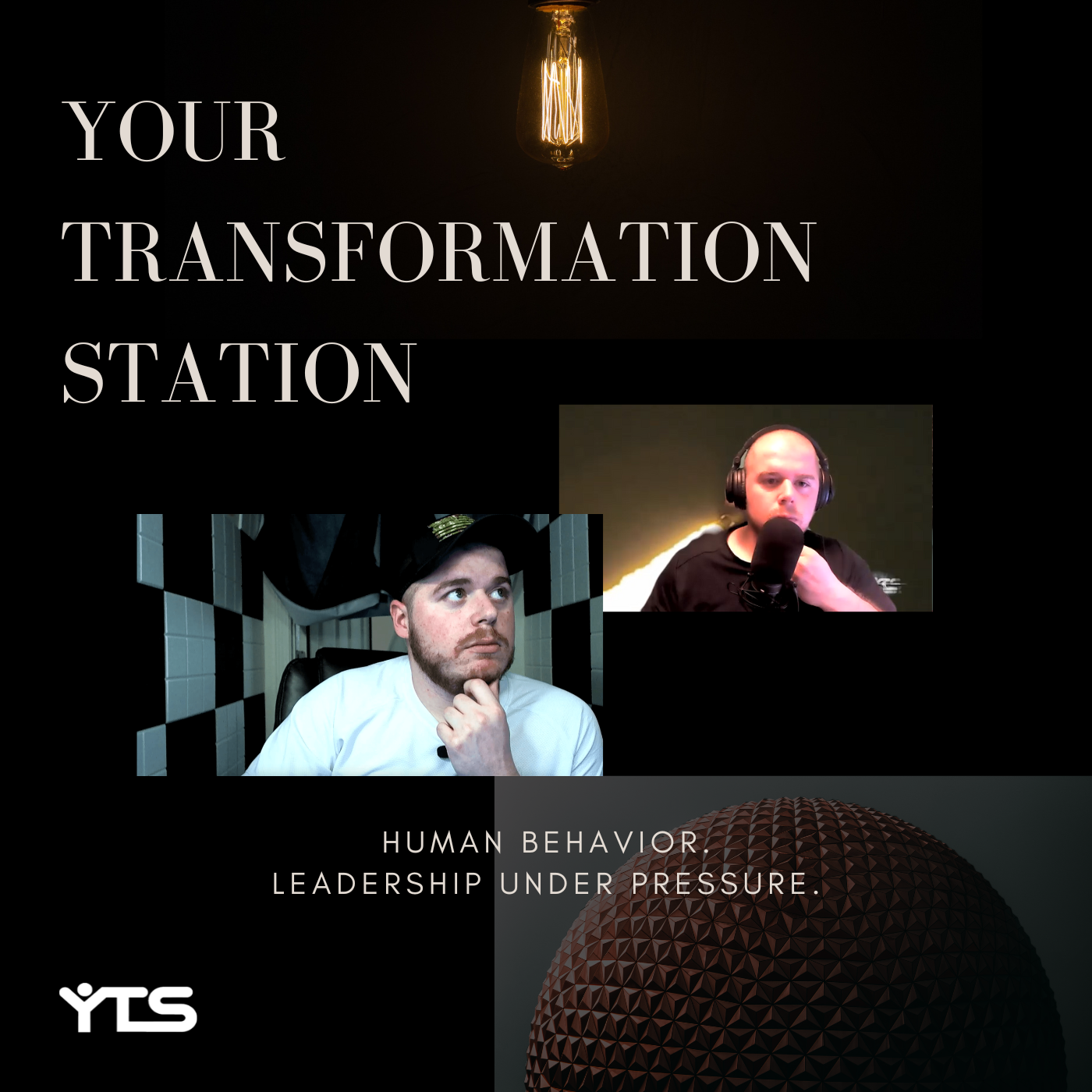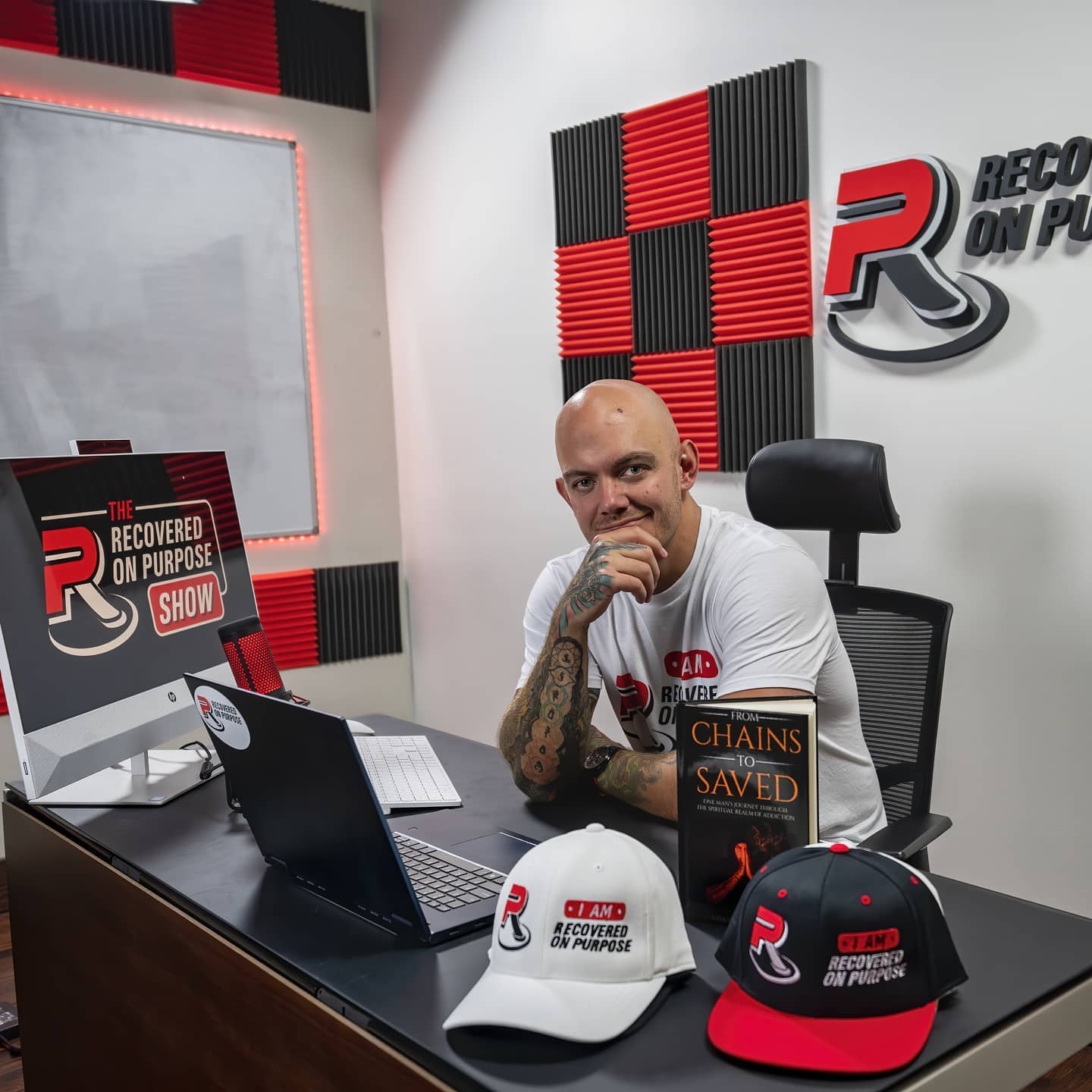


















































As we navigate the intricate dance of parenting and self-evolution, I found myself reflecting on the legacy of my own upbringing and its effects on who I am today. The tapestry of our discussion weaves through the shadows of absentee fathers and the lingering presence of narcissistic caregivers, against the backdrop of my own healing through endurance events and the simple peace found in rocking.
Transcripts: https://www.buzzsprout.com/2242998/14198087
EPISODE LINKS:
OUTLINE:
The episode's timestamps are shown here. You should be able to jump to that time by clicking the timestamp on certain podcast players.
(0:00) - Parenting, Transformation, Military, and Business
(08:51) - Conditioning and Hiring Challenges in Workforce
(20:12) - Challenges Veterans Face in Finding Employment
(33:36) - Army Training and Task Management
(45:19) - Understanding Brigade XO's Role
PODCAST INFO:
Podcast website: https://ytspod.com
Apple Podcasts: https://ytspod.com/apple
Spotify: https://ytspod.com/spotify
RSS: https://ytspod.com/rss
YouTube: https://ytspod.com/youtube
SUPPORT & CONNECT:
- Check out the sponsors below, it's the best way to support this podcast
- Outgrow: https://www.ytspod.com/outgrow
- Quillbot Flow: https://ytspod.com/quilbot
- LearnWorlds: https://ytspod.com/learnworlds
- Facebook: https://ytspod.com/facebook
- Instagram: https://ytspod.com/instagram
- TikTok: https://ytspod.com/tiktok
- Twitter: https://ytspod.com/x
the same way a parent would illustrate to their child hitting your brother's okay, because I just slapped you for hitting him.
Milo:So how does that make you feel?
Gregory Favazza:It takes me back to the good old days, like when Ben Crosby was a huge influence.
Voice Over Coverage:You're listening to a podcast that encourages you to embrace your vulnerabilities and authentic self. This is your transformation station and this is your host, Greg Favazza.
Gregory Favazza:My place is cleaned. I've been doing a lot of work just trying to figure out myself and healing and rocking a lot. I like rocking.
Milo:I wish you would have liked it when you did your EIV.
Gregory Favazza:Yeah, I know, I know I wasn't hydrated at all, I know. Yeah, that will forever be embedded into my mind.
Milo:What a fucking day Fucking.
Gregory Favazza:I was just taking a shit in front of a buddy.
Milo:Not even your first mile in. I had to give you a spare my socks. Oh God, no Just so you can still have the packing list.
Gregory Favazza:Nobody would believe it. I told them yeah, I like your profile pic. That's pretty cool.
Milo:God, that was like the warp toward 2010 or something like that Holy shit yeah. It was up in Denver too Such a great time, like crowd surfing, saw a newfound glory, blink 182. It was great. Nice, it was great. I got soap, sunburnt, dehydrated. It was bad.
Gregory Favazza:It looks like some of your tattoos are fresh on.
Milo:That's probably because it was like I was sweating, maybe like the sunscreen glisten. Yeah, good times.
Gregory Favazza:So I was also journaling here like a little bit ago and like understanding like child development when there's no parents around and how that can like impact like a child's success rate for being successful as they become an adult. But I was looking at studies and there's like 70% for children that don't have the father around can end up with anxiety, feeling of abandonment to even more severe issues that are psychiatric, to alcoholism, and ending up in jail.
Milo:I didn't see that.
Gregory Favazza:But then like what are? I couldn't find any like like research with children who have a narcissistic parent and a normal parent that are still together.
Milo:I think that's, I mean it's trained behavior, you know. So I don't know, that's a good question. I think like, maybe cases like still believe in like good old fashioned, like stay married till death, depart, kind of stuff, you know we got like other couples that are probably, you know, like hey, I had enough. You know, let's get divorced.
Gregory Favazza:Yeah, I'm like my mom, she, she only like like there's post secondary education wasn't a thing for my family, it was only education my mom with the haircutting school and my dad and he got the military. But after that, I mean, there really wasn't much that taught them the values of how being a parent is important. They just would take what they learned from church and then apply that literally.
Milo:That's the real clue.
Gregory Favazza:Yeah, I just thought it was interesting. I was generally about that and want to share that. But what do you think like? Would that be like a good show? Idea is like sharing how the military can like utilizing these fms. We could polish up on the presentation of it and then relate it to what businesses can do.
Milo:I'm pretty sure, like everyone has their own infrastructure. But you got to look at I mean I'm pretty sure you know, because everyone has their own business model and how they do it and it fits to what it is the service that they provide. You know, like, I'm pretty sure, like an information technology company you know would provide, you know their services different than, like, say, how the army does, which is a, you know, a people person, you know business to where you know they have to have like the rules and regulations, the rules and regulations to manage people and resources, versus like, say, like an information technology where you know they're just sitting at a laptop pushing, you know, but loads of information. Now I mean, I mean some of the principles will probably still there, like as far as, like you know management stuff, like that. But on how, like work is conducted on the daily, you know just changes. But I mean, if In the, you know the fms have been time tested and you know for you know hundreds of years and you know, and they're ever evolving based off of new business models, I mean, was it? Look at, like, look at the army supply chain? You know we, we basically copied Walmart and Amazon, you know, through was it Blockchain.
Gregory Favazza:Oh shit Really.
Milo:Yeah, I mean. I mean there's a whole thing about like how the armies, your army supply system, like revamped itself and you know, basically did. I think it's either Walmart or Amazon, you know they copied theirs, you know for like distribution purposes, to like streamline it better. Back of the day, you said. You said take forever to get parts, you know for vehicles or supplies, and you know now, awake, within a week or two, we're getting everything you need.
Gregory Favazza:Interesting. So I'm trying to understand like an organization as far as like how, how refined and complete it is, and the only one that I can come up with is NASA, like it's been around forever, but not long enough. The army's been around longer. I feel like I could be wrong, but their systems, their technology, everything about it is constantly advancing, but everything else seems to be just behind it.
Milo:Well, I mean, the technology is advancing but I'm pretty sure the infrastructure of like how to run the business you know, is still like the same. You know they're probably developing, you know new departments for the new technology, but you know the management system is still going to be the same. But I mean, you gotta what you got to think of it like in terms of like how does a, how does a business like, incorporate how they manage their R&D? Because you know, like, with that new technology, it's like you know you got your deadlines, you got your financing, but then it's like, how do we stay on pace with the project? You know to know whether it's a, you know a bust or not, but you know a lot of those stuff's outsourced too. You know the outsourced contracts for all these. You know all these places.
Gregory Favazza:But with the Army, yeah, you can do that.
Milo:But well, now it's like a thing.
Gregory Favazza:But in order to have that obedience it's instilled through basic training. So how would you get that from a civilian organization matching up with HR's hiring process?
Milo:Yeah, I mean, the basic training though is just to like, basic training in the military is just to, you know, set the tone and let people know they're. I mean I'm not saying like we're a conscript Army, but you know it's getting people mentally prepared for what the Army has to offer. Because you know, at the end of the day, we're all soldiers first and then we go through basic training first and then, you know, then you go through your AIT for your job skill. But you know, the military is a different mindset, based on like, yeah, you got to go to war, you got to leave your home, you got to go to another country, possibly shoot somebody you know versus where. Like you know your civilian world. You know it's like, hey, you're going to go work a nine to five and then you're going to come home sleeping in your bed. Yes, so I mean, the conditioning that basic training offers is something that's needed in the civilian world.
Gregory Favazza:And what would that be?
Milo:What do you mean?
Gregory Favazza:Like the conditioning. Like what kind of condition? Like what I'm thinking of? Conditioning? I'm thinking of it as a dopamine release, when you experience pleasure or something that a human desires. But if we're conditioning somebody to have those healthy mindset or those traits or characteristics of what an ideal good employee is, how will we condition them to be that individual?
Milo:I mean we're just, we're conditioning to a high stress environment is all we're doing. You know to live in a hostile environment, reestablish order and discipline. You know, like understand what standards are and what dress right dress means. You know, so it's. I think that's how we develop you know the military to be a conscript army. So like you know it's like that's why we teach, like the basics you know we don't go into. You know TTPs and anything you know. We just tell it. We teach by the numbers. That way down You've been trained. The same way you can pick up pieces and keep running where I left off.
Gregory Favazza:And that's like the best, what makes it run so effectively. And I think organizations are still trying to establish that kind of culture. But there seems to be just a piece missing of that puzzle.
Milo:I mean really now. I mean I think it's just the work ethic of everybody. You know the everybody wants. You know everyone got used to COVID. You know, like stimulus checks and not having to work and collecting unemployment that they're like shit. You know I could make money by not doing anything, you know. But then you know, with the rate of inflation, you know everyone wants more money. So that you know, even though minimum wage jumped up to what? 1325 an hour, like people still want 15, 18, 20 bucks an hour. You know to flip burgers. You know jobs that were meant to be a stepping stone into a career, or now you know that you know working fast food is the career. You know they think that working a register is $20 worth. You know $20 an hour or worth. You know it's like there's not much skill to it. Yeah, but now you know like what the job market's turning into. It's like. You know like working fast food is like working waste management. Now you know like nobody wants to do it. So now all these businesses are offering more money for you know, to entice people to come here.
Gregory Favazza:You know and do so. Well then, these organizations are missing more of the deeper incentive that these employees need, as far as I would say, something that's beyond the concept of the position that they hold, but also for future positions and setting them up for success, for where they want to go in life, because I know they didn't just wake up and want to be picking up shit for the rest of their life or flipping burgers.
Milo:No, they didn't. But you know I mean. But those are the jobs that are available, right, you know. But who knows, maybe social media is ruining the employment workforce because you know everyone wants that influencer lifestyle. They're like, you know, they spend all their time on a screen looking at people jet setting off to all the awesome places and spending shitheads of money. You know running nice cars. You know to where they're like man, what's the best way I can make a quick buck to do that stuff?
Gregory Favazza:Yeah.
Milo:And you know, and now it's. You know, now everyone's looking for the quick buck instead of putting in the work. You know, without realizing that these influencers do put in the work. They actually live in a high stress environment, you know. Granted, it's a high stress environment of their own, creating their own creation.
Gregory Favazza:But who knows? So if people are working these part time jobs, what is it that? They're just what? If it's becoming the point where we have to work multiple part time jobs, the fact to even have this lifestyle that we want and we're willing to sacrifice whatever we can to get that?
Milo:But they don't want to work the many part-time jobs. That's the thing.
Gregory Favazza:I just want to hold the role and just literally make the easy buck by having leadership tell them what to do. I don't know.
Milo:I don't think we went where you wanted to go on that one.
Gregory Favazza:No, we definitely did that. I got carried away. I was thinking.
Milo:We were trying to dig too deep instead of having fun with that one. I mean, I think, at the bottom line, because expectation management. I help on. Indeed, every day it's fast food places hiring because nobody wants to work. But then there's also other jobs that are hiring places that require you to have a CDL or that have some kind of manual labor. God, where was I?
Gregory Favazza:Indeed requires at least more qualifications than required for a basic minimum job.
Milo:Yeah, but they're still looking. But people aren't responding to these job, these postings. They're offering like $20 an hour or they'll get the job, they'll do it. They just stop showing up and then you see the same. Like two weeks later you see the same job posting for the same company. Like these people, they go out there, they try it.
Gregory Favazza:So my issue with the LinkedIn, with my recent experience, was going for a manager, a supervisor position at a car wash very well-known car wash out here, and I had to go through three interviews. I had to do an online test and then have the qualifications to be able to work there. And with all the qualifications even prior work experience there when I was younger, prior to the military and then, speaking with the regional individual who's in charge of everything, I don't get hired. And then they're still hiring. It's been an ongoing process for over a year and it's like why did I waste a whole month to get a job and then you weren't even going to hire me in the first place?
Milo:It's probably expectation management. It's like I think, having the military background, we're like, hey, we're a veteran, we served our country. We bring a sense of entitlement, like hey, yeah, we're the perfect hire. Of course we're bringing to the table leadership skills and stuff like that. But then it's like we have no idea what we're doing in the car wash industry to be a manager. But we see it as like yeah, yeah, we're going to bring determination, loyalty, we're going to push to make your business succeed, but they don't see that. Or maybe we want the mundane job. I applied to go fucking be a baker at a donut fucking place and I'm like, hey, fucking, 3am to noon, those are some 80 hours. But here it is my resume. All I have is 20 years military brigade operations, platoon sergeant, squad leader, infantrymen, brigade safety, nco safety manager, assistant. It's like okay, but I still didn't hear back from them. I applied. You would think, hey, yeah, we got a retired guy. I guess their mindset is they're so used to hiring people that need a job instead of hiring people who want the job.
Gregory Favazza:That's true, or the fact that you could probably take their job.
Milo:essentially, Well, I mean, that's the conversation I had with Steve over at Rhinos, just being the security guy, I told him I was like, hey, I love working the bar and I was like it benefits you more to have a person who wants to be there instead of needs to be there. Exactly, I was like because if I didn't want to be at the bar, I'd be like, hey, I quit, I'm sorry, Because what's the point of me being there if I'm not going to perform my duties to a standard to which would be acceptable? I don't want to just go through the motions. I mean, would you rather someone who wants to be there or who needs to be there? Because if they need to be there, they're just going to do the bare minimum right?
Gregory Favazza:Well, I think he for my understanding, I think he just wants a body there.
Milo:Well, he does.
Gregory Favazza:Or liability issues only.
Milo:But what kind of body do you want there? You want somebody who needs to be there or somebody who wants to be there.
Gregory Favazza:I mean his mindset. I can't say that, but for my understanding, I would definitely want somebody who wants to be there, and definitely a veteran, because the majority that rolls up in there are veterans. Yeah, so we have a common understanding.
Milo:That's like you got to look at, like where people are financially right, like I'm retired, so in that sense it's like I don't need to work, but I want to work. You know, and not everyone's like that because you know shit. I mean everyone's struggle, everyone's struggle bussing to get there. You know everyone needs that. Everyone else needs the job. They don't want the job. Now, I mean there are those cases where people get the job that they want. But you know, and those are the people you know, what is it like? The you know, if you like what you do, you never work a day in your life, kind of people you know. But I mean some people. You know they. You know they get stuck. You know they don't, they don't take the necessary steps to get to where they want to be and they're just okay getting by. But then you know it's like you know those are the same people who come home and bitch every day about work.
Gregory Favazza:That's true.
Milo:That was gross.
Gregory Favazza:Did you hear that? I tried to do it. I had the game turned up really loud.
Milo:I was like damn okay.
Gregory Favazza:I'm drinking a Red Bull, the new one that just came out, the Pear Cinnamon. Have you tried that?
Milo:No, that sounds disgusting.
Gregory Favazza:Oh, it's really good it's. If you don't chew big red, then fuck you. It's kind of tastes like that, but with the people that want to be there and then don't want to be there. But the issue that I see is I feel like there's not a place for us, as veterans, to actually get a job because it says we could. Yes, there's veteran preference. Yes, that's all known and I believe they follow it to protect their company to a certain level of degree. But from applying to different positions, I get overlooked all the time.
Milo:That might just be resume writing, you know.
Gregory Favazza:And that's true, and I had to have somebody. I had to have people review the resume because apparently I was not matching up to what I was illustrating in my behavior. Yes, I'm this person tensioned to detail. However, I missed a comma and something very specific that is on the headline. I shouldn't be there.
Milo:It's not that. What I'm saying is, like, you know, we, we as veterans, have a hard time translating our military experience into civilian jargon or how would qualify for a civilian position, which I mean? You know, sfl Tap teaches. You know, like, hey, you have your master resume and then, based off of what job you're trying to apply for, you pick and choose from your master resume what you want to throw into into your resume for the job that you're applying for. But but you know, then we also get sidetracked because it's like, okay, as an infantryman, like everyone wants to stereotype, like, oh, all you, all you can be, you know, good for is like being a janitor or a security guard.
Gregory Favazza:Yeah.
Milo:Whereas, you know, we forget about all of the other tasks that we do on a daily basis like, like, okay. You know, like and I've told you this before it's like, okay is the or. I think about multiple Mondays. You have mechanical skills.
Gregory Favazza:Yes.
Milo:Think about when we go to the field and you have to work a radio. You have communication skills logistics like in operations when you're, when you're prepping for a field exercise, you have to, you have to plan, you have to order supplies strategic planning you have, you know logistical skills. So it's like people forget that you have those skills because we just think of it as like, oh, it's something we had to go do in order to shoot fucking bullets, whereas you know it's like those skills. It's like you break it down and be like, hey, you know, like I have experience, you know, like logistically planning, you know, you know programs and exercises and taking care of soldiers, you know, and you relate that like, relate that experience into like you know civilian. So if you're trying to get a logistical job, you can be like, hey, I have logistical schematic training or whatever, whatever big words I want to use there. But, you know we forget to take, we forget that we do these little tasks on a daily basis. You know we forget that we do the tasks on a daily basis that you know we forget to put it in a resume.
Gregory Favazza:Yeah, because it wasn't highlighted as as something of importance, but just as an expectation to the environment. We're in.
Milo:Part of the job, yeah. So, like but you know, here it is Jesus On our resume. We put we were a squad leader, you know. But it's like, okay, all right, that works if we're trying to apply for, like, a team lead position. But then we're like what kind of team leader are we, you know, trying to apply for? Like what kind of business? You know? A team lead at Amazon. What we do, you know loading and unloading of trucks, you know like.
Gregory Favazza:And the hardest thing is, like I've did the unloading and loading of trucks at Amazon. I did it for a month and I just jumped in and I feel like this is what the army taught me is that I put myself in the situation and I'm ready. I'm ready to do whatever. Are you going to move these boxes? I'm hustling, Just crank it out. Where do I and I'm asking the right questions that I have no idea where the lingo is, the jargon or the intent of what it's supposed to happen. But I know we get, we get packages at our door. So I'm assuming we have a specific rack that goes to a specific vehicle and that has to be put in a specific way to match the route and, to my understanding, if I'm driving this vehicle, I can put it in any way. I so choose to meet my needs as the delivery driver and then I start doing it and like how do you know that? I don't know. I just I assume that was the case in the moment when I've encountered the first task of the day and I feel like that's what the military teaches us, Just that sliver in that specific situation and that's applicable. It's a universal skill that applies to all kinds of situations.
Milo:Yeah, but I mean it's probably like common sense, you know, taken over there. I mean, people do apply, but you know, like like the military, there's going to be a trial and error period too. It's like, hey, don't do it that way, because that's just not how we do things. Yeah, it may be efficient for you, but it's not efficient for the company.
Gregory Favazza:You know. So then we understand. Okay, then, what does the company want? They want their workers to be at ease, to be effective, because we're about to do a 12-hour drive and if we're going to do it your way and I'm not working the best that way now I have to relearn a way, because I already developed in my head this is what I should do, and you're trying to sound too smart right now, right? Yeah, it just happens sometimes.
Milo:It's like a malfunction.
Gregory Favazza:It's like a malfunction.
Milo:Also, we were talking about resumes and then all of a sudden we got into talking about a little bit.
Gregory Favazza:Yeah, you know I want to go anywhere, we go.
Milo:That sounds good to me, and then it's one time I was on shrooms.
Gregory Favazza:Tell us about shrooms.
Milo:I know I'm talking about shrooms.
Gregory Favazza:I know I did it when I was like six, 15 years old. I tried it and it was okay. Those were in the woods, those were purple, but those were in the mushrooms. I don't know if it worked or not, but it definitely felt like the trees were getting taller without moving.
Voice Over Coverage:Yeah.
Gregory Favazza:But, yeah, I mean in retrospect, with Amazon. I mean there was hit and miss with understanding the situation, but I feel like our skill sets it's a universal understanding, not just of leadership but also as presence and conviction and competency and asking the right questions when an average individual wouldn't know what questions to ask because they haven't applied themselves the moment they walked in the door to now being put on the job doing what they're supposed to be doing. On day one, when we already have addressed, we did the research to understand the idea behind the company, understand the mission, the vision, the direction and now the job description and read that to a T and now we know. Okay, what if this situation happens, when an individual who doesn't do that just waits for it to happen and then calls you and says I don't know what I'm doing? Please help Miles, please help me.
Milo:That's interesting. I think we should have done that.
Gregory Favazza:We should what.
Milo:We should unpack that.
Gregory Favazza:Yeah.
Milo:Let's dive into that.
Gregory Favazza:So the is that a leadership problem or is that the individual problem?
Milo:I don't know. What do you think, Greg?
Gregory Favazza:I think it could be a combination of both. I mean, if we were to, it depends who's looking at it would really decide on who's to blame. If it's from a higher superiority of someone looking down, they would say it's the leadership. Now the individual, who is that leader? Depending on their understanding of their job whether they think it's just a mindless job or if it's actually their career that can be decided on if they'll take responsibility or they'll blame somebody else.
Milo:That's interesting.
Gregory Favazza:And it can also be framed throughout the company. If they have the vision on the wall and nobody believes it in the first place, that also plays an impact on the leaders actions and then the individual it's. They're learning the culture the moment they walk in the door. So they're seeing that that's being illustrated and his behavior making that acceptable. The same way a parent would illustrate to their child that hitting your brother's okay because I just slapped you for hitting him.
Milo:So how does that make you feel?
Gregory Favazza:It takes me back to the good old days, like when Ben Crosby was a huge influence.
Milo:I see those are some interesting facts there. Greg Said you ever meet Mr Crosby in person?
Gregory Favazza:No, but it's been. It's kind of a it's like a common understood knowledge. So how did he influence? You Think he influenced my father then that influenced his actions and now he do. Conversation brought up and connect the dots.
Milo:Hmm Interesting.
Gregory Favazza:Yes, I'm saying I got my ass whooped. That's exactly what I'm saying.
Milo:Okay, so how did that make you?
Gregory Favazza:feel?
Milo:Oh, maybe feel enlightened, maybe every asshole thing was an enlightenment.
Gregory Favazza:Yeah, it taught me how to dissociate. It taught me how to assess a condition or situation and what to look for to protect myself from harm. Yeah Well, that was fun. Yeah, no, this is good. I'm glad we could just get a little something in and get this a whirl.
Milo:You know, I can my majestic unicorn voice.
Gregory Favazza:Yeah, no, we'll definitely get you polished up. I think give you like a couple weeks, you'll be flowing with me.
Milo:Like rap battle, huh.
Gregory Favazza:Yeah, that's what I want. I know you got. I know you got the skills. I've seen you in the heat when you're in those fucking meetings, when people are coming at you with these bullshit things saying we got to get this done, and you're like whoa, how's that going to meet the commander's intent with this situation when we're looking at this way? I didn't know Fuck about the commander's intent. No, but you made it look like you did and that's what was so cool about it. It was more like for your benefit.
Milo:It was more the army's intent. I'm like look, you know, the army is a army is like ever rotating cog. It's like everyone act like we were doing this for the first time and it's like now do you do? The army works in cycles. We've done this before. We know what we're doing. Like let's not recreate the wheel.
Gregory Favazza:It's somehow the same way when people experience wet weather, road conditions or even snow for the first time of the season.
Milo:Oh, yeah, Well, so they just forget, you know, and they're like oh, but you know what? What don't do is they don't pay attention to the cycles and realize it's like they know winter's coming, but they forget everything that they did for winter yeah. So it's like you know. It's like you know like going through like an infantry training cycle, like we know there's going to be, you know team, you know buddy team, movement, team, live fire, squad stick, squad, live fire, all the way up to you know the company level right, but everyone gets that it happens. It's like no, we all know it's on the calendar, we know what happens every year. We have to stay proficient, so, but everyone acts so surprised. You know it's like oh, we just did squad sticks last year but like, yeah, that was last year. You know it's time to. You know, because they don't want to. You know they don't want to dig into the regulations that say, hey, you have to do this yearly to stay proficient and job and stay qualified as a unit. You know that's why we do like you know the brigade FTX's and you know pinion canyon or you know NTC or JRTC, because it's a qualification for that unit to stay ready for deployment.
Gregory Favazza:So you know that's why my understanding what they're bitching and complaining about having to qualify yearly. My I'm guessing is that they might have gotten out of a qualification from a previous year.
Milo:Well, no, no, they act like they're surprised. It's like, no, the army legit has timelines for it. It's like how you have to stay qualified on your weapon every six months, right? But everyone's like, oh, we forgot. It's like, dude, you could literally plan your calendar out a whole year for these training events and then you backwards plan to be like, okay, hey, before going to a range, I need to do PMI or I need to do the EST trainer, you know, and go, you have practice sets. So it's like for to get a company through, all right, let's say, let's get the EST a week. So a week prior to the range, we do the EST and a week prior to that we do fucking. You know, we do diamond and washer drills, you know, and we get everybody's, you know. I mean, that's how the army used to work. But now we're so compact it's like, okay, within those, within those two weeks of training, oh shit, we still got to do like SRP and hearing and people are late on appointments and they're overdue. So not everyone's getting the exact training, you know, at the same exact time, because we're prioritizing HR shit versus training shit, you know. Or in the midst of, in the midst of going to the range, you know, it's like, oh, these vehicles have to go into the motor pool and soldiers got to sit with the vehicles while the mechanics do the, you know, turn wrenches on them for maintenance instead of saying hey, all right, hey, we're blocked for these two. Two weeks for rifle marksmanship to go to the range After those two weeks will dedicate, you know, a week towards vehicle maintenance you know, and relating that to a civilian perspective of an organization, you have to have EO compliance, sexual harassment understanding.
Gregory Favazza:You have to go through all those little classes and then still be able to do your job effectively.
Milo:Well, I mean it just. I mean I wouldn't go save for all that, but I just. It's just. Everyone acts like you know, because we have emails and cell phones and we convey information through, you know, various forms of various platforms of technology. Everyone's, everyone's like taskings is always an emergency. You know we have a triage. We have a triage like what tasks are like no shit, mandatory, important, versus hey, we got some time. You know this is it. You know this is we don't need this until like two weeks from now. That person's coming in like we need to. You know, yes, we needed two weeks from now, but it's today important and it's like no, it's not because then that's what you know, it's it's work management. You know we're not, we're not letting people, or you know we're overburdening people with shit. You know it's like okay, that's like me going to you and saying, hey, I need this like by midnight tonight. You get you Buster asked get it done by midnight, but turns out I don't need it for like another two weeks. So I just, I just caught unnecessary due stress on you know, when in fact the hurry up and wait mentality that you develop when, in fact, I could have been like hey, man, I'll give you a week to do this. That way, it gives me a week to review it and then I'll present it, you know, on that second week. So, but I, instead of like, instead of saying you know, instead of saying you know, going after and saying, hey, I need this by midnight, I'm giving you that leeway to get it done, you know, because? But everyone treats what they need, you know, with a sense of like it's important to me and it's urgent to me may not be important or urgent to you, you know, because you have, you may have other things you know, like maybe you know shit has something that's due by midnight, you know. You know that a week ago you were given something, you know.
Gregory Favazza:So then that comes down to the leader saying Fuck, I need to have all this done for my first sergeant. So me as staff sergeant, I'm going to tell Sergeant Favazza the fucking hurry up, because I got to get this shit done.
Milo:Well, yeah, but then you know it's on management to say, hey, you know like, hey, higher ups, this isn't a feasible timeline, I need, I need more time. You know, like, as a manager is like a team leader or manager, you're supposed to, one, manage your personnel, but two, you should be controlling or giving influence on, like the timeliness or the how and how and when you do the tasks. You know you got to give your input to higher ups, because higher ups are just going to be like hey, yeah, I need this, and be like Okay, I can get it to you in two weeks. You know that's a feasible timeline. You know, considering all the things we would have to do to get whatever task, you know, or maybe, or maybe it's something as simple as like hey, you know, fucking, look this up and I can have the information for you five minutes.
Gregory Favazza:Is that because they forget actually how the the human response time is and all they see from the glasshouse?
Milo:is everything's being conditioned as as they need it right now. Right, like like, think of, like the brigade commander. Right, like you have all these captains sitting around listening to the brigade commander and you know breaking, you know I'm pretty sure you've heard it before too Like we're brigade commanders, like shit. I got to be careful what I say around these guys Because, like I might be, you know brigade commander is going to think out loud. But then, all of a sudden, you know those captains heard it, and now they're like oh, we want to make the boss happy, so we're going to, we're going to like each of them here's something different. So three of them go off and do three different things.
Gregory Favazza:God no.
Milo:And it turns out that the brigade commander wanted none of those things. So now they just wasted time and time and effort because you know they, they thought man, you know they wanted to impress the boss, so you know they made. They made what they thought the boss wanted in an emergency, instead of just sitting back and be like, okay, like does he really want this? You know, and that's why you know NCOs are there, because we see this shit all the time and we're like sir, it's not what he wants.
Gregory Favazza:Trust me you know.
Milo:So there's, you know, there's the balance there. But you know, like the NCOs would be like the would be like the assistant manager versus the officer being the manager, like the assistant manager is always going to be like no, I work closely with the guys. I know what they can and can't do. I've worked closely with the systems. I know what they, you know what they, what they can and can't do. You know where the managers, where the managers just come in, all his, all his job is just to manage people. He doesn't know how, he doesn't know, he doesn't like maybe doesn't know what the equipment does. And you know he just on some piece of paper he just says from A to B takes three hours. You know regardless. But but then you know, a new task gets emptied in. That new task maybe takes, you know, takes another hour. But he forgets. You know you got to, you got to do A and B first and then B to C and then that's a four hour task. All he's thinking is like, well, if I get another person to do B to C while other people are doing A to B, it'll only take three hours still. And it's like no, it's not how that works. System. You know the NCO is coming in saying, no, it's going to take four hours.
Gregory Favazza:So wait, let me understand this. Like that was like a good example of a small version, like of, I would say like retail, but larger corporation or organization. We have the brigade commander and we have the Sergeant Major, but then we also have a brigade ops Sergeant Major. Now, how does that all play a role in influencing the, the intent of the Army?
Milo:Well, I mean the, the ops Army or ops Sergeant Major, is backing up, like the, the S three, you know.
Gregory Favazza:So then does each one have to have a Sergeant Major?
Milo:No, because you would think like an S six needs a Sergeant Major. No, because you got to look at the weight of what the S three is. The S three is logistics, operations, planning, right, like that's what the S three is. They, that's why they have, like they have coup ops and foo ops, they have current operations and future operations. So it, you know, while the brigade commander and brigade Sergeant Major are running the brigade you know they're, they're working with the leadership from each battalion, right, the S three is the operations side of it. So it's like you got. So think of it as like you got your, you know your brigade commander and Sergeant Major are like a CEO. And then you have your operations which handle like the day to day, right.
Gregory Favazza:Like.
Milo:I'm not sure what, what title that would be in this filling world, but like an ethics officer. No, that would be like your, your GM will just say yeah, your GM, your general manager, your GM is the guy is your like, essentially your S three, right, and then your assistant GM would be like your ops army.
Gregory Favazza:Okay.
Milo:Cause, like your GM, you're like your, your, your S three is like he's only fulfilling that role. You know, like all officers do, he's, he's going to be in that position for like a year and that's his development to like, understand, understand how a battalion works or how our brigade works and the inner workings and how planning goes at that level. That's what he's there to learn and execute, whereas Sarm Major has been in the army, you know, twice as long as that dude has, you know, and Sarm Major is just giving advice, you know, and basically Sarm Major kind of. That's why Sarm Major would see, like the op orders before you know, like the, the daily tasking orders before the S three does. So Sarm Major reviews it, says this is good and then gives the blood, you know, gives the blessing to pass it on to the S three right.
Gregory Favazza:Well then, what about Raider three, or whatever his fucking name is, or the?
Milo:that's the S three.
Gregory Favazza:We're talking about the brigade commander not the brigade commander, but there's like, there's like a Luther XO. Thank you.
Milo:Yeah, so I mean the XO. The XO is like he, he helps take some of the stuff off, right Off of the off of the brigade commander's plate. So, like the XO does more of like the logistical stuff. You know where, you know the brigade commander is looking at the big picture like, hey, I want my brigade to do this, and then the XO and the S three work together and be like okay, because the XO does more logistical stuff, logistics, right. Like XOs manage like the maintenance and the supplies and shit like that, whereas the S three handles the planning and the execution. Gotcha. So like the like the S three is hand like handles the taskings. Like, hey, I'm going to, I'm going to task this battalion to do this and this battalion to do this and this battalion to do this, because they have the assets to do that. While the XO is working on the maintenance, he's like, okay, the XO brigade XO's job is to make sure like maintenance plans are being fucking taken care of. He's reviewing the brigade commander's schedule to make sure you know there's no conflicting of interests of like, okay, the gate commander needs to make this meeting. I can cover down on this meeting and I'll get feedback.
Gregory Favazza:Okay, yeah, and I feel like he's like the guy that that kind of decrypt, I want to say like alters the language that we hand off to him for the brigade commander to actually understand.
Milo:Well, I mean, he works with the brigade commander, so he has kind of an insight of like how the brigade commander likes to receive information Right See yes. So it's like okay, so you may have that brigade commander that, like I love every fucking $10 word that you have to offer to me. Or there's some brigade commanders is like, look man, like I'm a Joe, like you fucking break it down to me Barney style. You know to where, like you know, like, like you know, brigade commander can be like hey, write me a fucking two page paper with all the biggest words you can find that clearly, you know, tells me what the situation is. Or you know. Or the brigade commander be like hey, shoot me straight, what's going on. Like hey, gun broke, no, bang, bang, you know. He's like, okay, well, let's get, let's get, you know, let's get gun fixed so we can go bang, bang, you know. And then that's what he says Okay, let's get it fixed. And then the brigade XO is like okay, you know what's armament doing, what are they doing? There's like that because it's like you got to, you got to look at your business right. It's like okay, like, in order to get the best, the best and true feedback. Because, like, people will church things up and they'll hide it with words, because words have meaning right. And it's like the simpler, the simpler the word you use, the more understandable the situation is, whereas, like people were like, oh, this is, this is in fact, you know indubitably. And you know it's like dude, what the fuck are you saying, dude? Or you know, you try to read a paper and, like some people use the big words and don't even know how to properly use them. You know, that's why I always gotten arguments about, like when people would fluff up awards or fucking NCB, ours, you know, bullets. I was like why, like, the army has a writing style. It's like, hey, you're supposed to write these awards, you know, as you speak. So if you don't normally use these big, fucking fluffer filler words, then you don't use them why? Because it's like, you know, the brigade commander comes up to me and is like, hey, sir miles, what's going on? I'm like, hey, this is my problem. You know I'm not going to sit here and church it up with fucking big words. I don't know, I know I don't know how to use. But then again, you know, he's going to meet, he's going to meet me on the same platform. He's not going to sit here and use big words that I don't understand, because then what he's trying to convey gets lost in translation.
Gregory Favazza:Interesting Right Now? Is that the problem with like? Is that why, out for with the XO, he's conveying the information one to stay consistent with the timeline, even if we're behind by a day, hoping that we would catch up? If that's one example of why, using this language, the big words, for some reason?
Milo:Some people just use it to belittle people. Man, it depends on the personality. You know, like I, you know, I mean I've had, I've seen brigade commanders be little of this shit out of captains with language. You know like they, they, they will talk to them so smartly or so intelligently that they make that captain look fucking stupid.
Gregory Favazza:Wow.
Milo:You know, and you know they'll walk out of meaning, but like I was just insulted in the most intellectual way, I feel like shit, you know, because they're like I went to college and I'm a retard, you know, but that's what it is, yeah.
Voice Over Coverage:Thanks for joining us on this adventure of growth and discovery. If you're ready to achieve a sustainable transformation, don't forget to hit that subscribe button so you never miss an episode. And hey, if you've enjoyed the show and want to support it, take a moment to leave a podcast review on Apple or your favorite podcast platform. Stay connected with us on social media for behind the scenes, sneak peeks, inspiring quotes and the latest updates. You can find us on Facebook, instagram, tiktok and YouTube. Just search for YTS, the podcast. Until next time, remember change is constant and transformation is inevitable. Embrace the journey and keep rocking your way towards a better you. Stay bold, stay curious and stay true to yourself. See you next time on your transformation station.