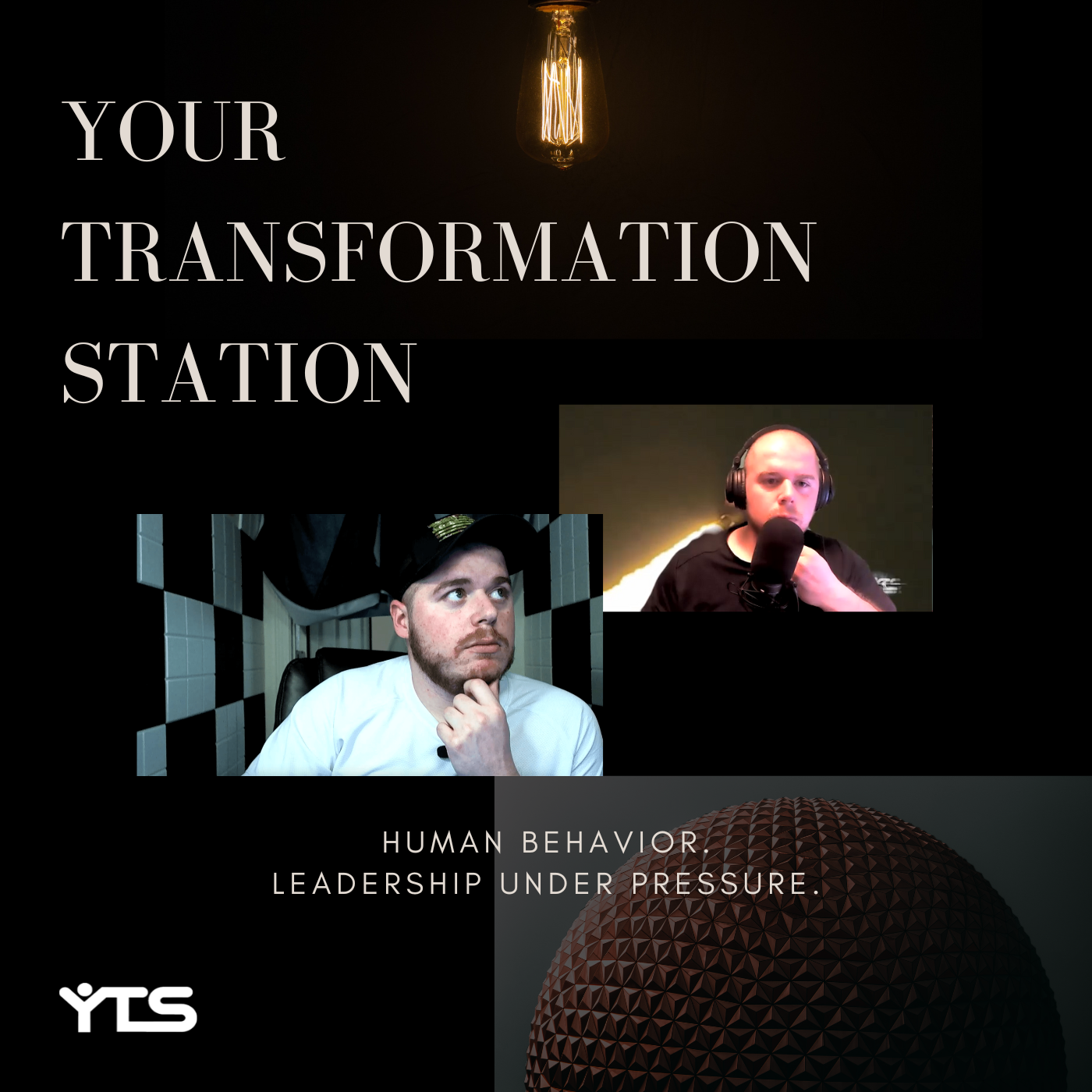

Adam shares insight on why some individuals remain tethered to harmful situations—be it toxic relationships or substance abuse—in the hopes of change.
















































Forward looking with Adam V Gunton offers a stark look into the struggle, as we examine the complex journey from addiction to recovery. Adam shares insight on why some individuals remain tethered to harmful situations—be it toxic relationships or substance abuse—in the hopes of change.
Transcripts: https://www.buzzsprout.com/2242998/14198161
EPISODE LINKS:
RecoveredOnPurpose: https://recoveredonpurpose.org
RecoveredOnPurpose Facebook: https://www.facebook.com/RecoveredOnPurpose
RecoveredOnPurpose Instagram: https://www.instagram.com/RecoveredOnPurpose
OUTLINE:
The episode's timestamps are shown here. You should be able to jump to that time by clicking the timestamp on certain podcast players.
(00:00) - Addiction, Recovery, and Negative Influences
(13:59) - Pornography's Impact on Society
(30:57) - Multiple Perspectives on Homelessness and Recovery
(42:38) - Recovery, Skydiving, and Healing
PODCAST INFO:
Podcast website: https://ytspod.com
Apple Podcasts: https://ytspod.com/apple
Spotify: https://ytspod.com/spotify
RSS: https://ytspod.com/rss
YouTube: https://ytspod.com/youtube
SUPPORT & CONNECT:
- Check out the sponsors below, it's the best way to support this podcast
- Outgrow: https://www.ytspod.com/outgrow
- Quillbot Flow: https://ytspod.com/quilbot
- LearnWorlds: https://ytspod.com/learnworlds
- Facebook: https://ytspod.com/facebook
- Instagram: https://ytspod.com/instagram
- TikTok: https://ytspod.com/tiktok
- Twitter: https://ytspod.com/x
I mean it's not just with sex. It could be with arguing with your spouse, it could be in a relationship with conflict, personality disorder or a narcissist, for clinical terms. I mean, you find yourself in shitty situations and you're still with that person because you're hoping they will change, but that is what they're using against you. So in these kinds of situations we know it's bad, but why do we still continue?
Announcer:You're listening to a podcast that encourages you to embrace your vulnerabilities and authentic self. This is your transformation station and this is your host, greg Favazza, just did a quick restart, sorry.
Favazza:No, you're good. What's rock dude? What are you talking about? Oh, we're just going to talk about whatever happens, you know, just kind of just flow with it, All right, yeah, you know. So you're a recovering addict, recovered, recovered. So that's a good. Is there a difference between recovering and recovered? Because I feel like it only takes one mistake to fall back into that situation.
Adam V Gunton:Well, let's imagine you have the flu, you know there's a certain period of time where you're recovering from the flu and then you know you still have a little bit of symptoms, but then the symptoms go away and you're recovered from the flu. That doesn't mean that you can't catch the flu again if you have. The virus come in you, but you've recovered from the flu. Okay, so if you're still recovering, then that means that you're still fighting it every day. I'm not fighting drugs and alcohol anymore. If I was, I can't smoke crack recreationally.
Favazza:But with somebody that smokes cigarettes for like years and they quit like 20 years later, they smell it, get a whiff. That crave just comes back.
Adam V Gunton:Some people.
Favazza:Yeah, okay.
Adam V Gunton:I quit smoking cigarettes on day 30 sober.
Favazza:Yeah.
Adam V Gunton:I haven't had a drag since, and when I smell it that's like repulsive. What about vaping?
Favazza:Oh, no, no, yeah, I used to smoke all the time when I was active duty, and then I still smoked afterwards and I decided to start vaping. Yeah, yeah. Now this is nice. So, like, what's your definition of addiction?
Adam V Gunton:Well, I go by the clinical definition when you are doing a habit that is having negative consequences in your life that you can't stop, no matter how bad the negative consequences are.
Favazza:Okay, why start the habit in the first place?
Adam V Gunton:Good question. A lot of people are seeking a lot of different things. Some people are seeking a different feeling than they're having in the moment. Some people are seeking pleasure, Some people are seeking, you know, there's all kinds of different addictions per se. But with drugs and alcohol, you know, a vast majority of teenagers are admitting that they have tried marijuana and alcohol. And if that's the case, then how can we blame somebody that has the disease of addiction and say, well, it was a choice to begin with, when the majority of people, right, the average age of first consumption is somewhere between 10 and 11 for boys and 11 to 13 for girls. And that's trying alcohol, that's trying marijuana, that's trying something that alters your mind. We don't have the ability to make choices at that age. You know we have there's nothing else in life legally that we can have the agency to make an informed decision on. So we aren't able to, you know, say that we started at some point.
Favazza:So then, do you think it was framed by something larger to say that you have a choice you could try it or not? If I were to go more specific, dare you familiar with dare? Absolutely. What are your thoughts on it?
Adam V Gunton:Well, I'm actually doing a program that is, you know, has the same desired outcome as dare, has a more useful and effective method. They've done a bunch of studies on dare. There's no study that shows that dare had a positive impact on the drug problem and there's actually some studies that show that it had a negative impact. Because when an authoritative figure comes into a school and starts talking to 10, 11, 12 year old boys, telling them what not to do, what are we going to do? Exactly what you tell us not to do. That's what excites us, right. And when you come in with a briefcase and you know you have drugs in it, and showing us what they are and like, what they do to you, and that kind of stuff, and usually the police officer is trying to make jokes and stuff with the kids, so it's, you know, it's this fun experience. And I remember I was the kid that got they got the drug goggles. You remember the drug goggles that they got? Yes, yeah, and I put them on and I'm like walking in class and I'm like going like this and everybody's laughing. So then all of a sudden, I learned that. You know, it's fun, it makes people laugh. I get attention when this happens.
Favazza:And that was something they did not expect to happen. Is positive reinforcement Like that would be like underhandedly positive reinforcements like it, like a parent yelling at their children not to hit each other and they she slaps them, say don't take your brother.
Adam V Gunton:Right, yeah, well, and the thing is that that frustrates me a little bit is, even though they found out that it's having either no effect or negative effect, they still kept funding it and they still kept doing it Right, and something that isn't out there right now. Most of the programs that are happening right now are individuals, right, individuals that are incredible, incredible people, incredible incredible speakers that are going in and making these incredible impacts. But we need to come together as a community in the recovery community, because we've actually been through this stuff and we, as a recovery community, have to do a peer to peer type model where we're training each other and making making an impact in every school. We can't leave any schools behind, because there's the problem is just going to keep persisting if we don't attack every single school together.
Favazza:I like this and I want to address it, but you you said that there was studies that shown the negative correlation with their. What studies are you referring to?
Adam V Gunton:I couldn't tell you exactly who did the study, but I know that I've read them and it's it's well known knowledge there they it was at a time period where the drug problem rose significantly in the United States and they just found that there was there wasn't a positive outcome from that program in America. It got worse after that program and they couldn't say if it was directly related to that, if it wasn't, but basically it didn't do any good. And coming from somebody who was in a classroom when they came in, who I was, you know straight A student. I was a. You know I was home run Derby hitter at the Little League World Series. You know state champion wrestler in Little League and I became a homeless drug addict. So didn't help.
Favazza:That's. That's interesting because I will hold on to that I wanted to address. You said recovery, recovering community or the recovery communities. All right, yes, okay With addiction. I know we can say substances, but what about? What about chemical within the brain? Chemicals within the brain for a dopamine fix? Do you know what I'm talking about?
Adam V Gunton:Yeah, absolutely. One of the worst things going on to America right now is pornography. That is something that is not talked about enough. It's something that with my nonprofit I don't address only because I have a very specific you know mission with drugs and alcohol. But pornography needs to be like unveiled to people, the damage that it's causing. There are so many things going on with it, like because we are, you know, we're being indoctrinated with this sexualized culture that's making it so that we can't actually connect with people the same way we're supposed to. A study just came out and a kind of a undercover journalist on porn hub and they're doing things with porn now that is trying to indoctrinate people watching it to even become gay. They're literally writing scripts to turn straight men gay and they're starting to do these things within it and people don't recognize that every time that you watch it there's like another door that opens. And another door that opens because the dopamine hit is from the secrecy of it, is from the pleasure of it and all this different stuff and it becomes, you know, like a mentor of mine puts it in Christian terms, you become a slave. It's not an addiction, it's your slave to it. And people don't recognize the damage that it's causing, not only to themselves, but to the people around them. You can't look at a woman correctly when you're watching that. You can't think of people correctly when you're watching that, and it's something that isn't talked about because it's so mainstream. Now you know.
Favazza:Yes, now I want to go deeper into this. So I mean you're a slave to it. I mean, like like any habit, once you you continue to go back to it. It's starting to become an automatic experience because you get the release of dopamine. I mean it's not just with sex. It could be with sex, it could be with arguing with your spouse, it could be in a relationship with conflict, personality disorder or a narcissist, for clinical terms. I mean, you find yourself in shitty situations and you're still with that person because you're hoping they will change, but that is what they're using against you. So in these kinds of situations, we know it's bad, but why do we still continue?
Adam V Gunton:There's still the instant gratification. There's still something there that we want out of it. We have it, and a lot of times this is very similar to drugs and alcohol. We know that it's causing all of these negative impacts in our life, these negative consequences, but there's some type of comfort in it. There's some type of identity that we have with this habit that makes us feel like we need it in order to be ourselves. And it's a lie. It's a lie straight from hell. That somebody needs to argue with their spouse in order to have a relationship Probably comes from something that happened back when you were a kid, between your parents. And that's what's really interesting is that most things that our mind is telling us any kind of fear or identity was actually given to us by somebody else at some point in our life. And if we're able to recognize that and recognize who we actually want to be, who God says that we are, then we're able to change that and start moving towards that other identity. And that's actually the strongest way to break a chain like the things that we're talking about is with a new identity. There's actually a study done on identities in people in recovery and you would think that me saying I'm a recovered addict is like the strongest identity for someone. But they found in these studies the most likely identity that someone can take in recovery to remain recovered and off drugs and alcohol is I am a good parent. I'm not a parent, but people that are in recovery, that have kids, that want to keep their kids, that got sober and clean and they really want to keep this life, them embodying that identity keeps them off drugs. So that says something strong about us being able to write an identity for ourselves that takes us into the future that we want to live.
Favazza:That is beautiful. So when I was trying to quit smoking cigarettes like going to the bars, this one was active duty it was hard. But I looked at it in a different way, because when I was just out and somebody offered me a cigarette because they knew me used to smoke and I said, no, I'm trying to quit. And then that made me want to smoke this weekend. Same individual. So no, I don't smoke, you do? No, no, I don't. Just that internal lie like yeah, obviously it's just smoke all the fucking time and it was amazing. But now it's no, I don't smoke. And from that point on I did. It was not hard, yeah, that's. That's that's really interesting to look at. So going back to like with porn and it being taboo is it because of, I mean, today's dating society? I mean why it's difficult for people to meet people is like I'm looking at it from a male perspective. It's hard to get somebody to go out with a female or, yeah, a male to go out with a female, when we're so locked up inside, Like we just want to get out and meet people. I'm like, hurry up, come on, let's just do something. But no, now you have this eagerness, Now they feel like you're some creepy axe murderer because they watch too much true crime or whatever. The case may be Right, I might be speaking from experience, so what could be? Could that be contributing to the?
Adam V Gunton:issue 100%. I also. I'm someone that has the belief that all the world's problems are the fault of the man, the male that is in society. We have failed to bring this about. The consumers of porn are men, on a majority basis. We're the ones that are purchasing it. We're the ones that are that are leaving wives behind that have kids at home. You know, we're the ones that are leaving the house. We're the ones that aren't being leaders. We're the ones that aren't following God. You know, and I believe that if men would reconnect with our identity, who we truly are, a lot of this stuff would be able to fall off. But we're we're so far into it now. We're so far into this. You know where it's it's. There's more people that are for it right now than are speaking out against it. There's more. There's more people that are talking about how, how it's empowering women to sell their bodies on only fans. You know, and coming from someone who who dated someone who's a well-known model and she was my best friend, you know, and the way that she viewed the world was was extremely skewed from her experience with the men that paid her on only fans, you know, it was impossible for her to trust men as a whole, because her experience was me and then a bunch of married men paying her for pictures and to talk to them married men doing these things, and it's our fault. It's our fault, we need to be the leaders in the society that's causing this to happen, you know, and I believe, I believe in retribution, I believe in redemption, not just for the individual, for society, for community, but I believe it starts with the individual and it starts with the man.
Favazza:Okay, I want to address this right here. So if she's has a skewed view of society based off, her encounters were only with male married men that were paying. And now this is really interesting Is that embodied from her social upbringing, as all she has to understand is from her past to the very point where she's at now, if she's not talking to anybody else, but that is her life, that's how she's going to view every male that she encounters, and that could be the same exact thing with somebody who has gotten out of a toxic relationship that all men are. All females are like this. So if we have these skewed versions of society, how do we get everybody on the same page?
Adam V Gunton:That's the. That is the unsolvable problem of the world right now, because there is no one page. There isn't one page depends how deep we go, because there's there's all kinds of different identities. Right, I'm a Christian man that follows Jesus. How many people could battle me just for having that identity? But then I'm also a recovered addict. How many people want to say that you know? Oh, you could have quit at any time, it was your choice, and all this kind of stuff. How many people could battle me for, for that identity? I think if we, if we as a, as a race, right, as a human race, if we were able to, when we have disagreements about one thing, if we were able to not argue about that thing that we're never going to change the other person's view on, but we come together on something that we can agree on. Right, I have, I have political views that I never talk about because there's no point for me to. I'm not fighting for that cause I'm not fighting for, for this cause is there's just some kind of value set that I have. Right, but I'm able to be friends with, work with and and do things for a positive outcome with people from every part of politics, because I'm able to talk about the issues that we do agree on and work 100% on those things. I don't know if there I mean there's just no way that everybody would be able to come together on all things but I believe there's a way that we can change the conversation, where we stop fighting and we start working together on the things that truly matter to us, cause I can tell you that a lot of the things that the top level politicians and everybody are getting us to fight about, those aren't the things that we actually care about the most. They've just gotten us to believe that they are and gotten us to fight about it so that they can move their own agenda for themselves.
Favazza:I definitely agree. I mean looking at it from an organizational leader standpoint, as far as delegating down the chain of command to the workforce. I mean, yes, I believe there needs to be clear communication from a political perspective. But as a political perspective, why can't we speak freely about who we decide to be? Why can't we speak freely about politics? Why do we have this encompassing thought that we're a type of person when we say we're pro this or not?
Adam V Gunton:You know there's different people that talk differently about different things. Right With, we're covered on purpose. One of my values and one of the core values of my nonprofit is that we don't have any opinions on any outside issues that involving you know, politics, economics, anything outside of our mission statement to help addicts, one being is if I have an opinion, I publicly state any opinion that can divide and take away other people that can help with the addiction mission, then that's what it does. It takes people away from the actual mission that I'm out to solve in the world by something that doesn't even matter to me. You know, and I think that it's you know, when someone comes to you for help, that they are on the complete opposite side of every belief system, every value system that you've ever had, and you help them. That is the most freeing and rewarding feeling you can possibly have, because you didn't have any stake in the game except for to help this person, to help this hurting person, and that's my belief, man. If people could hold on to that, that would be great.
Favazza:You're taking it right where I want it to go, so that is perfect. Like I'm looking at it from another organizational, from an organization standpoint, as far as having this transparency, I mean, we all want more transparency from today's institutions, from today's political leaders. Why aren't we getting it? And I feel like this complete transparency is going to be humbling. Knowing what is going on and from looking at it to a recovery standpoint, when somebody is struggling and they need help, who are they likely to go to? The one in their social group that is the most transparent, that doesn't care about what others think but has a solid foundation of values and is not afraid to convey that, even if it's on the same side or the opposite. I've experienced that in my past with friends. Former friends would come to me for advice and we were never on the same page, but they always came to me. It's because I told them like it was.
Adam V Gunton:Yeah 100% and that's why the mission of Recovery Down Purpose is we equip and empower addicts in recovery to share their stories powerfully with those suffering. I teach people how to write and publish books, how to get on podcasts, how to start their own podcast, make viral content and this kind of stuff, because it's important that we're not only transparent, but we're transparent in a way where we've reached the people that wouldn't be reached before. There's a whole sect of people out there that are suffering with substance use disorder, alcohol use disorder, that don't hear the message that recovery is possible, and the only people that can tell people suffering that recovery is possible are people who have recovered. And we have to, as a community, share our stories more boldly, more powerfully, without the stigma and the fear of losing jobs or losing housing or whatever it is that we used to in the past. I can tell you 100% my story has made a way for me. I've played squashed with the Denver District judge on a regular basis. I have shared a locker room with politicians and things. Because I shared my story and there's this thought that the shame is something that will make it so people won't accept you. This thing that you did in your past is going to make it. So you're not accepted, nobody's going to let you in their circle and that kind of stuff, so you have to hide it. What I've found is that shameful moment is your superpower to connect with people at a level that you couldn't without it. You open up about that thing that hurts so bad that other person is going to recognize that you hurt like them, and with that connection then you can come together with total transparency, total trust, in a different way that you couldn't without it.
Favazza:Wow, all right, this internal dialogue that we've developed inside ourselves. It's making us feel shame. Now I'm looking at it as is it possible that it's coercion, but we are doing that to ourselves because of all these norms back then and now, with everything being taboo, but we're trying to step out of our comfort zone. Is that what's happening with that? And for those that are drinking every weekend, or doing it to the point where it could be considered too much from one perspective, or normal?
Adam V Gunton:and how would they recognize either or Ready to hear the biggest lie ever told, always, alcohol. It's the biggest lie ever told. There is absolutely no amount of alcohol that is good for you in any way. You remember that study that said one glass of red wine a day is good for your blood? You know who conducted that study the wine industry. And they did it as a marketing ploy. And it has been disproven a hundred times over and over. Even one drink actually has enough poison and toxicity in it to start to kill the gray matter of your brain. It ages you, it starts to, it can cause Alzheimer's, it can cause you to get a stutter. All this stuff and this is later on in life, right. But people don't recognize that the social drinking and even having that one or two drinks isn't good for you either. But if you're at a point where, if you even have the question here's the thing If you are, if we take away that study that I was just talking about, right yeah, and you're drinking to a point where you even have the question am I drinking too much? Right, that is worthy of investigation. Deeply, because I'm sorry.
Favazza:I'm not trying to laugh at you when you say like it gives you a stutter.
Adam V Gunton:For real, for real, I couldn't hold it in much longer. That was good. I'm sorry. Please continue. Yeah, dude, I'm working with a girl right now who she's in her first year of recovery and she would, she in her recovery, after like six months, her stutter and her gosh I can't remember what it's called, but like where, where you are thinking of, like you're in the middle of a conversation, you're saying something and then you just like, forget what you're saying, and then you'd have to like, and then you come back to it Like that's, that's cause, that was caused by her alcohol consumption. It's a real thing. She was drinking a lot, you know, so it was. It was coming in a lot faster, but people don't realize that it's actually happening. For your long term, for your longevity of life, I would rather have an extra 10 years of enjoyment than 10 years of you know type living right. And and I don't think that I don't I remember having good times right. I remember having good times on alcohol, on drugs, sometimes right, but it never led anywhere good. It never led anywhere good for me.
Favazza:So an extra 10 years of living. But that thought wouldn't be considered if they think they're living when they're on that drug or having that drink. Right Right, that's interesting. All right With the, with you being homeless, recidivism what do you, what do you think about that when you hear that word?
Adam V Gunton:I think about prisoners and and the fact that 87% of them are going back to prison within seven years of leaving prison. You know, I think that's that's garbage. I think that they're. They are. The system was built to keep them in, not teach them how to stay out. And I think it's interesting that if you get a degree in in prison, like a, like even a bachelor's degree, your your likelihood of going back drops significantly, and if you get a master's degree in prison, your recidivism rate is less than 1%. So if that's the case, then why is every single person that goes into prison, why are they all not basically required to do this kind of extra learning? If prison was actually meant to reform us, to, to, you know, help us become a contributing member of society and it's been proven that less than 1% go back to prison if they get their master's degree why is the system not getting every single person a master's degree? That's saying something, yeah, yeah. And that's want us imprisoned.
Favazza:I mean, and how do we know once they get out that they're still in prison? What if we're all imprisoned right now?
Adam V Gunton:I mean, I mean, I go pretty deep in that Taxes. You know the fact that you know, I mean you're, you're a veteran, right? There's a lot to be said about that and I'm I'm extremely grateful for all my brothers and sisters in arms right and I think that you know we, we spend more to be a world power on our military than the next four countries combined and doubled. That's saying something. You know we are, we're able to impose our will on the world, right? So, yes, we are as a community, as a as a country. You know we have to pay our taxes, we have to do what the elite saying all that kind of stuff and the rest of the world kind of has to do what we say, or else F around and find out right.
Favazza:Yeah, I mean we could. We could look at it from multiple perspectives. As far as establishing a security detail to have a presence in other countries, but is that really what's happening? I mean, there's a list of possibilities, but I really want to go back to recidivism. As far as with the homeless population, I've had a nonprofit called a inspire real change, where they address the homeless population, why it continues to reoccur once they provide them with a home, they get them a job and they leave them to live their life and the next thing happens they end up homeless again where they started, to backtrack from the beginning, to what led to this point of them being homeless. Now, is there a common factors with what led to being homeless, with how addiction starts?
Adam V Gunton:Yeah, I mean, there's a lot of different reasons why people become homeless, or people even become comfortable homeless. You can tell you that in my recovery and this is going to sound crazy to somebody that hasn't experienced this, but I remember in my recovery in 2020, when all these tent cities were popping up and everything, I had a lot of responsibilities. I just published my book, recovered our purposes going well, I was speaking and all this different stuff. And I remember this one day I was like really just stressed about so much stuff going on and I drove by this tent city and I thought to myself man, that looks nice. Just no responsibilities, a group of friends that you can kick it with all the time and drugs. You know that's what it is. You don't have to worry about anything, you know. But then it was a quick thought, like not like I want to go back there or anything, but there is a certain level of we have to teach people how to live a good life. You know, it's not just about here's a handout, here's a handout, here's a handout. The most fulfilling thing you can find in your life is purpose. You know what is it that you were created to be and what were you created to do while you were here, with the time that you have, and if we just say, hey, you were created for me to give you a house, you were created for me to give you this meaningless job making people sandwiches, you know, if that's it, and they're not getting a continued community of growth, a continued community of helping them find who they are, then how are you supposed to start enjoying a job being a slave in a system that you were completely out of when you were on the streets, you know, and when I came back, because I went down to Columbia for a couple of years, I came back in July and the population on the streets is completely different now, completely different. There's like young people who absolutely 100% do not have to be there. I've got 70 resources that are Medicaid resources for Colorado alone, and just the fact that I have those says that there are so many resources for people that are on the streets. But it's a mindset, and the people that have all these resources are doing incredible things. But what we're missing is the continuum of care. From a Christian standpoint, it's the discipleship. It's the discipleship. How do we, how do we help them become who they are, not just give them something that doesn't change their identity, it just changes what they have.
Favazza:Yeah, that's, and with the prisoner study that you brought up, knowledge. Having access to this knowledge, I feel like, would be the way that we, that we know we can create ourselves. Our past does not define us and we have, at any moment from now to the next moment to the next we can decide if we're on the right path to change or to continue. But having that moment takes awareness to be able to stop and think. And what's contributing in that today? Is it because we are attached to all of our phones? Is it because it's not being presented to us, or is because the larger organizations doesn't want us to know? What do you think?
Adam V Gunton:I think it's a collection of all of it. You know, I tend to believe that humans are innately good intentioned. I don't think that just because somebody has a big corporation, they're out to do evil. I think that most people make decisions thinking that it's the best thing, but I do believe that things get distorted on the way out, like AI, for instance. This is one of the most incredible things that has ever happened to humanity being able to get knowledge in an instant. But I can tell you that there are a lot of evil and dark implications of where AI can go. It's not necessarily about the continuing growth of humanity. There's always going to be this duality of good and evil inside each of us. I believe in good, I believe in spreading good. I believe that good will always conquer evil, good will always prevail and it comes down to the individual. I believe in everybody taking responsibility for their own life, for their own actions, for their own thoughts. And once you do that and you take control of what you have control of, which is, you know if you're standing inside of a hula hoop, it's everything inside of the hula hoop, that's what you have control of, nothing out here. The better you get in control of that, the more influence you're going to be able to have outside of it, because you become an example, you become the light when you walk in a room, because you are embodying what it looks like to be who you truly are, and that's really attractive to people. When I go down on the streets and I'm talking to people that are literally right in front of me, shooting up, and I'm talking to them about how I was right where they're at, and they're asking me how I did it. They're not asking me from a place of obligation to the missionaries coming out and giving them lunch People just coming out and giving them lunch, which is amazing. We need all of it, right but they're asking me from a place of this person actually did it. They've been there. I want what they have, not in an egotistical way. It's like I make it clear we're right together here. I've been right where you're at and I think that that's something that a lot of people are missing also. Each of us has overcome something that someone else is battling right now and by us sharing the story, sharing that process of overcoming what it was we overcame, we're helping the person that's still struggling with it.
Favazza:Beautiful, just spot on. Now I want to address two things here. One, when you're for someone that would like to step out of their comfort zone to say hey to someone who's trying to make it to the point where they're at, how would they illustrate it to the point where they don't sound egotistical? But then also for the person who wants to rise up, how can they recognize that they were abused and that they're given off the abusing mindset of wanting to abuse others, subconsciously not realizing it? Because we know, healed people, healed people, abused people abused. I know it's a lot.
Adam V Gunton:I think for the people to reach out to someone that has overcome, you need to recognize that, no matter where you're at, there's somebody that has been where you are, that has gotten to where you're going. I promise you 100 percent. That's a fact. The people that have gotten there are searching for people to help get there. That's the law of the universe, is that you have to help people get to where you are in order to get to the next level. You have to. When you reach out to somebody that has something that you want, make it short, very short and very sweet, compliment them and then just say, hey, this is. And then be honest and transparent. You want to have it like three to six sentences tops, because people only have a certain amount of time and then ask them a question. Make it really simple, especially if you're someone that's struggling with drugs. I get messages every single day from people and I love getting messages from people and helping people Reach out, say, I'm struggling with heroin, fentanyl, I'm on the streets and I really want to get clean. I see that you have gotten clean. What should I do If I give you a step to take? Take that step, no matter what it is take the step that that person gives you, because if they take the time to reply to you with a piece of knowledge, that means that that's the ultimate thing that they believe will help you in that moment. And you don't have that knowledge no matter what your mind says about it, like that's not going to work. It's what they did. It is what they did. If you take that step and then you message them and say, hey, I took that, this is what happened, they are much more inclined to continue working with you because you're not going to be wasting their pearls. They're giving you pieces of knowledge and for someone that has, if you've been abused in your life, you know it, and if it was in your childhood, it's not your fault. Point blank period is not your fault. That's not who you are, and there's a lot of organizations out there that are here to help you. I've heard the worst of the worst stories you can possibly imagine when it comes to child abuse, and I've helped people through it and be able to share their stories in a way that helps other people hear that they're not alone, no matter what you've been through. Also, you are not alone. You're not the only person that's been through it. It's not the thing that is that shame thing we were talking about earlier. It's not going to make people not love you because you got hurt. People want to help and the cool thing is is that even if you're still in a place where that abuse is traumatizing you now, like it's holding you back, you still have that story and when you overcome that, there's going to be people in your future that are in the same spot you're in right now that you're going to be able to help the same way the person's going to help you. That's how it works. But it takes the taking the responsibility for yourself and saying I'm ready to heal, I'm ready to do the work. I had to do a lot of work to recover from a daily 16-year IV drug habit. That's a big deal. I had to do a lot of work but I can tell you it's absolutely worth it. You don't know what you don't know on this side the freedom, the joy, the happiness. It's new. It's something I haven't experienced before in my addiction. You don't know it till you experience it.
Favazza:It's an even better high. You would say.
Adam V Gunton:Yeah, I wanted to go. Since I was 17 years old, I always wanted to go skydiving. I thought about it every year and all this stuff, but I was never able to go because I was worried about the withdrawals. I was going to be away from dope for like six hours or something. I'm going to be around people for like six hours, or. It's also going to cost a lot of heroin to go skydiving, right. And something that I got to do to celebrate my recovery was for my six months clean and sober. I went skydiving for my first time and now I've been skydiving in three different countries. I've been skydiving in three countries in my recovery and I can tell you that jumping out of an airplane is an incredible, incredible feeling that you can't experience on dope. You just can't experience it. Even if you jump out of a plane on dope, you can't experience it for real. So what is it?
Favazza:What is it like? Is it like you're just? It's like falling from a chair, but it feels never ending.
Adam V Gunton:The actual falling feeling is only for the first, like second or two, and then it's like you're flying. You lose that, your body acclimates to falling, so you no longer feel like you're falling and it feels extremely, extremely freeing. I'm someone that loves adrenaline, loves feeling like my life is on the line and knowing that technically it is, but also I'm in complete control and I'm completely safe, even though something, even though I'm taking this risk, I'm safe and it helps me. I do things like that, whether I was on a track, maybe or not. I've gone 186 miles an hour, 181 miles an hour, in a Lamborghini that I rented, and I've gone 186 miles an hour on my R1. And this is I don't suggest it, I'm not telling anybody else to do that and I'm done doing it because I'm at a point now where I'm not taking those risks. But having that's something that I have recognized, that I like to feel that stuff where I'm willing to take that risk. I'm willing to start a business and put myself out there. I'm willing to risk, you know, looking bad in order to help people. I'm willing to do that. I'm willing to say on a podcast that I took a Lamborghini up to 181 miles an hour, dude dude, I did, was it out in Las Vegas.
Favazza:I rented one out there. They came to pick you up. I got the Gallardo. It was the only real old drive one before they switched it over to all wheel and I don't know. I didn't watch Spidometer because I had the guy sitting with me and he was like gas, gas brake, hard brake, and then like like my foot when I was like hitting the brake was shaking because I was so just a drenner. Yeah, it was insane, it was awesome.
Adam V Gunton:Yeah, you can't explain that feeling, you can't explain it and I want people that are struggling with drugs and alcohol that don't get to have these experiences. I want them to have experiences like that, whether it's a Lamborghini or it's being the best man at your best friend's wedding. I got to experience that. It's a big deal.
Favazza:I like that, getting people on the same page. I feel like now we might have some ground where we can say is it's addressing all this, it's doing the internal work first, before we can have a voice.
Adam V Gunton:Yeah, and for me and some of those things that I teach people, there's certain things that I believe you have to actually do a lot of internal work before you share, because you can't share from an unhealed place. Then there's also things where you heal while you share. Case in point for me I had an experience when I was a freshman in college. I'd been out drinking and partying like most nights in my freshman year of college. I woke up to my phone ringing and vibrating down by my leg, swam through the soft sheets, found my hard phone with the bright screen that read 447 AM. It was my best friend, chucker, that was calling me. I remember having the conscious choice that I could either answer the phone like I always do, with hey, what's up, chuck? Or I could answer the way I was feeling with hello, am I still drunk? In state. I chose a ladder, to which a soft voice replied hey, what's up? Why are you calling me this late? I was just calling to say hi, don't call me this late again. And I hung up on him. He shot himself and for nearly a decade I was unable to share that phone call with anyone. I would literally lie about what happened in order to not tell people that in my belief, I killed my best friend. But what healed me from all the guilt and all the shame and all of that was beginning to share that story transparently and from a real place, and that was the healing part for me. I didn't go to therapy over that. I ended up. What my therapy was was using it to help people. There's some things I 100% recommend People do internal work and make sure that they heal. There's things that I have to talk to mentors and pastors and things about to heal myself right before I talk about them. But some things the most healing thing you can do is sharing it, taking that power of darkness away from it. Once it's in the light, that darkness doesn't have power over you saying how bad it is and how shameful it is. Once it's in the light, it's like oh, that wasn't that bad.
Favazza:I have an experience I haven't really publicly addressed or shared, but it's with a good friend that I was friends with for maybe since I was 9, 10 to age 21. It was I don't know how many years that is right now. I'm just addressing the issue. The last time I spoke in with him I was supposed to go to a party and he started getting mixed up in some drugs. I was working at UPS as a supervisor out in the factory. I was supposed to go but I couldn't get off because it was like a mandatory Monday through Friday kind of gig and I worked the Twilight sort and I just told him I couldn't go. He shot himself. He wrote a letter, left it with his dad. He was at his dad's house and that does sit with me in the background.
Adam V Gunton:Thank you for sharing. Yeah, there's. Was he a veteran? No, yeah, man. It's really interesting that we can take it on to ourselves and believe that there was something that we could have done to change the outcome. I would say that there wasn't. I would say that I wish there was. I've studied it like in my own mind, in my own heart, spiritually. If I'm going to take responsibility for my own life, I have to let other people take responsibility for theirs also, especially in instances where there's nothing more I can do at this point except for honor them, love them, and do that a lot of times by living my best life.
Favazza:Now that mentality. I know that applies to being a parent. In order to be the best parent you can be, you got to take care of yourself first. But what about as someone who's in a leadership position, who has his people in their charge? What would you say to them? That they need to take care of themselves first, or does their people come first?
Adam V Gunton:100%. You have to take care of yourself first, anything that you have like. If you have a sickness within you, whatever that is. If you're dealing with something and you're out leading people, subconsciously and spiritually, you are passing that on to them, whether you like it or not, whether you believe it or not. You are passing it on to the people that are listening to you if you are not healing yourself. I believe that the number one most important relationship is between you and God, and then you and yourself. In order to do that, you have to be willing to say no. No is the most powerful word in the English language to no, because I have to be able to say no to people when I get reached out to a lot. I have to be willing to take care of myself when I need it in order to help more people. In the grand scheme of things, it used to hurt more because I was still wanting to help everybody all the time and do everything I could, but when I recognize that the more time I spend doing that, the less I have to build other people up to help in the same way I am, and multiply it, scale it.
Favazza:So with addressing these issues, I know once we get that process going we start to rediscover ourselves, we start to learn about the things that we like and dislike and start to value our time or so. Establishing boundaries might be difficult for people, especially if their boundaries are permeable, so they get stuck between that and rigid. What would you tell them? Who's at that process right now, how to establish those boundaries?
Adam V Gunton:I think it's something that you have to know within yourself who it is that you are and what it is that you're going towards. And the clearer you are on where you're going, the easier it is to make the boundaries that will take you there. And what's really interesting is that at the very beginning, when you decide exactly what you want to do, where you're going to go and what you're going to do to get there, the first thing all the opposition is going to do is try to distract you with all these different things here and look over here and look over there. And that's a test from God about how ready you are to really go for your call. If you're able to say no to the distractions and move toward what you know in your heart you're supposed to do, you are born to create it. You are born to make that happen. Knowing those distractions becomes a way to life. I'm able to say no to a lot of stuff now. A lot of stuff. It's not taking me to where I'm going or helping someone else get to where they're going, which is part of where I'm going, right, then I'm saying no. I've said no to podcasts that I love this podcast and I love what we've talked about, because I've shared my story on over a hundred podcasts, and I love sharing my story because it helps people to do that. At the same time, I'm at a point in my life right now where I'm not trying to share my story. I'm trying to help others share their stories. I'm trying to help other people heal and grow with whatever they're dealing with. I'm trying to be a leader in the space of thought around this thing and I've said no to podcasts that want me to share my story on there just because, yeah, it's not where I'm at right now, and this has been a conversation that I've really, really appreciated.
Favazza:Thank you Really appreciates this. All of our listeners I do. I mean, this was something that was meant to happen, so I really do. Thank you for your time and I would like to open up the floor for you to share whatever you would like your book, your TEDx, anything.
Adam V Gunton:Yeah, my book is called From Chains to Saved One Man's Journey to the Spiritual Realm of Addiction. I give it for free at recoveredonpurposeorg. If you want a digital or audio copy, you can get it on Amazon. If you want a paperback copy, If you are in recovery or trying to find recovery, I have a relapse prevention worksheet on there. It's different than all the clinical stuff. It's pretty fun to do. Figure out what you want to do and where you want to go with your life. That's free on my website as well, and then, if you're struggling in addiction, reach out on Facebook to recoveredonpurpose. I've got resources in all 50 states specifically for people with no insurance or Medicaid, so I've got no financial incentive to help you whatsoever. It's only to help you. I just want to help you and the TEDx talk as of recording this. It has not been released yet, but it will be out very soon and it's called Relapse Prevention Failed and how we Can Solve this Crisis Together, and I am really, really looking forward to that getting out and empowering people to share their stories and help people out of struggling.
Favazza:Beautiful. Well, I appreciate you coming on the show and sharing us with your story.
Adam V Gunton:Absolutely. Thank you so much for having me, brother.
Announcer:Thanks for joining us on this adventure of growth and discovery. If you're ready to achieve a sustainable transformation, don't forget to hit that subscribe button so you never miss an episode. And hey, if you've enjoyed the show and want to support it, take a moment to leave a podcast review on Apple or your favorite podcast platform. Stay connected with us on social media for behind the scenes sneak peeks, inspiring quotes and the latest updates. You can find us on Facebook, instagram, tiktok and YouTube. Just search for YTS, the podcast. Until next time, remember, change is constant and transformation is inevitable. Embrace the journey and keep rocking your way towards a better you. Stay bold, stay curious and stay true to yourself. See you next time on your transformation station.
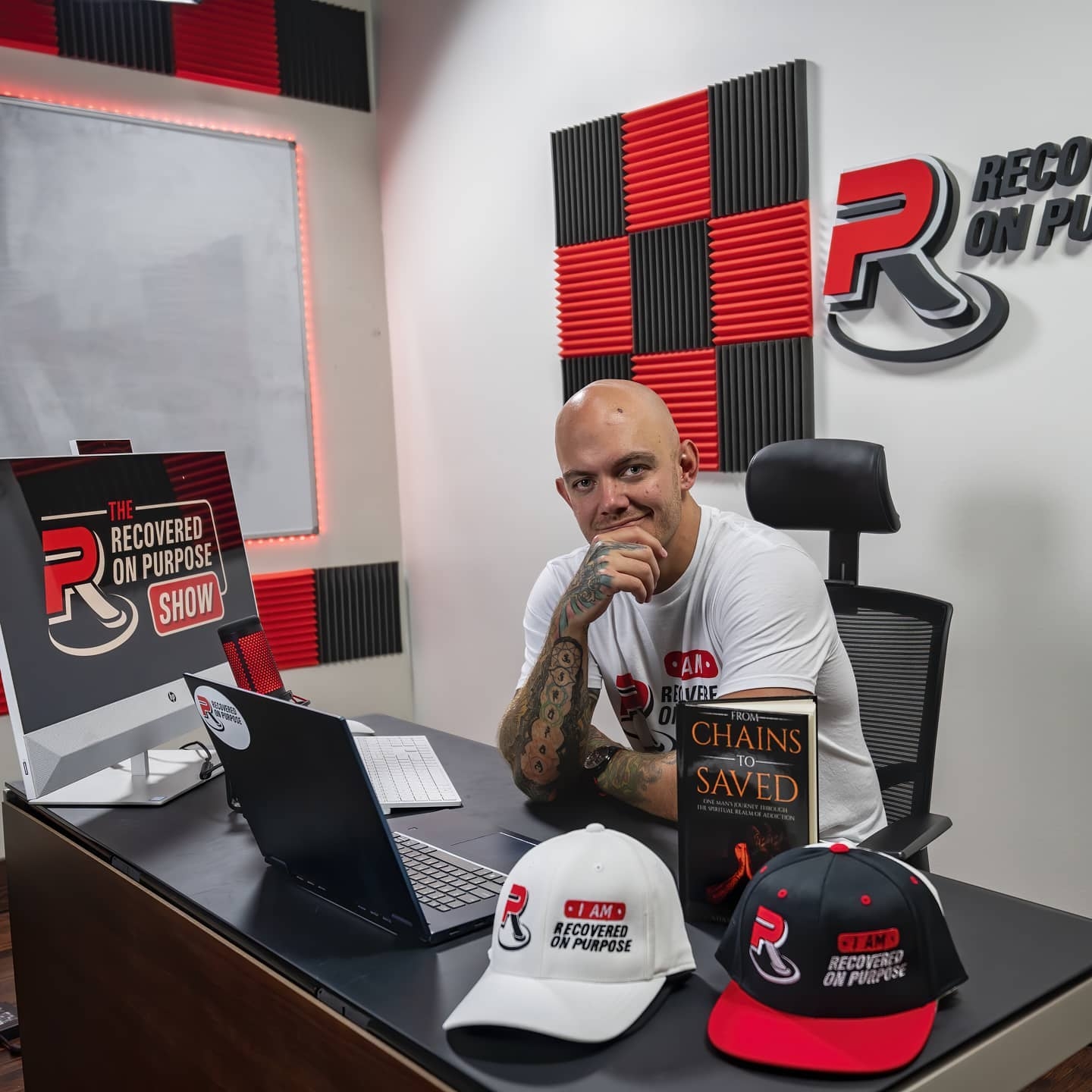
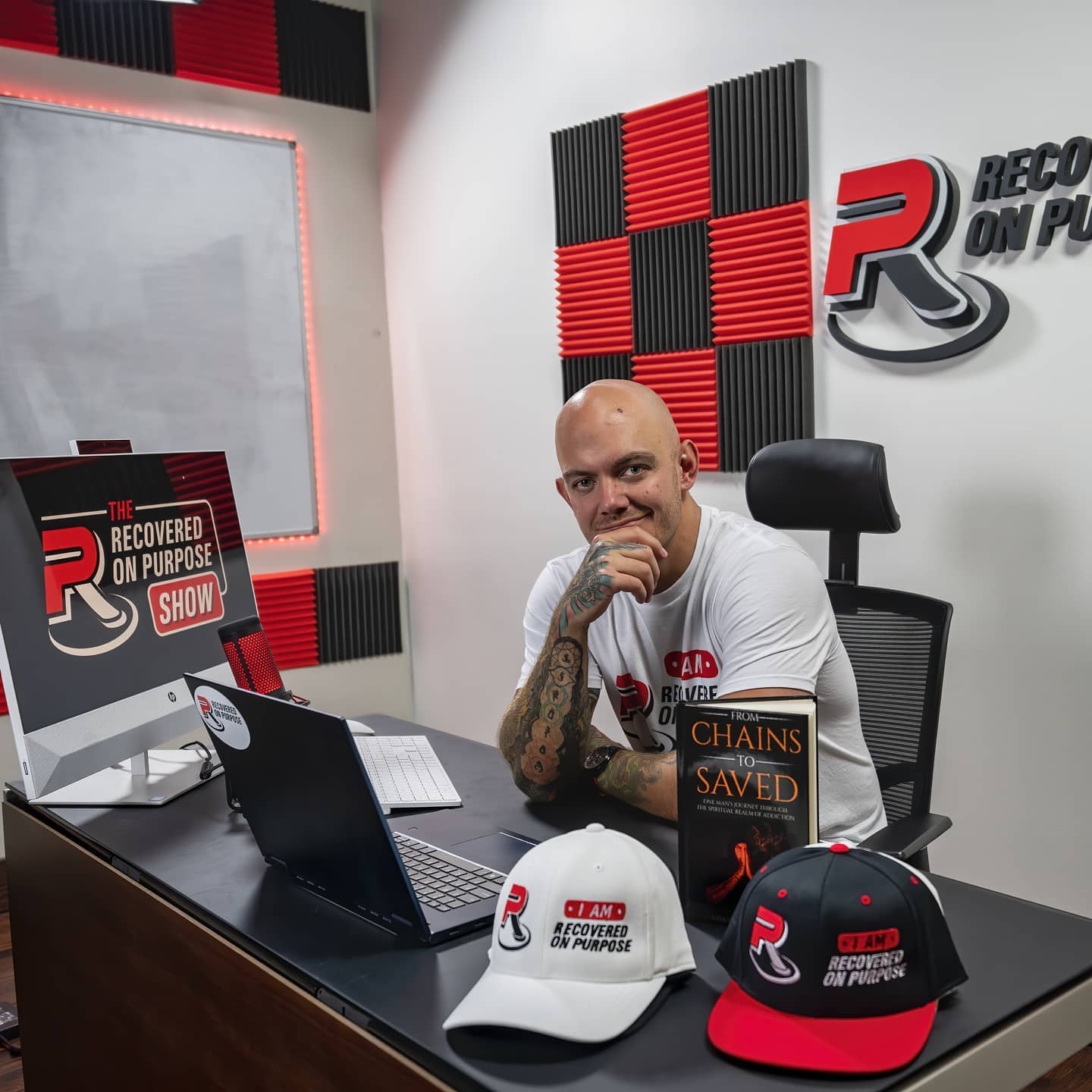
Executive Director: Recovered On Purpose | I Help Addicts and Treatment Centers Share Their Message
Adam Vibe Gunton founded Recovered On Purpose with the goal of combating the epidemic that is drug and alcohol addiction. Through Recovered On Purpose, Adam has built a platform that helps recovered addicts tell their story and inspire future generations to a life of purpose. He knows firsthand how addiction can be a slippery slope that can be almost impossible to dig yourself out from alone. By helping people seeking to regain control of their futures, people who have come to Adam for his insights and wisdom have gained much more than their freedom from addiction.
A leader by example, today Adam is two years into his recovery and has overcome homelessness and drug addiction, built a 7-figure business with expertise in B2C and B2B marketing, is a best-selling author and speaks at events to share his journey and inspire others. Adam lives by the affirmation, “I am the example of what is possible for an addict when they recover.” Adam continues to look for and execute opportunities to progress to the next level in life while reaching back and pulling people out of the darkness he once lived in.
Connect with Adam to learn more about his work or bookings for speaking engagements today!
📕 Book: From Chains to Saved: amzn.com/B07ZY5XW15
ℹ️ Website: RecoveredOnPurpose.com | Social: Facebook.com/pg/RecoveredOnPurpose
📺 Youtube/Video Podcast @Recovered On Purpose

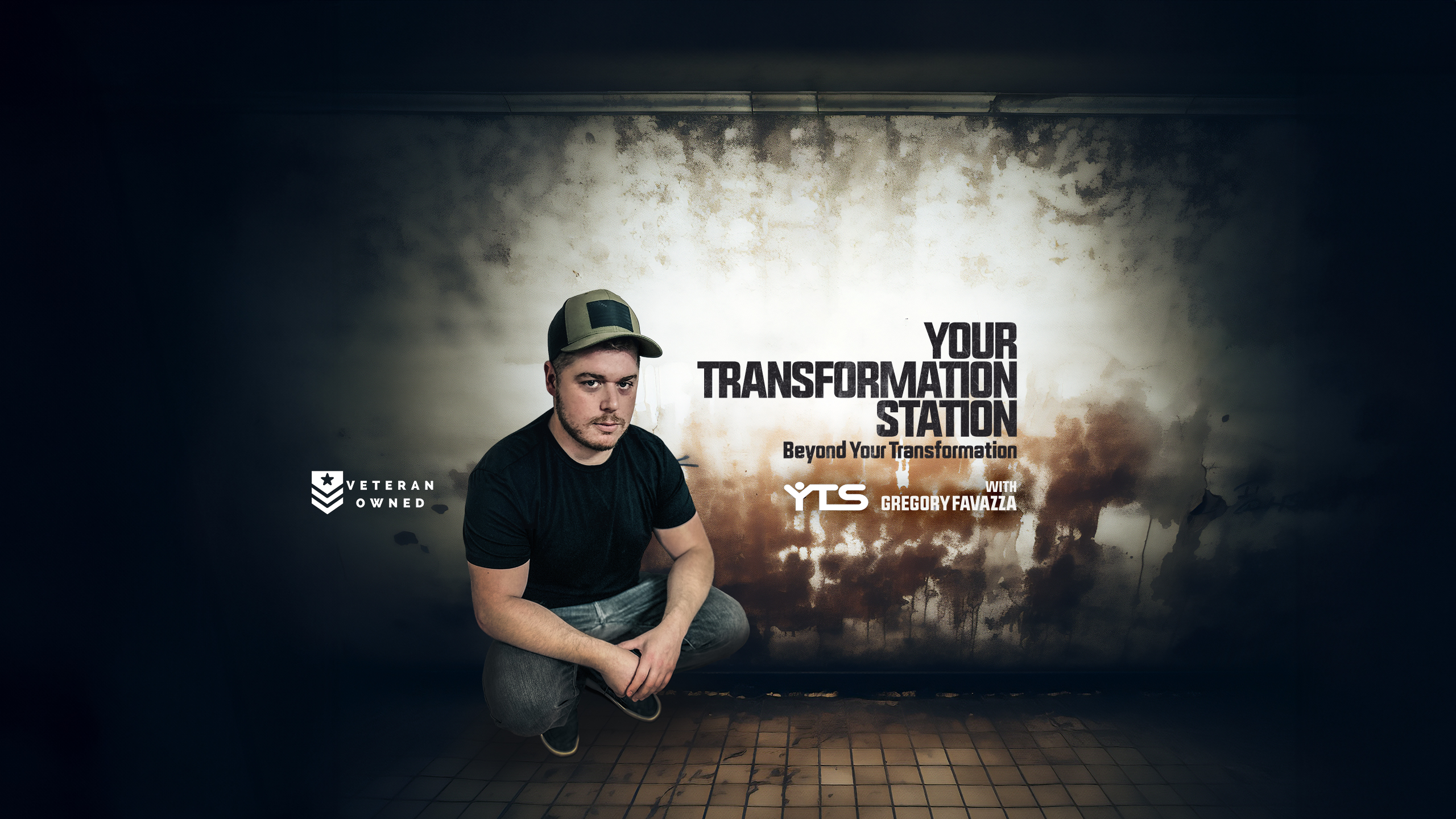
Gregory Favazza: Veteran, Host, Leadership Expert
Gregory Favazza is the host of Your Transformation Station, a podcast focused on clarity, discipline, and the psychological mechanics behind real change.
He holds a Master’s degree in Industrial Organizational Psychology and a Bachelor’s degree in Organizational Leadership. His academic training is paired with lived experience as a military veteran who has operated inside high pressure systems where performance, morale, and accountability are not theoretical concepts. They are survival skills.
Gregory approaches transformation clinically rather than motivationally. His conversations cut through surface level advice and expose the systems beneath behavior. Power dynamics. Incentives. Identity. Emotional regulation. Accountability. He challenges guests and listeners to stop reacting, start reading situations accurately, and lead themselves with precision.
His style is direct, controlled, and intentionally uncomfortable for anyone addicted to excuses or performance based confidence. Your Transformation Station attracts leaders, creators, and thinkers who value depth over hype and self control over noise. People who understand that change is not inspirational. It is operational. #podcasts #yourtransformationstation #leadership