
Long-term benefits of holding onto properties for rental income, including tax strategies like cost segregation and the importance of choosing the right business structure for asset protection.
















































Mike Kaeding and Favazza navigate the long-term benefits of holding onto properties for rental income, including tax strategies like cost segregation and the importance of choosing the right business structure for asset protection.
Transcripts: https://www.buzzsprout.com/2242998/14379578
EPISODE LINKS:
Mike's Linkedin: https://www.linkedin.com/in/mikekaeding/
Mike's X: https://twitter.com/mikekaeding
Mike's Instagram: https://www.instagram.com/mikekaeding/
Website: https://www.norhart.com/history/norhart/
Best Saint Louis Podcast of 2024: https://podcasts.feedspot.com/st_louis_podcasts/
OUTLINE:
The episode's timestamps are shown here. You should be able to jump to that time by clicking the timestamp on certain podcast players.
(00:00) - Real Estate and Housing Affordability
(11:01) - Flipping Houses vs. Renting Out
(21:31) - Investing Strategies
(29:57) - Mindset and Success
CASTMAGIC
Disclaimer: This post contains affiliate links. If you make a purchase, I may receive a commission at no extra cost to you.
Support the show
PODCAST INFO:
Podcast website: https://ytspod.com
Apple Podcasts: https://ytspod.com/apple
Spotify: https://ytspod.com/spotify
RSS: https://ytspod.com/rss
YouTube: https://ytspod.com/youtube
SUPPORT & CONNECT:
- Check out the sponsors below, it's the best way to support this podcast
- Outgrow: https://www.ytspod.com/outgrow
- Quillbot Flow: https://ytspod.com/quilbot
- LearnWorlds: https://ytspod.com/learnworlds
- Facebook: https://ytspod.com/facebook
- Instagram: https://ytspod.com/instagram
- TikTok: https://ytspod.com/tiktok
- Twitter: https://ytspod.com/x
Favazza:
If you wouldn't, I'm sucked into that message right there. So that doesn't really happen very often.
Announcer:
You're listening to a podcast that encourages you to embrace your vulnerabilities and authentic self. This is your transformation station and this is your host, greg Favazza.
Favazza:
Hey, Mike.
Mike Kaeding:
How are you?
Favazza:
I'm doing well Trying to see what's going on with this. Did I mess something up? Are you going to be doing a video with me?
Mike Kaeding:
I've got my video on, is it not? Oh hey, sorry, I forgot to close the button. There you go. How about that?
Favazza:
Yes, oh, wow. Look at you, holy cow. I love this little setup. Oh my gosh.
Mike Kaeding:
Yeah, we do so many of these and we're on TV and so forth. We decided to finally build a set.
Favazza:
That's fantastic. Well, I mean, I got like this background. It's not even like I can't even cover my I'm in my bedroom or whatever. So I had this little thing right here and I got my dog sleeping and stuff. So it's like all right, I want to make sure she's good, but my hand.
Mike Kaeding:
Actually, with the blurring effect it actually looks kind of cool. It looks very intentional.
Favazza:
Yes, that's the whole point. I guess you know.
Mike Kaeding:
I like it, heck yeah.
Favazza:
Well, you have a interesting background, but I really want to just understand, like, why, like, why construction? Like why did you go down that path towards real estate?
Mike Kaeding:
Well, it was originally a family business, so partly it's a life of circumstances. But the other aspect is I've always wanted to make a meaningful, positive impact in the world and I realized that we could do that by working to solve housing affordability. And so it's sort of where I grew up and what I knew, mixed with sort of my dream for the future.
Favazza:
Okay, Now with inflation today like what are your thoughts with how that's affecting affordability?
Mike Kaeding:
I, yeah. So rent increases is really really. Inflation has gone substantially up and that's not good. That's not affordable at all. What's interesting is what's actually underneath the hood. What's going on right now. As interest rates rise, or as they have risen, that's slowing down development substantially by as much as 70 to 80%. So new apartment building starts are substantially slower. So if you look at the next two years, there's going to be much less inventory out there. So even though we just had a big negative shock to prices, it's only going to get worse, I think, in the next few years.
Favazza:
Interesting. Now are we catching up with COVID, with how we had this whole issue with? I mean getting the wood or whatever. The supply chain, say again the supply chain. Yes, thank you.
Mike Kaeding:
Man, that was a huge shock to the system. I remember resin, like for bathtubs and window frames, like that was nine months out. We were just getting stopped every turn of the turn, every time we turned, but that has really gone away and what we saw really is this like supply chain got really bad, then inflation prices went way up and the next thing was that interest rates rose and so, like this wave is hitting the economy, it's having different effects at different times. It's really interesting.
Favazza:
So with just understanding, like with real estate and how that's actually playing a huge impact on families today, like what are some like thoughts for people that are going towards buying a home? Like what would you suggest to them? Like, and do you have any resources, information with first time homeowner?
Mike Kaeding:
Yeah, so a couple of things. One of the big questions first is whether or not to buy or to rent. Correct, I actually did a video of this recently. It really depends on the market. So certain markets is better to buy, certain markets is better to rent. In today's market, right now, it's better to rent, and basically what you can do is save some money on your total housing costs by renting and then investing that difference. So that's one tip. Another thing to know is, even when you are renting, there are ways to save money on your rent. So, for example, if you target large new buildings, they have leasing staff that is very under a lot of pressure to lease up the building quickly, and so you can actually negotiate with those leasing staff discounts on your rent, and you can oftentimes get two to three months free off of that rent, and so you can live in some of the best properties while having a lower cost.
Favazza:
Interesting Like. What would they have to say? Like is there like a little template that they can like, tailor it to their name or whatever Like. Can you be a little more specific than that?
Mike Kaeding:
Yeah, yeah, play hard. The big thing is play hard to get. Yeah, yeah, if they feel like they're going to lose you, they're going to be more apt to give you a discount. But even then, before you totally walk away, you would go back to the leasing staff and say, hey, I'm willing to rent here If you give me a, say, two or a three month free rent. That gives them something concrete that they can either decide to accept you or not accept you. But you always want to offer them an offer that's a little bit more of a discount than you would have gotten from them. And then they just want to make sure that you're not going to make a profit. And then they just want to say what do you want to know? What do you want to know?
Favazza:
I'm not going to say that it's the price you know a lot of times they'll say yes, because they look at and say this unit is going to be vacant right now, or I can fill it with you with a little extra promotion. I'm better to fill it with you, no-transcript.
Mike Kaeding:
Exactly. Another thing is when you are at least renewal, a lot of times people will get a letter in the mail and you are just praying that they didn't increase it more than like 3%. I've seen release from the letters at like 15%, 20% increases, and so you often think that the price that they stay in the letter is just the only price you're going to get. The key thing to remember is that's negotiable, right, so you can actually go in and go back to that landlord and ask for a lower rate than what they offered. And the key again is they need to believe that you're serious about moving out. See, landlords think that they got you once you moved in, because it's hard to move again. Right.
Favazza:
Yes.
Mike Kaeding:
So that's why they increase your rent later Interesting.
Favazza:
So everything is negotiable, Not just. I mean, I'm trying to understand this from other places because I know there's like a thought process. I'm like, oh, this is the final amount. I either pay for this service or I don't get it.
Mike Kaeding:
Yeah, everything's negotiable. Another good example is your internet bill. That's a really great one. If you go on and tell them you're quitting, oftentimes you're leaving them. Oftentimes they will come back and say, hey, can I keep you if I give you a 50% discount? There's a lot of online services in the same way. If you cancel the subscription during this cancellation process, they'll offer you a substantial discount. So it's a little trick going and cancel all of your subscriptions that you've got and then see if there is that discount. If there's not, put it back on. Now. Things like Netflix and those sorts of services often don't have those kind of reductions. A lot of other services that do.
Favazza:
Yeah, I'm aware with the experience they have that bill negotiator tool. You can activate that and apply it. I'm not sure of anybody that's utilizing that service, but if they are or have not, I would definitely look into it and apply that to see what you can get with the services.
Mike Kaeding:
Yeah, there are some really cool tools out there. What, in particular? I'm? Remembering that if you sign up for their service, they will actually look at all of your spending and actually try to find areas that they can actually reduce it. So automatically reduce some of those bills for you or just help you identify spots that you can cancel spending. A lot of times we forget that we signed up for XYZ service and they're still billing us three months later, and so just be mindful of that. Stuff can actually meaningfully help you reduce some of your costs.
Favazza:
Interesting. I like that. I like to try to kick off the show with some sort of resources that just shows that we're applying actionable advice for everybody, regardless of their economic status. Just information to start applying here. Now let's transition to understanding investments and real estate investing. What are your thoughts with that?
Mike Kaeding:
Real estate is one of the ways actually it's the most common way people become wealthy. It's incredibly powerful for people who want to make investments. If there's a few different avenues we can go down, but one example is if you're thinking about smaller investors, it's simply go buy a house and then work to rent it out. There's some simple math you can do to kind of calculate out if that makes sense. Be mindful not all houses are priced right to rent properly. If you can find like a small duplex or a triplex, oftentimes they're not all that expensive and the cash for there is pretty good. And the reason that is is because the big players, they're not interested in the small two or three or four unit buildings. In fact, for us we'll often sell those smaller projects off to small investors because we don't want to worry and spend that time on those projects. Then what you do is, as you're building equity in those small buildings, you start to pour that over into the next project, into the next project, into the next project. So yeah, that's one powerful way. There are simple ways if you don't want to get involved, because there's a lot of work involved in that, but that's the most powerful way to increase your wealth.
Favazza:
I like that. Now, if we were to compare like flipping versus just buying a house and then renting it out and then kind of moving on to getting another one, like what is there like a benefit for flipping versus renting out? Because I can see a large amount of money that you're obtaining when you flip a house, but the residual income that could be looked at on a different way.
Mike Kaeding:
Yeah, you know each market in each time period are different, and so really it's just about running the numbers. So if you are flipping a house, you can oftentimes get a good step up in income. You maybe get 10, 20, 30% immediately Just fantastic. Now there's work involved, right, you got to find properties at a low cost point. You got to put the energy into renovating those units, finding the subs, monitoring the subs that's all kind of pain. But if you can do that well, there's good profit margin there. Now one of the downsides though in flipping is all of that income is typically ordinary income, so you're paying taxes on it. There's no depreciation or anything like that. On the flip side the buy and hold strategy you can actually set up your taxes in a way that you essentially don't pay taxes, and the reason that is is because you are constantly buying new properties, and every time you buy a new property you can use strategies like cost segregation study. If you do a cost segregation study, that lets you accelerate the depreciation. So the first few years you have a higher degree of depreciation. Later years you have less depreciation, but then you can use that depreciation to offset the income that you're actually earning on that property and if you do that enough and it's scale and keep growing, you can actually not pay taxes during your years of growth.
Favazza:
Oh my God. Okay, now you just opened up a little wormhole here for a second. Are you familiar Like how familiar are you with LLCs and actually going deep into creating a strategy to protect yourself?
Mike Kaeding:
I've got about two dozen LLCs created myself. We're to the point now that we can create a new LLC, get an EIN at everything in 10 minutes.
Favazza:
Nice. So, because I'm familiar, I did a couple of real estate events with Robert Kiyosaki. I don't know if you've, I'm sure you must have heard.
Mike Kaeding:
Yeah, yes.
Favazza:
And it was a seminar and I wanted to take off with that, but then it was with an ex-girlfriend or whatever. Yeah, that was just. It was a learning experience for me and definitely a lot of great knowledge. But one thing that I remember that just sticks with me is creating this strategy within LLCs. Inside an LLC, like, essentially, you have one which is surrounded by a trust. Now in that LLC, there's four LLCs and now from there, you can put your self-directed IRA account, you can have your possessions in one and you can have your properties and so on and so forth.
Mike Kaeding:
Yeah, there are some really clever strategies. We don't go quite to that level, but yeah, one of the examples is to use a trust, because if you're personally guaranteeing loans which you typically want to avoid doing, but as a small time group, you can't avoid that they can come after and take all of your assets. But if, instead, you move your assets into a trust, guess what? You don't own those assets anymore. Now there's something called piercing the corporate veil where if you go to court, a judge can say that is just a fake, phony structure that you set up and therefore predators. You can go after those assets. But if you do everything right, if you set up things properly, if you take proper adherence to sort of like the meetings and pretty minutes and having real discussions and doing everything like a company in LLCs would do, then you're in a well poised to provide protection to that. But yeah, we'll use LLCs, we use S-Corps, c-corps, we'll use that whole structure in quite elaborate ways to kind of balance the different factors that we're concerned about.
Favazza:
For our listeners if you can just give them a little rundown of S-Corps, C-Corps, for people that aren't familiar with this terminology.
Mike Kaeding:
Yeah. So a C Corp is a company that's taxed both of the company level and the individual level, which is not good for you, the investor, because company gets taxed to maybe 20 or 30%. You get taxed again at 30% instead of doubling up on those taxes, and S Corp allows you to flow the income from that business right to your personal tax return, so then you're only taxed once. So C Corp and S Corp, those are really taxed terms Really for most people. So an LLC is a legal structure. That's the most common way to set up a business. There's the LLC structure, which is the most modern structure. Older structures include a corporation and then a partnership, but LLC sort of gives you the best of both worlds. We can actually set it up given how you want to run that business. Now, when you do set up an LLC, there's like three different types of LLCs there's member managed, there is manager managed and then there is board managed, and so you can set it up like we have a board of directors that then elect or set up the chief executive officer, the CEO and all the executives of the organization who then run the company. Or you can just say, hey, I'm a small company, small enterprise. It's just me I'm the only one here, I'm a member managed. I own 100% of it and I manage this business. It allows for the LLC to have much less complexity. We actually have LLCs that we've created where the entire operating agreement is just one page, and so we'll do that when it makes sense, and then we'll have much more elaborate ones with 50 or 100 pages of legal documents, because they just need that for the structure that we have in place.
Favazza:
That's interesting. Now, with the companies that they're using this online bidding system, I freak what it's called like iCorpor iSomething. It's almost like Carvana. They buy properties and sell them immediately, just moving them around. Are you familiar with that?
Mike Kaeding:
No, but it sounds like an arbitrage move where they buy one place and then immediately sell somewhere else.
Favazza:
Yes, I had to look, I saw it and I was talking about it in my previous episode and I just can't remember off the top of my head here. And no, it's interesting to understand, but yeah, it's in the brain now. Yeah, that's super cool.
Mike Kaeding:
Anytime you can find true arbitrage in the market, you can earn outsized returns for minimal risk. The challenge is and we often learn this in school is that there's no free launcher in finance classes. Those arbitrage opportunities tend to disappear pretty quickly once people realize that they exist. Another one of the more interesting arbitrage opportunities that I have seen is something that most investors don't really get access to, and that is there are companies out there that have laid like fiber-optim cable to shave milliseconds off of their trades in the stock market and they will actually buy order flow. This is how companies like Robinhood actually make money, because they don't charge you, the investor, any money, but they will sell their order flow to these companies this dark black market kind of thing. They will actually front run your trade. They will go buy it on the market and then relist it on that same market for a little higher price, but still below the next best offer. And then you come in and you buy it for that higher price. So they make fractions of cents on ever-stone trade. They're doing this at scale, making literally billions of dollars.
Favazza:
Oh my gosh. Okay, so that's essentially with this quick trip as far as it's the largest convenience store, slash gas station, but it's not. Majority is gas and they have more fuel than actual like order refineries and they do that same kind of approach. So that's just really fascinating to hear that from another perspective.
Mike Kaeding:
Yeah, you know it's kind of crazy because, like that payment for order flow I almost feel should be illegal. Like why is there some people in the market getting filthy rich off of little trades and you have no idea? There's no disclosure of the hidden fees that you're paying through that it's crazy.
Favazza:
So then now let's transition to like looking at an organization and understanding the transparency within the organizations. Now would you like an organization to be upfront with that kind of stuff, or do you think that a little aninomy is kind of a good thing, because it could cause more issues than there really are? What do you think?
Mike Kaeding:
A mentor of mine once said there's margin in the mystery, and so if a company is hiding something, that's usually where they're making a lot of money on you. So it's not. I don't think it's good for investors, I don't think it's good for consumers. Our company, we've really taken the approach of being very transparent, very open. I just think it's a better way to do business and, frankly, I want to sleep well at night. So that's the approach that we take. But yeah, it's like permanent life insurance. Yes, they make all the disclosures too. Yes, you can read through all the documents, but unless you have a finance degree, it's really hard to know where they're cheating you and, underneath the surface, they're actually paying brokers huge sums of money to try to sell these life insurance products to you. Now, with that said, some permanent life insurance makes sense in some situations, whether for the vast majority of us, it's way oversold, but they're making so much money off of that product and it's just not obvious in the way that they structure the deal.
Favazza:
And then when you get like this huge copy of all, like where are your money's going and these little fees, and then it's just the way it's calculated doesn't make sense, and that's where you feel like you need to have that degree, like maybe I'm just stupid, I just don't know what it says.
Mike Kaeding:
Yeah, I have the perspective of like, just diving into things. So when one of our financial groups proposed to me a permanent life insurance, I just cleared out three days under my calendar and I rebuilt an entire financial model that allowed me to understand the actual mechanics and how it was actually functioning underneath the hood. And then I went back to him and said dude, do you realize how much you are actually siphoning off to your bank account as a result of this? And they were like almost taken back. Well, partly because I was able to figure it all out, but partly because, like, they were embarrassed by how much fees are really getting taken out of that system.
Favazza:
So for individuals that would like to start investing, that would like to understand more about it, like I feel like there's some stigma where it could be good but it can also be bad.
Mike Kaeding:
Yeah, I can tell you the best way to invest if you're getting started. Took me many years of college and many years of experience to see this. So there's so much in the marketplace. The reality is, unless you are doing investing full time, you're not gonna beat those people who are doing investing full time. So the best thing to recognize is that you're not gonna be smarter than them. So don't try to beat them right. Don't try to pick stocks. Instead, invest in an ETF. What's that? It's exchange traded fund. It's basically a basket, a collection of a bunch of the market. Some of my favorites are just like S&P ETFs, or even just all American stocks and then even all world stocks. I invest in two ETFs for that reason. That gives you diversification. By diversifying, you're actually getting a higher rate of return for lower risk. I can explain that, but just trust me, it's better for you. Then the next thing you want to do is look at the expense ratios of the ETFs. A lot of mutual funds will charge you 1%, maybe 2%, every single year, whether or not your stocks go up or they go down. It's extremely hard to combat that, even if they got some really clever strategy. In fact, one of my favorite books was called the Rain of Walk Down Wall Street. In that book they did a big study and they said okay, of the fund managers who are trying to beat the market, are they better or worse? Than the average market Turns out, they're better, so give them credit, but when you take into account the fees, they're actually worse. The best investment you can put your money into is an ETF with a low expense ratio. You do that, you'll do, incredibly well. The last thing to think about, though as you get older, you need to be more mindful about the risk you take on. An ETF is going to have the full risk of the full market. Some years it might grow by 50%, other years it might go down by 50%. As you get older, you can't take on as big of a risk the way that you do it is put less of your money into the ETF and more of your money into safer things like government bonds.
Favazza:
Thank you, that was my follow up. I was like, is he going to say that for me or no? But no, that's beautiful. So what diversification? Government bonds? What about cryptocurrency? What's your thoughts on that?
Mike Kaeding:
Boy, I'm going to be speaking out of both sides of my mouth here. I've actually made millions on Bitcoin. I invested in Bitcoin way before the world knew about Bitcoin.
Favazza:
Son of a bitch wow.
Mike Kaeding:
Yeah, so I do have sort of like side funds that I will throw into things that I think are interesting in the market, just because I think they're cool, and cryptocurrency was one of them. In fact, like Ethereum, I invested in that the day that it started. So yeah, but what I would say, in today's market and cryptocurrency, there's just so much risk, right, and the world now knows about cryptocurrency, so the likelihood of it going up by 100X probably not going to happen again. Will it double? Sure, will it have? Sure, it's going to do both of those things. So if you're willing to take on the risk, if you kind of like the gamble and want to put some money into it, go for it, but know that you've got to assume that you're going to lose all of that money, and I know many people have lost all of their money in crypto.
Favazza:
So if we were to wait out on one side, like I got on my left hand, I got crypto. On my right I have just that little Easter basket full of different little stocks. Like you're telling me to go for the stocks over the crypto.
Mike Kaeding:
Yeah, put your gambling money into crypto and put your investing retirement money into stocks. One important thing to know is crypto is a lot like commodities in that commodities don't actually generate income. Commodities at best. In the very, very long term will follow inflation. A better place to put your money long term is in companies that are generating income that outpaces general inflation. And if you look at Warren Buffett, that's what he's done. He's simply invested into companies that their future cash flows are worth more than the current cost of the business. He's done incredibly well with that.
Favazza:
So what would you recommend is, if we were to try to recognize like another Bitcoin instance, like what would we look for?
Mike Kaeding:
Mm, hmm, uh, huh. So when it comes to me investing in like crazy side things, I just look for things that I think are cool on. There's like no more, no more than that. But again, this is my gambling money about putting like I'm not putting all my chips into that the when we are looking at things from a business perspective because I run a $200 million company when we look at things from a business perspective, we're really evaluating something that's called net present value. You look at all the future cash flows of an opportunity. Then, for each cash flow, you discounted by a discount rate or sort of like an interest rate, and then you add them all up and you figure out is the current value of all those future cash flows worth more than the amount of money I'm putting into that investment? And when you have that as a model, as a framework to study investments, it's a very clear way of separating the investments that are going to make you good money versus those that may have just a lot of hype behind them, and so understanding that present value is going to be a incredibly strong tool for identifying good investments.
Favazza:
Well, then that's beautiful If I were to leave you with the floor. What would you like to share with our audience?
Mike Kaeding:
You know the one thing? I got a chance to brush shoulders with billionaires on a regular basis Just this morning I was talking to Drew Scott, who's property brothers HETV. Yeah, just incredible people. There is something that separates those that reach that kind of level or billionaire status and the everyday person, and it's something that's not all that complicated. It really just comes down to mindset. See, people who operate at small level are just thinking small. They spend time with people around them that are thinking small, but if, instead, you're willing to let yourself dream, you're willing to let yourself fail, you're willing to tell that voice in the back of your head that says you're not good enough to tell them to be quiet and move past that, despite how you might feel, that's where these people that were everyday people turn into extraordinary people that changed the world.
Favazza:
Wow, that was spot on. That was beautiful right there. If you wouldn't, I'm sucked into that message right there. So that doesn't really happen very often. So if you were to leave our audience with anything else as far as links to your website, how can they get in touch with you if they want to learn more?
Mike Kaeding:
Yeah, you can visit our website, norhartcom. That's N-O-R-H-A-R-Tcom. Couple of interesting things. The first is our show called Zero to Unicorn. It's about the journey of small enterprise growing to billion-dollar scale. One of my favorite guests was Michael Usland, who's the executive producer and the originator of Batman. Fuck off Freezy, what? Yeah, the guests are amazing. Oh my gosh, he well. What's amazing about his story is he was able, as a fairly just out of college was able to get a few investors together to eke out enough money to buy the movie rights to Batman. He was so excited about it and he went to all the major studios. He connected with every major investor and everyone told him no, there's no way. There's no way that anyone wants to see a dark and serious Batman movie. And for 10 years, investors breathing down his neck and bleeding with people and doors being shut in his face. 10 years, people told him no. For 10 years he fought through that, fought through his own inadequacies, his own fears of whether he could do this or not. And after 10 years he made the first set of Batman movies, which now he's started a whole genre of superhero movies and, like, when I last talked to him, he was on the set of the Joker movie just in crazy cool stuff, which, by the way, is a musical crazy side story. So anyway, that's. One fun thing is our show and the second is Norharn Invest, where you can actually invest in our company. We didn't talk much about that today, but we're offering investors a 10% rate of return for what we work to try to provide a fairly safe investment. So if you're interested in great rates of return, go ahead and check that out as well.
Favazza:
That's beautiful. I will link all this in the show notes.
Mike Kaeding:
Awesome.
Favazza:
Okay, what did you think? What did?
Mike Kaeding:
That was awesome. I have, honestly, I've never experienced a podcaster that just went right into it. I mean I'm like, are we still chatting or are we like into the show? Just kind of cool. It's kind of a really clever approach.
Favazza:
Yeah, I like to try to just keep it authentic and just embrace the vulnerabilities and try not to look too much into you and just kind of fall back on preparation from my experiences and just try to be just like an audience member, just learning along. So that's.
Mike Kaeding:
But the other thing I think you did incredibly well, which I think serves your audience incredibly well. Most people ask about a Tomair story. Tell me the history. Yeah, that's interesting, yeah, but you got right into like what is things that the listener can actually take away with, and so you got stuff out of me that literally no other podcaster ever does. So congrats.
Favazza:
Thank you so much. I feel honored.

🏡 Solving the US housing affordability crisis with @Norhart, a $200M construction company. Want to join our mission? Make an impact, and a 10% annual return with @Norhart Invest. Click below to learn more!
🚀 Redefining Real Estate with Heart and Innovation at @Norhart
As the CEO of Norhart, a pioneering $200M construction company, my path in real estate is deeply personal and driven by a mission to make a significant impact. My journey began in the heart of a family business, founded by my parents. But life took an unexpected turn when my father passed away shortly after I joined. Suddenly, I found myself at the helm, not by choice but by necessity, with the immense responsibility of leading a business in an industry I was still learning about.
🏗️ From Adversity to Innovation
This transition wasn't easy. We faced significant challenges, including a moment when the city briefly shut us down, which shattered my world. Yet, it was in these moments of struggle that Norhart's true potential was born.
Without preconceived notions of "how things are done" in the construction industry, we started solving problems naively but effectively. This approach became our magic – it's what sets us apart.
🏡 Beyond Building Homes – Building Futures and Tackling the Housing Crisis
Today, Norhart has grown from 80 to over 1,000 units, creating $230M in assets. This growth is a testament to our dedication to change, efficiency, and sustainability in construction. We're not just constructing buildings; we're… Read More

Gregory Favazza: Veteran, Host, Leadership Expert
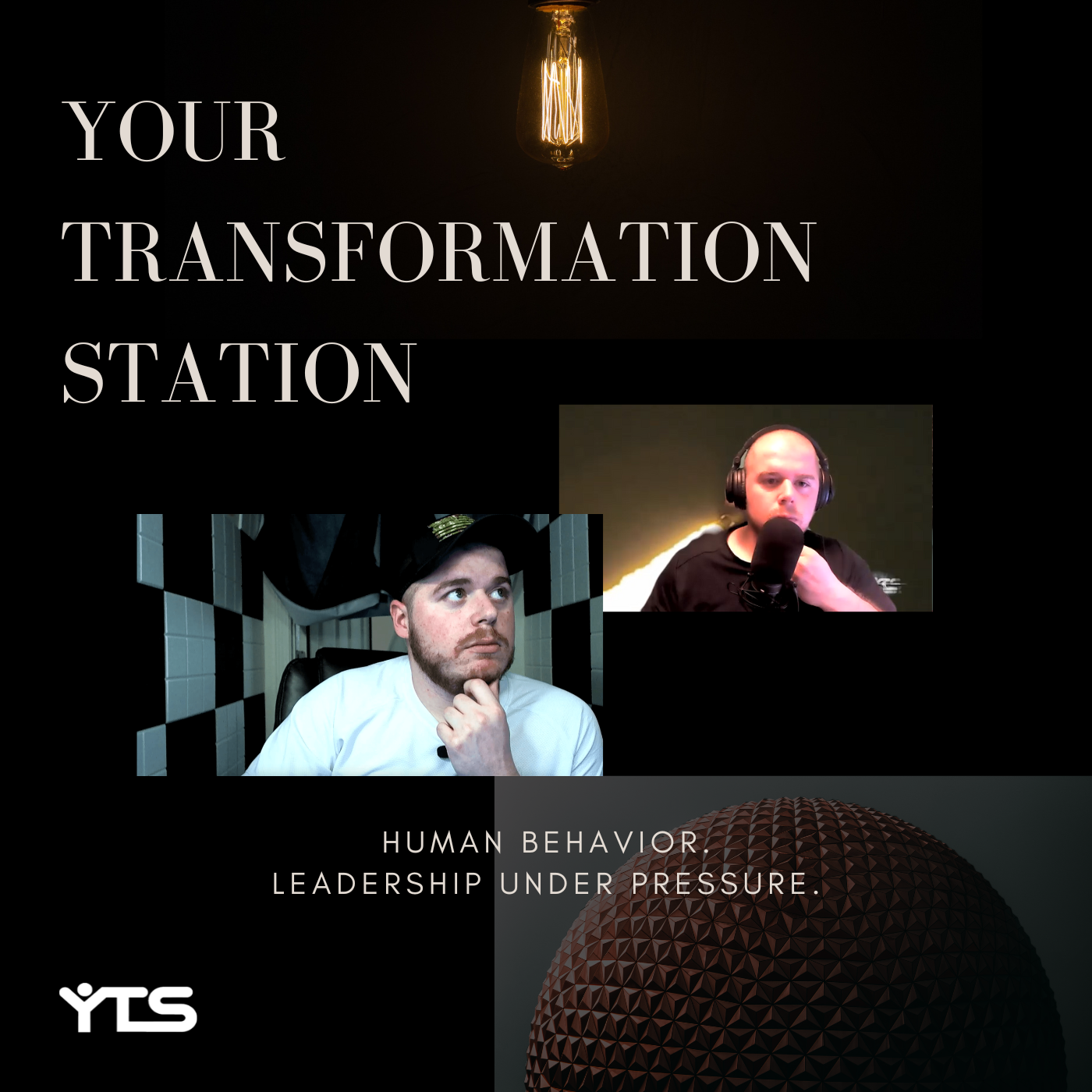
Gregory Favazza is the host of Your Transformation Station, a podcast focused on clarity, discipline, and the psychological mechanics behind real change.
He holds a Master’s degree in Industrial Organizational Psychology and a Bachelor’s degree in Organizational Leadership. His academic training is paired with lived experience as a military veteran who has operated inside high pressure systems where performance, morale, and accountability are not theoretical concepts. They are survival skills.
Gregory approaches transformation clinically rather than motivationally. His conversations cut through surface level advice and expose the systems beneath behavior. Power dynamics. Incentives. Identity. Emotional regulation. Accountability. He challenges guests and listeners to stop reacting, start reading situations accurately, and lead themselves with precision.
His style is direct, controlled, and intentionally uncomfortable for anyone addicted to excuses or performance based confidence. Your Transformation Station attracts leaders, creators, and thinkers who value depth over hype and self control over noise. People who understand that change is not inspirational. It is operational. #podcasts #yourtransformationstation #leadership