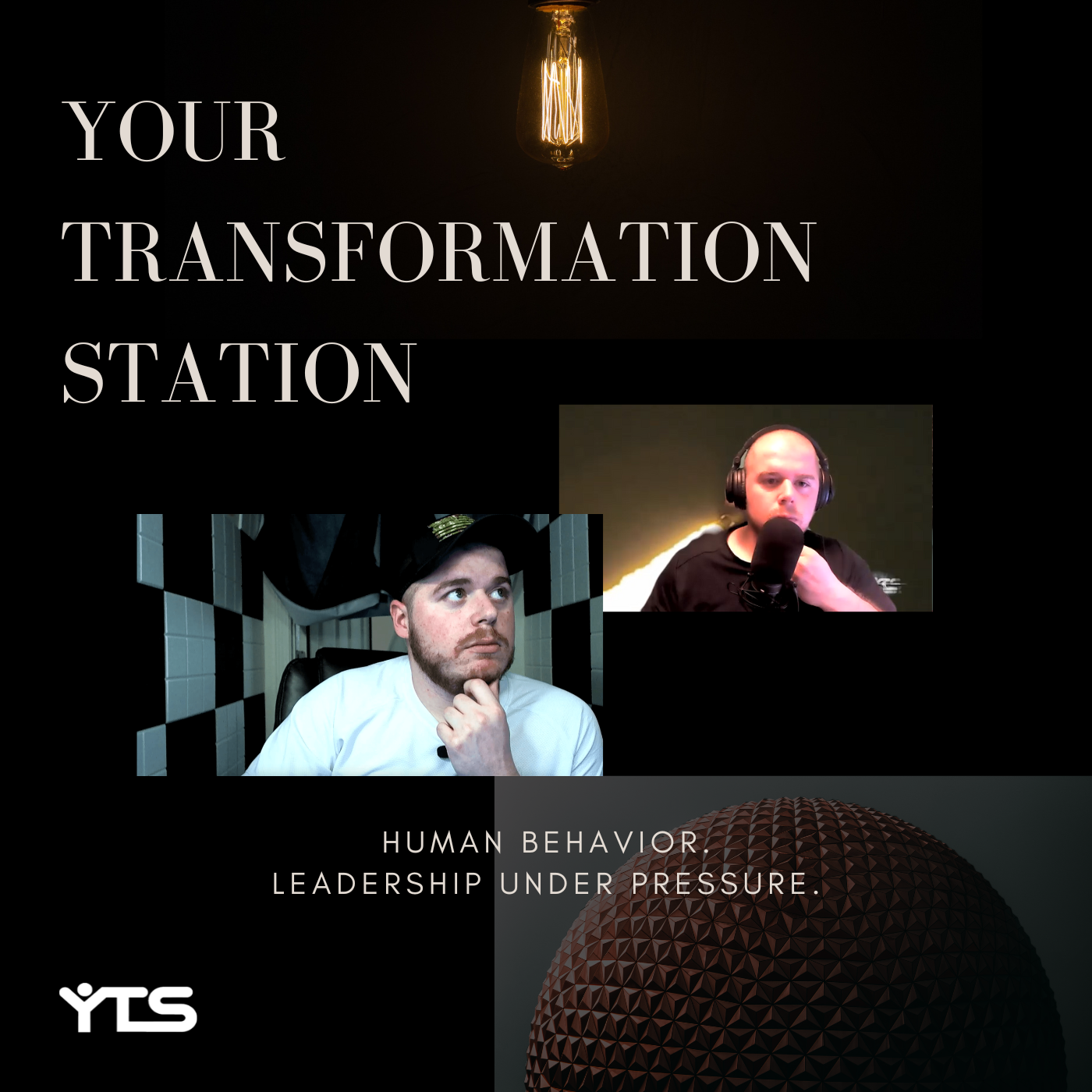


















































"Ryan Warriner" is an author, coach and communication expert. I take the time to ask EVERY question burning behind my mic. Ryan is a good sport and we really broke through all of the standard questions to the transformational side of our interaction. I posed many imagined and real scenarios to see his expertise in action.
PODCAST INFO:
Podcast website: https://ytspod.com
Apple Podcasts: https://ytspod.com/apple
Spotify: https://ytspod.com/spotify
RSS: https://ytspod.com/rss
YouTube: https://ytspod.com/youtube
SUPPORT & CONNECT:
- Check out the sponsors below, it's the best way to support this podcast
- Outgrow: https://www.ytspod.com/outgrow
- Quillbot Flow: https://ytspod.com/quilbot
- LearnWorlds: https://ytspod.com/learnworlds
- Facebook: https://ytspod.com/facebook
- Instagram: https://ytspod.com/instagram
- TikTok: https://ytspod.com/tiktok
- Twitter: https://ytspod.com/x
Yes, God, public speaking events. If it's more than one, one individual, like a group of people, I get nervous because I feel like just talking about it. It's making me uncomfortable. I'm feeling my mouth drying up as we speak, but I start to undervalue myself. I forget about everything. Like what we talked about earlier. Like, yes, that is that's, that's the way to do it. But in the, when you're under pressure, I started to doubt myself like Greg you,
Intro/Outro:how can you create a transformation and others, if there's no transformation in yourself, join your host, Greg as your voice on the hard truth. So leadership, your transformation station, connecting Clara, Clara to the cutting edge of leadership. As millennials, we can establish change not only ourselves, but through organizational change, bringing transparency that goes beyond the organization and reflects back into ourselves extract, extract, actionable advice and alternative perspectives that will take you outside of yourself.
Gregory Favazza:It looks like we're live here. All right. Hello. Let me get you on the right. I I, you in the left. Cool. All right, Ryan, Ryan, welcome to your transformation stage. No Ryan Warner. Welcome to your transformation station. How you doing today?
Ryan Warriner:I'm doing fantastic. I'm awaiting transformation. That's how I'm doing.
Gregory Favazza:Oh, beautiful store. Our listeners. They're definitely awaiting as well. First off. Is there an echo coming through? We don't want any echoes coming through
Ryan Warriner:on my end. Let
Gregory Favazza:me see. Maybe this might be just a little bit loud where it's picking up. Bup bup bup bup shit test, test, test. Oh yeah. I'm going to turn the, this little peaker down. Woo. All right. So what can you teach our audience now? Wait, before you jump into that, I would like to jump in and put my 2 cents on what we will be going into, or I should say how we will be going into it. I like real authentic. Intellectual conversations. And I like to know what makes you tick, what makes the expert tick, how you think that and why. And I'm going to challenge it, being a pessimistic asshole. And we're going to see if we can debunk my theories of truth and how we can teach our audience, how to be optimistic, how to be healthy when I'm trying to teach the audience, how to reason, how to rationalize and not be afraid of thinking on the other side of the fence, if that makes any sense.
Ryan Warriner:Yeah. I think I know where you're going with this. Yeah, for sure.
Gregory Favazza:Okay. Beautiful. And with that being said, you're not going to monologue. I will cut you down and be like, no, not up in here, not up in here.
Ryan Warriner:I went up in here. Yeah, sure. Sounds good. All right.
Gregory Favazza:So then jump right in. Tell us a little bit about yourself. Not too much where you're bored everybody, but give us an introduction. And what can you teach me today right now?
Ryan Warriner:Sure. Yeah. So I'm, uh, I have a couple of different roles. I feel on a daily daily basis. I'm a, I'm a professor. So I do research and I lecture, uh, in addition to that, I'm a consultant and a coach, a trainer for a number of organizations. And I'm also a published author. I write books and I write resources to help people to level up their communication, develop themselves more professionally and personally, and realize their fullest potential. And it sounds a bit corny, but there's a lot of people out there who can achieve so much more success than they're currently experiencing. And I really help them see that and then approach that in a way that makes sense.
Gregory Favazza:I like that. I mean, everybody seems to have that mentality first. I want to just comment. You said self published author. Thank you for not saying a bestselling self-published author. Everybody seems to go down that path and then we have to find out and get disappointed. And that's not what we're trying to go with that. But when you say help, people get to, when I'm taking away your help, people achieve that elevated mindset. But my question for you is how do you ground those that you're teaching? So they don't get too high up in the sky and over shoot where they're trying to end up and end up falling on their face.
Ryan Warriner:Yeah. So that's called that falls into the category of managing expectations. So we would, we kind of, um, depending on the circumstance and I always take a customized approach because circumstances always are varying, but once you have a handle on the factors at play, including the individual's own, uh, past experiences and how they feel about it, you can set up like, what does a win look like? What's my best case scenario in this situation. What's the outcome that I that's practical that I can bring to fruition. And then I usually work on developing tiers of that. So what's the, from everything, from the best case scenario to what's the bare minimum I got to come away with here, like, what's the worst case scenario? What can I, and usually if it's a pitch or a presentation interview, something that you're showcasing, uh, some sort of skills you want to come up and professional being prepared, respected, something like that. And then we go up to having people sign a check for you or make you an offer or something like that.
Gregory Favazza:Beautiful. So let's, you're like. I don't, I don't want to make any assertions yet, but your profile, you help people, uh, public speaking.
Ryan Warriner:Yeah, not to go back a little bit. I'm not a self-published author. I do have a publisher. Uh, my publisher would be upset if I didn't correct that. Um, but, uh, yeah, I, I specialize, I started in, uh, speaking, pitching presentations that's and then I kind of evolved over the years to now I do leadership coaching. I do, uh, developing positive culture shifts in organization, things of that nature.
Gregory Favazza:Okay. So you built up this confidence and now you have the capability to step on the stage, do it comfortably without any anxiety, fear of uncertainty, yada, yada, yada.
Ryan Warriner:So the fear, the anxiety that will always be there, a level of it, but what I did, what I have done in the past, what I still do with some clients where I coach and I work with is through a series of strategies and techniques. We lower the level of anxiety and we help people to still deliver effectively. You know, in my book, I quote like Mike Tyson has a great quote. He says, everyone has a plan until they get punched in the face. And it's exactly where people have a plan of what they're going to say when they get up there. And then when they see however, a hundred, 200, however many people looking at them, all of a sudden that's like the punch. Right. And you're like, okay, now what? And then a lot of people default to just reading it or some people, you know, they, they stumble and they kind of stagger through parts of it and they'll apologize and et cetera. So really getting people set up for success.
Gregory Favazza:Yeah. I hate when people are apologizing unnecessarily, it's really just. God, just shut up and read Jesus. We know. You're sorry. I'm sorry for you. That you're up there struggling. It's okay. But so you're teaching these series of steps. That's great. I mean, we can highlight principles and all of that nature. I think that's fantastic. What's really, what's the root of it. I mean, I feel like you got to have yourself down. You've got to have an understanding and your values in a F in your principles, in your character and what you stand for and what you will not, what you will go against to prove a point to raise an assertion, whatever that may be. Greg, are you monologuing? No, I'm not trying to, but the point I'm trying to make make is what do they need to know? So the fact that they don't need to study for something. Per batim and just go up there. They can just go up there and not even look at anything. Look at any notes and just deliver with conviction and confidence.
Ryan Warriner:Yeah. So I think I understand what you're asking. There are, there's no magic bullet, like there's no one size fits all solution. However, there is a hack that works about 80% of the time. Uh, and the research supports us. The hack is to sh before you, before, it's your time to shine before you step into the spotlight to get into the mindset of, I need to help these people. These people are here. My audience is here for my help, and I know they need to hear what I have to say. It's going to either make their life easier. It's going to help them make money. It's going to help. It's going to provide some value to them. And when you stand up with that in mind, like they're going to, they need this. Whether they know it or not right now, they're going to need this. It really, your focus is on getting them the message. Your focus is not on yourself. You're not worried how you look or about screwing up. You're worried about, are they receiving this because I need to help them right now and I could monologue longer, but I'll, I'll I'll stop before. Hey,
Gregory Favazza:no, I mean, uh, by all means I want something from the heart. I don't want nothing. I don't want the basic like generalities. These, I don't need that because we all know that we can Google it and find out and like, oh yeah, that's great. It's like every other blog on Google for the next 12 pages, we don't want that. We want Greg Labasa getting heart from each individual. That can really be a great takeaway. So I understand, like when I get onto a stage, which was a while when I was active duty, now I'm on, on here. Do my best to imagine that I'm actually making an impact. What I do is I fall back on my achievements, but I also look towards, what am I trying to do? Yes, we are trying to influence people. We're trying to do these great things and elevate, but what I'm trying to solve is what issues are preventing. Everybody from being successful are there is the system rigged, and if it is who's to blame for it and how can we all get a chunk of the pie? You know what I'm saying?
Ryan Warriner:Yeah, no, I hear what you're saying. And, and with that, Um, in mind, let's say, uh, I always encourage people to approach it like this, understand first, where it's coming from. So it's not just you, 98 point, whatever percent of the world has experienced experiences, speaking anxiety, and it's evolutionary, right? Many, many areas, ancestors. If we were on our own in front of a group of strangers, we might be in a bad situation. So our brains telling us, get out of here, get out of here, get out of here. Right? And cause it, you know, it could be dangerous. So you're fighting that. Cause in modern times we know that's not happening, but why am I still experiencing this? Because it's hardwired in our brain. Hasn't adapted to the millions of years of evolution. So everyone experiences it. It's not just you. And a lot of times the audience is more sympathetic than we think because they know what it's like to be in our shoes. But I always tell people, I say, consider this. If you're walking down the street and there's like an elderly person crossing your path and they trip and fall, they fall off their cane or their Walker, your instinct. Most, the vast majority of people is going to be to, to lean down and help them like to help them up. And that's human nature. Right? We, we don't, it doesn't matter if there's a million people watching, we're going to help that person up. Right. And we have no anxiety at all about doing that. So when, when it comes to presentations and public speaking, I take that same approach.
Gregory Favazza:See, I liked, um, and, but like with human nature, I mean, yeah. We can say that they'll help an olderly elderly individual, but they fall. But what about if somebody is getting dragged out of target and getting kidnapped? I mean, I think there's plenty of videos on YouTube where people are standing and just watching, maybe even whipping out their phone, like, holy shit, this is happening. I might do. Why aren't you stepping up and going after that individual and beating the shit out of them.
Ryan Warriner:Well, in those situations, there is an element of danger of self risk, rather than not really too much risk and just helping someone up. But, um, but yeah, I th I think most people, if there's no other factors, everything else being equal, they're inclined to help. And I just it's people don't get as much practice nowadays, especially with technology. They don't get as much opportunities to speak in front of people. So when they, now, when the pandemics kind of, uh, you know, slowly subsiding, some places are opening up more and more. I think that we're going to see a lot more of speaking anxiety going forward.
Gregory Favazza:Okay. So for an individual, how does he define it? Cause there's my example, which is the extreme and yours, which is not, where is that little, little line that they can walk, knowing that if they just trust in themselves that they can actually, they can make it out. Okay.
Ryan Warriner:Yeah. So it's with that, making it. Okay. That's a good point. You bring up there. I like that. There's a premeditated decision you have to make beforehand. And I'm sure being someone in the military, you can relate to this before you go in on an op or a mission, whatever, you know, best chance of success is this right. That, you know, plan a is your highest probability of success. So with when going into it, you know, other factors might throw you off, but you know, like, okay, I'm going to revert back to my premeditated plan and that's the same thing. So when I get up on stage, even if I want to change my introduction in the moment, I know that's not going to help me. Cause I need to achieve a desired outcome. What my target at the end of this, a lot of people don't do that. They just start that's my pet peeve, by the way. Yes, there we go.
Gregory Favazza:I like
Ryan Warriner:this. Tell us people get up in front and they're just like, I'm just going to go up and send my message. What I need. Okay. That yeah. That'll work until it doesn't, that'll work with certain people who understand the way you naturally think. And they process info the same way, but that's like 20% of people at best have the same mindset at best. So what people who do that, they're just setting themselves up for failure. And then afterwards they're like, oh, I feel good. And that's their measurement of success, right? No. Your measurement of success is, did you influence the rod? Did you achieve what you needed to, did they call you up for a follow-up meeting or did you get that sale or did you get the promotion you wanted or whatever your desired outcome is? That's your goal and everything else gets strategically structured to bring that to.
Gregory Favazza:Okay. Yeah, no, it makes sense. But I want to challenge that as far as what, what about the goal of actually transforming ourselves? I mean, the reason why we are stepping up is we are wait, we don't understand. We haven't grown to the potential that we think we are at when really we're really not. And we go up there and we do fall on our face that could be considered a learning experience. And I like what you brought up before you comment on that one. I like what you brought up as far as stepping up to the plate and just saying it, I mean, we don't rise to the occasion. We fall back on preparation. I can't claim that that is a quote that is widely used in a variety of ways. So.
Ryan Warriner:Yeah, no, absolutely. Yeah. We definitely do fall to the best level of our preparation and people. When they fail to prepare, they just prepare to fail. It's the same. It's not anything new, but yet people do it. And the other big problem that I see as Ms. Preparation people think by doing a number of things that they feel like they have an action bias. I feel like I'm preparing, therefore I must be preparing now. That's not the best way, but we can get into that later. Um, for those folks who are interested in professional development and speaking is an area you want to improve. Yes, it is great for you to seek out opportunities to, to speak. Um, make sure you have a message we're speaking about first and have everything else in mind now to the more deeper point, which I'm glad you brought up as well, thinking back on experiences as a lesson, not as a regret and not as a, not emotional is a skill that takes a lot of practice, but when you can do that, And you can remove yourself from the situation, look at it objectively. And what are the takeaways here? What would I do differently next time? What would I be the same? Right. That's what you need to kind of pull out with, uh, you know, machine like efficiency, no emotional, like, you know, dispassionately and then you can operate from there and you'll bring about better results going forward. Yeah. Yeah.
Gregory Favazza:Usually people, I mean, I'm going to speak on behalf. When I say usually when I'm looking at me here, I was able to associate, I still can able to disassociate myself from my own emotions and be able to walk into the situation and almost act what's perceived as robotic, but I look at it as I'm being direct, right from the heart, right. To the point, because I want to address that. And that allowed me to go through all my trials and tribulations, but also. It saved me from my social upbringing, the trauma that I experienced. And it will a lot of people in management positions today they're facing that shit. So what was your message be if you could help them face that right now, if they're not even aware of it, that's occurring and affecting their public speaking.
Ryan Warriner:Yeah. If they're not aware of it, that's tough to, it's tough to heal a wound. You don't know where it is, but in that to use metaphor. But in, in that regard, failure is not the opposite of success. Failure is part of success and the, you know, this, uh, public developing yourself. So achieving your full potential is not a sprint. It's not a one-week game. It's not fixed. Okay. Continuing. And it compounds the interest, the effort you put in today, you'll build on that tomorrow. You see, you get to keep that the momentum you create, the, you know, the good positive habits and the situations you put yourself in now, they will yield opportunities for you in the future. It takes a little bit of a little bit of wisdom, a little bit of advice, usually, uh, people who are successful and they get this have mentors that, that tell them that they're trusted because if you don't have. It's tough to keep going on faith. Right. But yes, the truth.
Gregory Favazza:So what this let's look at the let's look at entrepreneurs. All right. So they're out there grinding. I'm one of them. And I'm putting effort in every day, working on the podcast, trying to monetize, not getting shit after two years. And then you go into a lot of research and then you feel like the system might be playing off my own efforts to benefit those that earn a higher position. Now for people like me and who are striving, who are driven to get the goal that they're after, like whatever is in front of my way, I will run it over till I get to that position that I want to be. What can you do to help us understand that? The positive mental mindset is a good thing. Versus when I want to be negative and look at everything and be like, no, what, why should I help these other people? Why should it matter? As far as the businesses that are caveating on me, marketing to individuals that are listening to the show, because I feel like if people really cared, they would look at the true reality and what's really happening. People aren't getting their, their dream job. They're not getting in the place that they want to end up. And I feel like regret is starting to come in very slowly. So what is your message about.
Ryan Warriner:Yeah, that was a lot. That was my, my mind goes, Greg, my mind goes so fast. I had like three different thoughts at it. I'm trying to remember them now as I going through, but okay. Number one. And I'm sure you've heard this quote before too, because it's a fact that, you know, people are, you're 30% smarter, more intelligent, especially at problem solving when you're in a positive frame of mind. So keeping that positivity, keeping that hope, keeping that belief alive has benefits on a daily, like a real benefit on a daily basis, right? The more positive you are, the more upbeat you are, the more creative you are, the more intelligent you are. And the more kind of you want to say, like a motivated, like driven it creates drive, which is excellent to have, especially as an entrepreneur, you, you won't make it. If you don't have the drive and the passion. I worked with a lot of entrepreneurs earlier in my career. So I I'm, I'm familiar with the, with their mindset, their personalities pretty well. So that's number one. Number two is the most important thing you can do for as any professional. Like the most important thing is develop your own personal brand. It doesn't matter whether you're a part of an organization or your standalone entrepreneur or your developed growing your own corporation, your personal brand will follow you everywhere. Well, you know, if you change companies, if you decide this, if you decide that, so the, the way, what, how does your personal brand get built? It gets built off your track record. What people see from you? Did you handle this professionally? Did you give an, a quality effort? Everything you could give, even though it was a pro bono work, or it was just promotional, you didn't get paid for it, but you had to do it to get your name out there, or you were doing someone a favor. How did you treat people who were asking you for favors? Right. All of those things. They play, they build your personal brand. And when that time comes, when the opportunity comes, people will be, you know, should we give this person a shot? Or what do you think, should we do business with this person when those conversations happen, your personal brand comes into play. Right? So we need to be mindful of that too. Um, that's where I would say. And I'm sorry, I forgot your third question in my mind locked. Yeah.
Gregory Favazza:Yeah. My mind labs, cause I was locked on. You said 30%. We are something with being more optimist. I want to challenge you on that source. Tell me about that.
Ryan Warriner:Yeah. So it's, it's widely, um, it's kind of been widely documented now and actually, uh, Chris Voss, I'm not sure if you've read his book, he's got a great book. Uh, Nick boat negotiation, he mentions it in there and the FBI, they teach it when they're negotiating with terrorists that, you know, to not get bogged down on the, the actual hard circumstances, because it will cloud your judgment and you won't be as creative when you're trying to solve problems. And when I, me being a professor, I wanted to verify that back. So yeah, there's been a couple of different sources. The happier people are generally healthy, healthier, they're more immune to diseases. Their bodies fight off. They have more antibody. There's a myriad of benefits coming with being positive, right? It's easy to be negative. There's a lot of things in the world to be negative about. It's very easy, right? So if you have the choice to be negative and focus on the things that are going wrong, or be positive and optimistic about the things that have, and might continue to go right, I'm choosing to be positive because I need that 30 to leverage that 30% and I want to realize my potential.
Gregory Favazza:Okay. Okay, great. So with this information, we have a developed mindset. Now, when we're in a conversation or at a social event, public gathering, whatever you want to call it, Europe in front of people, and you've got to speak where, how do we maximize our success in the conversation when we have to speak as something that might challenge our ethics or our morals without being afraid of offending somebody or the audience?
Ryan Warriner:Yeah. So there's a, there's a lot in that. There is a lot in that it depends how firm you are on, on your standpoint, on the morals. Um, and the, the conversation at hand. But there are like, let's say if, if hypothetically, if we're going to go to the end of the spectrum here, if you're really dead set, and someone's saying something that's, you know, borderline offensive or something you disagree with. Right. And they ask you for your input and they say, Greg, don't you agree? Something like that? Oh no. So that's one way to go. But, um, w when I'm, when I'm consulting, to be honest with you, that's only come up a handful of times. And it usually comes up in social circles, especially with, with attorneys for some reason. But, uh, nevertheless, when it comes up and someone says something that you firmly disagree with or whatever, right. A good response is like, you know, I understand your point or I see your point. Uh, I mean, you know what, that's, you've given me a lot to think about. I'm going to think about that, right. Even if you categorically disagree with them, that kind of neutralizes the there's nothing more they can say about like you're signaling to them. I see. You're where you stand and I'm still processing what you. Um, you know, and they're not going to push you further like that. That's because you've already acknowledged it. Right. So that's a good way to keep yourself, um, from a, by all appearances, professional and neutral and what have you. And then, you know, at a later time you can come forward. If you, if you'd like, but I I'm in the business of, you know, kind of feeling out, you need to know where everyone stands before you do something that might be misinterpreted by others, right? Because you want to be well received as possible, especially in the business world, right. People who are friendly and outgoing and they do, you know, much more business, they have many more opportunities. So that's where I usually stand from.
Gregory Favazza:Okay. So tell me about authentic leadership. Why is that important? Why should I care?
Ryan Warriner:Oh, you need to be, so yeah, leadership, something. I talk a lot about, uh, being authentic. You need to have your own personal values weaved into your leadership style or else there'll be a lot of internal friction. You'll, you'll realize you'll experience outside of work and inside. So w I I'll kind of distill this down quickly and I'm sorry if I don't do it justice, but when I'm coaching, when I'm training new leaders and even leaders who are changing positions, you need to develop a leadership like. And that's a combination of your own personal values over here, the company vision and their priorities over here, maybe a, your subordinates and your, your team and what their goals are over here. You need to align those together. And then you create like, almost like a telescope. I say, like, as a visual aid, I say it's a lens. And then any problem that comes up or any decision that needs to be made you look at it through that lens and that way you're satisfying all of your, into all of the needs, all of the desires at once. And it's not, it doesn't always work, but for, you know, a good proportion of it, it will, and that will help guide you. That's
Gregory Favazza:great. And that's a great response now for those that don't believe in the word that you say, and you are just like everybody else that gets on the microphone with Greg and says, you need to do this, this, and you will be better. Well, prove it. Tell me something, tell me something. I don't know, reassure me that you are the best choice out of everybody else. The best,
Ryan Warriner:a lot of pressure there, the best choice in terms of coaching and consulting. Correct. So I tell people to be honest with you, I've never had to my client base, to be honest, I'm kind of restricted right now. I've always traveled by word of mouth. So I don't advertise, I don't promote people. Who've worked with me. They tell someone else you need to work with Ryan. Or I got a guy who can help you, his name's Ryan, go talk to him. Um, so that's a lot of credibility right there when I get the referrals. But I think a couple things, number one, because I've worked with over a hundred of organizations right now, everything from healthcare and pharmaceuticals, all the way to real estate tech, everything in between. I've seen so many different professionals in so many different areas. I've seen a lot of circumstances and I can help navigate people through and help illuminate their decisions so that they can kind of realize what's at the end of the tunnel on, you know, door number one versus door number two. And, uh, so I that's. What a lot of people, like the leverage is my experience, what I've seen. But I think above all, my, my biggest asset is I'm. I love helping people. Like I always tell me if I won the lottery, I would do this for free because I just love seeing people achieve their own goals. I feel like the residual effects of it, I feel like I achieved it through, even if I didn't. So that's really what drives me when people realize that I'm on their side and I'm helping them because I'm not just out there just to spin my wheels that's that really was what's resonates with people. Okay.
Gregory Favazza:So for those that are working their ass off, and they're only, they're illustrating their selves through with word of mouth and what their actions portray. I mean, when I, when I'm out there doing work or it's on the field, or if I'm doing something back in the military, they know fucking, don't bother him. He's getting shit done. All right. That's what you just steer clear. Let him get it done. We get the results. We fucking bring it home. You're teaching me how to communicate. So if I can't communicate, if I'm entering into a new position, if I'm transitioning to a new lifestyle, because the previous lifestyle failed, how do I articulate my success and illustrate that to the potential organization or team that I'm taking charge, Hey, you're going to trust me because I illustrate it through my behavior. I should even have to say it because when I walk in there, they'll feel my presence and know that Greg is a fucking leader. So how do you illustrate that?
Ryan Warriner:So when you're, when we're transforming, what you just articulated in the military, for example, we're translating that into corporations are real, real day, real time they need. So, so the first thing you need to do is you need to understand what's my highest probability of success here. What do I need done? Okay. What, what's my outcome. I'm talking to this new team I'm stepping in. They're not going to trust me. They're going to think I'm like everyone else. And I'm just, you know, working nine to five or I have ulterior motives or whatever, they're going to think people take their scars with them. Right. So, but you need them to, you know, to help you fulfill your goal, right? Because you're like the Maestro of the orchestra. And if they're not playing their instruments, that's a poor reflection on you. If you can't get them to play. So, and you needed to play in harmony, in sync with everyone else. So what do you do? Right? Well, number one, you identify, what do I need? What's my overall goal. What do I need from each of them? And then you craft your message. That's, it's easier said than done because the communication style you use, it needs to resonate. They need to, it needs to hit them. And then even if they don't know, not everyone will agree with it. It's never going to be a hundred percent, but you reinforce that with your actions after. Right. And you can have those conversations, those followup conversations, you explain to your team members, how, what they're doing is contributing to the overall goal and how much you value it because everyone needs to do their part. And if they stop, then everyone feels the repercussions of it. You know, you know, in the military, there's actually funny. You mentioned that because I watched this documentary yesterday, it blew me away. They said any, a superior officer or commanding officer who sends a soldier to battle without a weapon, uh, faces a court martial. And I feel like that's, that's the same thing that some organizations do to their employees. They send their sales teams out. They send their people out to conferences to speak without speaking, without polishing up, without giving them any tools to succeed. And like you said, these people might be extremely knowledgeable, brilliant geniuses, but if they can't communicate, if they can't present themselves, if they can't represent the organization, well, if they like you're, you're setting them up for failure, like, you know, It's not gonna serve them so
Gregory Favazza:well, if you look at it as a developmental role, they have to learn on the fly and that's where they fall back on their learn, their reef refined behaviors that we talked about earlier. What, in that set them up for success, just identically the same way as they would, if they were to step on stage and give a public speech. Okay.
Ryan Warriner:Well learning from their mistakes. Yes. That would be like learning the hard way. So yes, if they have the resolve, if they have, you know, because some people, it also takes a toll on them. Right? It's, it's a, it's a bad memory. Then a lot of people, they have a tendency to kind of try to forget or bury the bad memories and they don't extract the value that you might because you're a little bit more direct and more mentally tough. You've been through some more things. So you're able to look back as a lesson a little bit more. But, uh, you know, we, and we need to, we need to prep them. We need to set them up for successful. We need to simulate some, some circumstances. We need to give them the language of the phrases to use. We need to have them maybe go with a mentor once or twice and see someone else how they handle it so that they can kind of replicate that when it's their time. And we need to get that. Oh,
Gregory Favazza:I liked that. Okay. The following, watching their mentor in an action. Now, do you illustrate that in your line of work? Can they watch you in real time to pick up how you handle yourself under.
Ryan Warriner:Oh, absolutely. Yeah. That's one of the things that some of my clients enjoy. I called into a training session. I was in Denver, uh, before Christmas and yeah, they, they, I was doing a training session on presenting yourself and in a conference setting when maybe you're a little bit guarded because you have some proprietary information and you don't know if the people you're speaking with are actually interested or they're just trying to find out your secret sauce or find out what your actual number or something of that nature. Right. So they love it. We do a little bit of role-play and I say, okay, go ahead and like, bring it on. Like, what do you want to know? And they would, they start firing and they start asking questions. They're like, so how long have you been developing this? And then they started some prying questions and I showed them, I give them the phrases of, of how you would kind of feel those and navigate those to maintain, you know, respect and you look professional, but at the same time, you're not giving them, you know, exactly what you, what you're afraid to
Gregory Favazza:that. Okay. You said something that really got me going now. When we're actually negotiating with an individual with certain information that we don't want to give out, or we're trying to make a deal, but we don't want them to know we're fucking failing. We're barely surviving right now. But when I come in, they're like, no, we're doing fantastic. We just made, we just made a million dollars in sales. Sorry about that. My Mike's fucked up and I got to get this straight. We just made a million dollars in sales, but that's why you need to trust us over the competition. Where is like, how do we illustrate ourselves with that confidence, even though we know we're not doing good.
Ryan Warriner:Yeah. So, so I always, uh, being deceitful is never a good strategy because if it's a partner or sometimes you actually in the future, you have to show them the books anyways, and you have to go at that point. It's not going to be benefit you. Right. Um, and then other times, if you mislead people again, it's going against your personal brand. It's not going to help you in the long run. But that being said, you don't always have to, uh, leverage or highlight tool, a hard data and, and, you know, sales and, and numbers to justify someone coming on board. Right. You can illustrate how far you've come in, the development of something you can in that scenario in particular, I'm kind of just working with the Walton area. Yeah. There's there's other ways you can highlight the value. Right? And we have perspective this on the horizon and we're focusing our efforts here. And right now we're working on some groundbreaking tech here or groundbreaking solutions for this, but really excited about that. And when you're excited, it's contagious, right. And people become excited. They become pack.
Gregory Favazza:Sometimes. Usually I like, whoa, this guy is, I don't know if I trust him now, if he's a little too excited, reminds me of a car salesman. So when, when somebody brings up the numbers, then that makes me doubt them even more because it's like, okay, you know, this exact amount of data that every dollar amount that you've made, I don't believe it. Somebody mentioned,
Ryan Warriner:I see that some people are skeptical and yeah, it's, it's. There is a little bit of a mind, like, you know, how do you present? Like basically, how do you send your message? So it will be received the way you want. And the people will think what you want them to think. That's ultimately what effective communication is, is how do I send a message to you? And have you walk away with the impression with the thoughts that I would like you to have beforehand? And if I can do that, then the words that I choose, the language I'm utilizing really is flexible. The end goal is you thinking what I need you to think and going away when I, so I need you to go away, respecting me thinking I didn't deceive you, that I was honest with you, and that I'm a person you want to do business with or work with again in the future. Right? So to do that, sometimes that entails like, yeah, you know, the phrase such as, you know, what the numbers are always fluctuating. They're always climbing, to be honest, they could have changed in the last five minutes. I'm not really sure. And actually my finance person could probably speak better to that. But, but in w what I'm focused on now is I'm, I'm interested in that this is what's happening, you know, and you can redirect. So you've acknowledged them. You've said that there's someone else who's could be better positioned to answer, and then you're telling them what you are focused. Cause you're not focused on that. You're focused on something else. So you're re you're leading them into an area of strength. You want them to go because typically, ideally that is where you've made the most development or the most positive changes. Do you know what I mean? Yes.
Gregory Favazza:No, that was right on point where I wanted to go with that. Now let's say we're leading a team. All right. They don't like the way I lead them. This is just using this as an example, because the way I try to lead people is through transformational leadership with a little hint of empathy. However, in this scenario, I'm direct, I'm an asshole. They don't like it. Okay. The job needs to get done. I'll find somebody else that will take your position. Now what's wrong with that picture.
Ryan Warriner:So if it's. What's wrong with that picture is the leader is not helping themselves, frankly. And it's very, again from a, a black and white, very clear right. And wrong perspective. Yes. Okay. You're their superior, the subordinate. They should be executing your commands. They should be following out your orders, what you tell them to do. However, and I wrote an article on this about a month ago, um, the motivation that they have, the job that they do, how, how well they attack it, how much they care about it, the effort they put in that those are all like varying. Those are qualitative. You can't account for those, right? So if you're saying this is my, this is my style. It's always worked for me before, which is what I hear. Sometimes when I'm working with leaders, it's always worked for me before. It's just this one person. Okay. Even if that were true, what is giving you the best shot of success? Your goal is not to, you know, make someone else conform to your style. Your goal is to achieve your success right. To achieve what you want. So is if sending the message different. Or multiple ways, or if, you know, taking a different approach with one person, if adjusting your approach is going to give me a 90% chance of success instead of an 80% chance, I'm adjusting my approach rather than me trying to change this person and complain about this, but that's not helping. Right. So yeah,
Gregory Favazza:no, I definitely play devil's advocate with this a little bit. Cause you play along nicely. So this is great. What if I just, I don't want to, because right now the main task is to achieve this objective and you're sandbagging. I see you fucking 20, your thumbs when my fucking back is turned, what the fuck? How do I handle this? Do I approach and get in their face and knife, hand them and say, what are you doing? Why aren't you doing your job? Why do I got to micromanage you every five seconds?
Ryan Warriner:So that would en and so again, it depends on the circumstances and that would not be the optimal approach. Um, the approach in that scenario, for me just working with the limited data, I would approach them and I would ask them like, how are you doing? Is something going on? I can't tell you how many people are like going through a divorce or are having other problems that distract, like they're not distractions because they're big issues, but they're, you know, spilling over into their professional lives. Do you know what I mean? Yes. Right. Very, so yeah. Some people have to take care of their, you know, their parents who are, you know, they're going to go into a home, but they can't afford it. And they're trying to find the right wall. There's a lot going on. Okay. So then why
Gregory Favazza:do we separate that? You're at your job. You leave your personal shit at your house. See, I'm bringing junior enlisted Sergeant in on this right now. Normally I'm very intuitive. I understand. I can, I can sense when somebody is off put with my message and I just. Moved a little bit to where I can hit them just right. So with this situation that I'm portraying right here is this is real. This is in the military. This is how, if you're on the line, these are how individuals that are in charge. Keep people alive. Yes. That transfers over into organizations. I've seen it operate in warehouses with ups. I worked there. I was a manager there. I seen it fucking on a, with security, undercover security, armed security law enforcement. That's a little more laid back because everybody's going after the same thing, but that does happen even though people don't want to admit it, it fucking happens. So how do we address that individual who's being addict to us?
Ryan Warriner:We would assume that people do things to annoy you, not necessarily, or that annoy you, not necessarily to annoy you. We would, and it's, it's a little bit different and I know where you're coming from. And I, I watched, like I said, I watched tons of military documentaries. I just can't get enough of them. Um, but it, it, it, it, in those circumstances, it is life or death. And time is of the, is of the essence. And people are trained to not question to just do. There's a lot of differences. I mean, there's similarities, of course. But when you're working with someone who, like you said, they're underperforming, they're distracted. They're, you know, it appears by all appearances, they're defying you, or they're not carrying out what you'd like them to do their jobs as they should. Right. If I want to help make that person perform better, because that's my goal. I need them to perform more. I mean, if I, you know, you say, okay, fire them, okay. If firing one was off the table, if you can't remove them, if they're on the project, then we need them to, you know, to increase their productivity. The strategy I would use is a strategy approach. Know, I would say like, are you okay? Can I, well, do you need any help? Like, is there something I could do to support you? Like what's going on that you don't wanna get too personal, but say, if you're going through something, let me know. I can point you in the right direction. Or we can give you some resources. Right. Then the person starts to feel a little bit like they're being cared about they're being looked after they're being considered. Right. And then generally that's the first step. It's not the end all be all, but it's the first step and getting them to get their mind in there, get their mind back and get their things sorted out. Because oftentimes there's other things at play. Things are not sorted out
Gregory Favazza:for them. Okay. So let's say you're in that position and I challenge you on your, on your ethics, what you stand for. And I just, I look at you, like, I don't feel like you deserve to be in a leadership position. I feel like you need to be at the very bottom and climb your way up, like everybody else. Now, what would you say if somebody says something to you, like.
Ryan Warriner:Okay. So if I were, if I were a leader and someone, uh, so that to me,
Gregory Favazza:yes, me as an example.
Ryan Warriner:Hmm. I think I would say, yeah, that's, that's a new one. You're you're death. This is new territory for me. I've never had this role play before. I think I would approach them. And I think I individually like one-on-one and I would say, I would ask them be like, I'm really curious. Uh, I'm not upset. I'm just curious. Like, why would you say that, that, was it something, an action or an event that unfolded that led you to that conclusion? Like what what's, what do you think? And hopefully they would be forthcoming and tell me, like, I've seen you do this or the way you said this, or the way you. And I'd be able to spot it if it was something that I did or like, you know, a mistake that I made. Okay. You know, I would address that. But I think the goal is to recalibrate, to recalibrate the relationship. Right? So they're signaling to you, if something's wrong with this relationship, I don't respect you. Or my respect is hanging in the balance, hanging by a thread. I think the goal would be to get on the same page and whether that's, you know, realigning priorities or, you know, apologizing or justifying or whatever you have to do. But I think at that point, yeah, that's the next step
Gregory Favazza:I'm sure heard when an employee quits their job, they're quitting their manager. I don't know what the percentage is. Maybe you might know, but they're quitting their manager because they have not. In line with everybody else. I feel like that might be the fact that the leader didn't investigate and learn each employee that is below them. Understand what motivates them. What de-motivates them again, what you said, what are they going through that could be hindering or causing fog when they should be performing way better than they're actually. And what about communication? I mean, as far as that's all illustrating communication, but communicating the philosophy and the intent of the organization from the top down, but then also to the bottom up and how to be. At our prime, what would you say about that?
Ryan Warriner:Yeah, there, there has to be a little bit of room to breathe. There has to be a little bit of flexibility. It has to be a little bit of understanding. Like some people they're, you know, there, there are those people out there. I think we're speaking by and large with like, uh, like a minority of the population. I think the vast majority of folks, they understand the role and the responsibility. And if they're not fulfilling it, like they know they're not fulfilling it, but there is that small proportion of the population that's not fulfilling it. And they feel, I don't know, dare we say entitled? Or they feel like, yeah, I showed up today on time. What else do you want? Right. Like what I want you to do your job. And they're like, well, I'm here. That's my job. Right? So there are those people, um, in the world.
Gregory Favazza:So wait, wait, hold on. We want to say that the majority understands their position. Okay. So not everybody can be promoted. So what about the ones that do, and they're doing everything right, and they don't get promoted.
Ryan Warriner:So if they're doing everything right and they're not getting promoted, it means that a couple of things, it means that either a there's no positions for them to ascend or either efforts are going, uh, unrecognized. So it needed, they need to be highlighted in some form or fashion. Usually that's asking for more responsibility from the, their direct leader. And then they, and the direct leader forces them to look at review what they've done and like, oh wow, this person's actually done a lot. Um, and that might be a path there. The other option is, you know, typically the they're, if they're being overlooked, something, maybe a mistake they made in their past or something that is, you know, putting up a red flag and people are, you know, thinking hard and second guessing whether or not they should be empowered to a leadership position. But I think people need to, I would go through that process. I would ask my, ask them to for more responsibility, see what they say. And then my advice would be if, if you were looking for a promotion and there's not one where you are, then you need definitely need to change your circumstances because you know, there's no use waiting around 2, 3, 4 knows how long, how many years hoping for a promotion.
Gregory Favazza:Yeah, no, that's good. Okay. You can take this conversation, take it to the next topic.
Ryan Warriner:How much more time do we have?
Gregory Favazza:Uh, as much time as I want. I'm looking at maybe 30 minutes. Wow. 30 more minutes long. Yeah. Yeah. I'm going to hold you here as long as I can. Mr. Knowledge expert.
Ryan Warriner:Yeah. I feel like I'm getting yeah. Held hostage. No, it's all good.
Gregory Favazza:Exactly. Right.
Ryan Warriner:Um, yeah. So the next topic, I think. I think that there's a lot of folks who take communication for granted. And I don't just mean people themselves. I think people in organizations, and it's a message that I've been sharing for a while. You know, oftentimes I get called in by companies to do culture shifts or team cohesiveness, conflict resolution, because people with working within teams have this friction. Sometimes they don't work together. Well, they don't like, you know, they respond to emails late or they'll, you know, they feel slighted. So they, then, you know, they're going to respond in kind with one of their colleagues on their team. And I just, I, I, the more I see it, it's, it's always eyeopening for me. The more companies I traveled to, the more places I go and I see them there, it's the same, like basic, fundamental misunderstanding. People think that, you know, their communication is like, I send you a message direct order and you do it and that's it. And if you don't do it, then you're the problem. Or I did my job so that that's all I need to do. Right. And that's very, very common, many people. They especially, um, like I've seen it a lot too in the, in the tech world when like a bunch of engineers are working together for the first time and they just it's all just mess all one way, communication, all being set around. It's back,
Gregory Favazza:go back with that question. Or that statement there. All right. Now they send them a message and then they feel like that's all they need to do now. Is that on whose fault could that be on? I feel like it could be on either or God's microphones fucked. I feel like it could be on either or the individual knows that the sender who sent the message to the receiver knows that the receiver is a lazy ass. Thus. I know if I send it to him, he's not going to do it. Thus, he gets in trouble and my day is smooth sailing because he goes home early. The fact that he knows that, is he now a sandbagging individual or is he, she shouldn't even be considered promoted with that type of mentality? Like, tell me about that. Just that side of the conversation first.
Ryan Warriner:Oh, well that would be, uh, I guess that would be a judgment call based on the individuals, the specific individuals in the, their manager, maybe in their workplace that gets recognized. Um, a lot of places are unique, but I mean, for me, from my standpoint and where I, what I stand my philosophy is I'm, I'm a big believer in building your personal brand and you want to be a person that everyone wants to work. That's the reputation you want. Right. Greg, whatever situation Greg goes to whatever company people like. I want them on my team. We want Greg? No, get them over here or yeah, with Greg weak. Yeah. That's what we want. Right? Like, yes, this guy's awesome. We can put them anywhere. He does. Awesome work gets along with everyone, right? This is what we need. And when guess what? When the company needs to send someone out to represent them or needs to, you know, give someone a promotion opportunity, we'll get Greg Greg speaks great. You know, I heard him at a conference explain, you know, he was selling things. He was talking to people, you know, we'll get him to do it. Like, that's the reputation you want. So when you're in that situation where you're sending a command, your. Or you're sending a message and just kind of like wiping your hands, but it's done. There may be repercussions from that. Like I said, there, there may be consequences that, you know, you get kind of labeled or you start to get that, you know, you start to get that kind of aura of being someone who's own. Self-serving who's looking out for themselves. Who's, you know, a little bit, uh, you know, spiteful or what have you. Yeah. Is not going to benefit you in the
Gregory Favazza:long run. Yes. They're definitely tainting the culture within the organization with that type of mentality. And you said something, it made me laugh because it's like, oh, we'll call Greg for, for this situation when we need somebody that's direct. Oh, someone's getting promoted. Greg will say the best speech that will really elevate the organization during this meeting later. And they'll be fired up until next week. However, what if it's like an intense, like an intense emotional situation? Don't call Greg. Holy shit. He will bury us. Call fucking Ryan right now. Don't leave about it. Don't let Greg know that there's something going on down.
Ryan Warriner:Yeah, that's a great point. That's a great point. So you want to be, um, you want to be well versed and there's actually a term that I don't want to say. I, it, even though I have never heard anyone else use it, but you know, I was listening to a podcast once and there was a nutritionist on there and he, people were asking him, what's the best diet, you know, is it, you know, the carnivore diet or the keto diet, or is it the, you know, vegan diet or, or whatever, all these dials what's the best one. And he said, so I'll never forget. He said, I strive personally. I strive to be, he's like metabolically flexible, which means whatever I put in my body, my body will harness the most energy out of it. It'll make the most efficient, uh, choices, how to process it. And I can go on about my day. So if I find myself in a situation where all I have are potato chips, I'll still be okay to function. Right. And I, when I heard that, I thought like, yeah, that's at the time, I didn't know it, but that's what I was preaching. And what underpins everything I do is I help people to become communicatively flexible so that whatever situation they find themselves in, they have the vocabulary, they have the delivery skills, they have the approach, the, the tools so that they can succeed in that situation, whether they're firing someone, promoting someone in a high pitch or a high stakes pitch in whatever situation they're in, they'll have the best tools for.
Gregory Favazza:Excellent. I feel like we don't need to go onto the receiver on how they portray themselves and their position. I feel like we've covered that enough, but I would like to be a Guinea pig in this situation, this situation I'm about to put myself in. I want you to help me. You are my coach. You're mentoring me right now, here and now what can, what do I do? What do I need to do right now? I'm here, right? I want to be a better speaker. I want to be a better individual. I want people to know my message and know that I am as real as it gets. You won't find anybody like me. And I will say prove it. Otherwise, if you.
Ryan Warriner:So if I were your coach and this exercise, and you gave some of the goals you want to be, uh, received, do you want to be presented as a great speaker? And you want that to be the, your kind of label only reputation going forward. The then we'd go through a series of questions. So first I'd go through a series of diagnostic questions, like with who, in what industries, where, like, I need to know a little bit more about what to fit, to kind of specify to narrow down your goals. Sure. Then, what I do is I generally create a plan. I map out a plan with milestones saying, okay, we'll hit this one first. Then we'll hit this one. Then we'll hit, you know, usually there's about four or five and depending on the situation, and then, you know, after the fifth milestone will get you where you want to be
Gregory Favazza:great. Do it on the fly, do it on the fly. Let's do it right now.
Ryan Warriner:It takes a lot of time. It takes like hours, hours. Yeah. Okay.
Gregory Favazza:If I were to answer five questions, you were to give me five questions. Could you give me a ballpark, you know, timeframe of where I want to be like short goal, a short goal for me. Could you think you can do that?
Ryan Warriner:If you give me a short goal and you give me some, uh, some specific, some details, I can probably tell you how many hours or how long approximately of working with me. I could take, it would take. Okay.
Gregory Favazza:Yes. And then also, if I got man, also, if I were to ask you, Hey, what about self-driven work where I don't need you anymore? Cause my goal is to take everything, you know, and run with it and use that as a tool in my toolbox. So we'll start off with, okay. My goal is to get myself out there, not be afraid to embrace my vulnerabilities as my authentic self. Like what I want to illustrate in my character is everything that I've been through and what I'm going towards and follow me. If you feel the same way.
Ryan Warriner:Yeah. So my, I have a little ton of thoughts going through my mind if we were off the air, if we were okay. So I can tell you hypothetically, and please do answer this. Sure. Publicly, but I would ask, what are you like, what are your vulnerabilities? What do you feel you're vulnerable? I would have, I would target a little bit. Sure. I'll tell you
Gregory Favazza:my vulnerabilities. I don't give a fuck, but
Ryan Warriner:that's okay. We don't have to go through it all here, but once I know a little bit more about that, that's how
Gregory Favazza:I roll and I do it on the fly. Like, Hey, that's how we got to be. That's the way I see it. That's the, that's what I want to illustrate for our audience. There's an opportunity. One I'm communicating with you and you're on the show that you are helping us. Now I'm taking that as an opportunity. Well, I would like to learn something since I'm holding you hostage right now, and I'm not letting you get away until we do these five questions.
Ryan Warriner:Let's go through one. Let's go there. So sure. If you feel comfortable. Yeah,
Gregory Favazza:sure. I was sexually abused as a child. I've been, I've been, uh, I've been beaten up. I've been thrown down, shoved outside my house when I was ass naked. When I was nine years old, all revolving. I've been through 114 different relationships and ended up in a horrible place because I didn't understand the very thing that I wanted. I've had a DUI I've had over 20 speeding tickets. I've been through hell and. I want to illustrate that that is normal because I didn't die and I'm here to share those experiences so that people don't feel alone empty.
Ryan Warriner:Okay. So yeah, then that was, that was a lot. That was really deep. That was, that was a lot. So let me, let me ask you, let me rephrase. What's one situation now, like in the here and now that you avoid or that you feel vulnerable and that you don't want to, you're not, you know, you're a little bit hesitant. It's daunting for you. Yeah. Yes.
Gregory Favazza:God, public speaking events. If it's more than one, one individual, like a group of people, I get nervous because I feel like just talking about it and it's making me uncomfortable. I'm feeling my mouth drying up as we speak, but I start to undervalue myself. I forget about everything. Like what we talked about earlier, like, yes, that is that's, that's the way to do it. But when you're under pressure, I start to doubt myself. Like Greg, you, you didn't do it in the military. You didn't do, you're not getting your bachelor's degree. You didn't get associates. You didn't stand up to the biggest authorities and came out the other side because you weren't afraid. Then it's like, I'm not good because I see these people here handling themselves. And then I'm thinking, what if they're better than me? But I know there's nobody like me.
Ryan Warriner:Yeah. So we, so based on what you said, there'd be, there'd be a little bit of work or there'd be a few conversations, a few sessions about some, some inner friction that you have, like you said, you're the actions, your thought process and your actions are a little bit misaligned. Yes. Right. But, and we would work to kind of slowly re realign those. Um, but yeah, at the end, I can tell you this. At the end, instead of like having a dry cotton mouth and sweating and dry palms or whatever, and worried about going up on stage, you'd be like, I see tomorrow I get to go in front of people. Like you'd be looking forward to it. It would be, it would be an event.
Gregory Favazza:Interesting. Can you give me a little more bit more than that? Tell me a little bit, come on.
Ryan Warriner:Yeah. So we would deconstruct what you go through, the process you go through. I would articulate it for you so that you'd feel you'd see it's real. So all the process that you go through subconsciously when your experience, when you get hit with that punch of nerves or what have you anxiety, and when all of the things happen and they're kind of outside of your control, you know why they're happening, you know exactly what's happening and you know what to do to override them. And then once you start overriding them, which we practice that, then you're thinking you don't have the brain fog anymore because you have no programs running in the background. Right? Those are already school. You've already circumvented. And then you're focused on delivering your message and you're excited to deliver your message because you already know what the outcome's going to be, the outcomes going to be people clapping saying, thank you for your time saying, you know what you've been through. I'd really like to continue this conversation. Do you have time to talk afterwards? Right. Do you know that's going to be the outcome before it's like watching a James Bond movie, you know, he's going to win. So you're going to be excited to just, you know, enjoy the ride. So that makes
Gregory Favazza:sense. Yes. No, that makes very, very good sense. Actually. Are you an introvert out of curiosity?
Ryan Warriner:I tell people that jokingly, no, I'm probably the most extroverted person. I'm very gregarious. I love speaking. Yes. That's
Gregory Favazza:definitely one way to reinforce that mentality. No, I believe it that's, that's what I try to tell myself is that I am an extrovert when I need to be, but I prefer to be an introvert because that's where I can focus and reflect on everything and understand and align myself and where I'm trying to go.
Ryan Warriner:Yeah. I mean, a lot of, yeah, there is many people are like that, right? The world's split and there's introverts and there's extroverts. And the, I always say, people always ask me, they're like, what's better. I'm an extrovert. Is that good? Or I'm introvert. That's not good, right? No, it you're. Everyone's like being right-handed or left-handed, it's not like, you know, one's good and one's bad. It's, you know, some are more prone to have more success in some areas and naturally some have more success in other areas. Naturally. It doesn't mean that you can't be good at both. And the people who are the most successful in the world, they understand that and they become good at.
Gregory Favazza:And then they don't teach us that and they keep it for themselves. They don't, they
Ryan Warriner:don't know how that's, why there's people like me. No, I'm joking. Can I actually say one thing before we cut off here for going out?
Gregory Favazza:No, we're going out here and just a minute, just a minute, but go ahead, go ahead. If you're trying to, if you're trying to link your book, don't you dare, I'm opening up the floor. You son of a bitch. Ryan, would you like to ask our audience anything else? And is there something I have not asked you that you would like to cover?
Ryan Warriner:Well, let me ask the audience. Anything else? No. I'd like to, to tell the audience, uh, whoever's listening. Yeah. I hope you've enjoyed this. Um, I hope it was meaningful for you. I hope you've been able to extract some value and if there's something I can do for you, please feel free to reach out and I'll, I'll do my best. I promise I'll do my best to help. I'll find some time. Um, so something I try to do, um, but what I would like to say, yeah, my. My book got published on Friday, officially. It's out on, on Amazon and everywhere. And then my publisher called me Thursday night before I went out on Friday and said, your book's already sold out. And I said, well, what does that mean? It means, well, we gotta print. We gotta print like 5,000 more. So fuck. I mean, if you're looking to level up your speaking skills, your communication skills, there's a whole chapter on speaking anxiety and how to overcome it and questions to ask yourself process, to go through,
Gregory Favazza:bring it to the right a little bit. Okay. But this way, hold it right. There you go. There you go. Now we can see it. Beautiful.
Ryan Warriner:There you go. Sorry. Will that, but yeah, check it out. It's available on Amazon. It's in us. It's like 18 bucks. It's not expensive and I'm telling you it it's like getting a master's in speaking and like. Over a weekend. Okay. Everything I've learned over the years, all the research, everything, I, all the experience that I've jammed into this book, I want to say jammed I've methodically, paired and woven into this book. So yeah. Please pick it up, have a read and realize your full potential,
Gregory Favazza:Ryan. I appreciate you coming on. It was, uh, it was a fun experience. What do you think? Yeah,
Ryan Warriner:absolutely. You definitely put me in some new territory, but I'd be happy to come back. If you ever, if you ever need anything, let me know. You've got a resource in me and my friend.
Gregory Favazza:Beautiful. Excellent. All right. You get out of here. Alright, bye ladies and gentlemen, that is it for today's episode. I would like to jump on apple podcast real quick. Your. Hold on here. Trans for me shuns station, I got to really align this microphone. It's just spinning around like a little wild dude and we scroll down here. Boom. No, I don't want to go onto the app. God. All right. We're going to jump on the stupid app. There we go. Oh yeah. I love the silence and it's wonderful. Yes. Embraced the silence. Beautiful. All right. I would like to think Petro Williams loved the podcast. This is for apple podcasts reviews, the latest reviews that we received on apple podcast. Pedro Williams love the super interesting and amazing podcast podcast. Thank you so much. That means a lot to me right there. A great podcast. This was the first podcast I ever listened to consistently. And Gregory. Gregory has continued to create a show. I look forward to coming back to each episode, Patricia, thank you so much. That means a lot and Ooh, Gregory crushes it. Alex. Thank you. I first found this show when the episode titled which pill did Neo take episode 88 solid conversation. Great host, super good quality, a great podcast to listen to Alex is the CEO of pod match and we utilize his services. Fantastic. For those that are trying to get on to a podcast, or you are a podcast host. Curator, whatever, check them out. They just upgraded their, their website where they're now hosting podcast onto their website. They have a great system that you can get linked up with people that you are trying to connect with that really will resonate with you and your audience. Definitely check them out pod match. And for those got to love water for those that are still listening. Thank you for tuning in and hanging out with me on today's episode. Now we have, we switched over to Podbean. We are looking for people to help donate to the podcast. This we understand that podcasts are free. However, We need to monetize. We have to continue to make the show go on. And the only way we can do that is we need some money. I'm a father, a full-time student. I'm driven to deliver content, but if I don't see results that can come through and you can help us make our goals through Patrion or through a one-time donation to PayPal or get PayPal, YTS the podcasts. And we're not using that one anymore. Cross that one out. We're not using that. It'll be a cash app. Us fall off of AZA. Go there, make a donation. We need it. We gotta, we gotta survive. Can't do this much longer. If we can get no monetization, any finances that can help us continue to keep rolling. I can't even hold my microphone up. You see content, we need new shit. Like this stuff sucks. And. You want to know that you have a host that will deliver the best content? Well, I turned my room into the fucking studio. I mean, I got three monitors. This is a bad-ass looking place and I wish you can see all of it. Whoop. It's pretty sweet. Uh, one day I'll definitely put up a video or you guys can see everything in real time, but I would like to transition. To an idea like I want, I want to do like a, like a call session kind of thing. Like for the, for those that are listening, who really find my, my anecdotal direction actually informative and interesting. And if you want to challenge the norms, if you want to gain, uh, the ability to question, uh, what's being presented in front of you and really grow yourself as a leader, but also as a mentor to others, and to have that mindset of, of an authority and have that presence where people can just feel the vibration. When you walk into a room, I know that was one thing I've always wanted when I was younger, because I struggled with it. I struggled with communicating to this day. I still suck at it, but I'm going to do my very best to get there because I have people to rely on me. That's why we need your donations. If you have a donated, wow. That's the real question. Why not? You see that? If you want to get my perspective on your personal life, your understanding, your beliefs, what you want to do to improve yourself, send me an email. We can have a one-on-one session. Try it out. See what you think. If you don't like me. Oh, well, you're not my clientele. But if you do want to fix yourself, you do want to take control of a team. You do want to take control of your life, and you don't want any candy ass individuals that are going to lead you into disappointment. Then give me a call. But for now, you're going to get my email. It's at gmail.com. If you want real results, you want somebody that actually will give a shit and will make growth out of you one way or another. You can email me. Otherwise, Hey, you tune until you tune in next week to get more of this funny looking face, delivering some good content to you. And, uh, yeah, later
Intro/Outro:you've been listening to your transformation station, your voice on the hard truths of leadership. We hope you've enjoyed the show. We hope you've gotten some useful and practical information. Make sure to like rate and review the show. Remember your transformation station is on all major platforms, including Facebook, Instagram, Pinterest, Tik, TOK, and youtube@ytsthepodcastandvisitthewebsiteatytsthepodcast.com till next time.