Mastering Agile Program Fundamentals for Faster Delivery
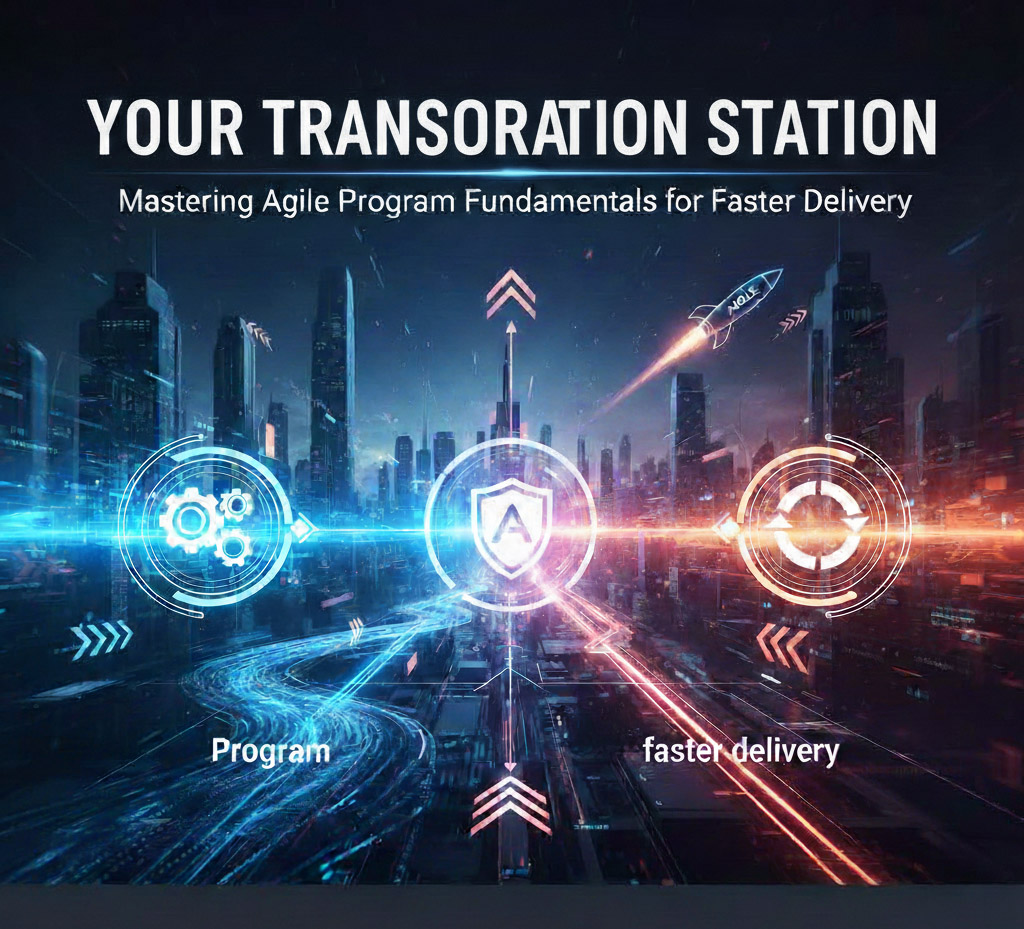
Mastering Agile Program Fundamentals for Faster Delivery
Understanding Program Work vs. Operations
Before diving into the mechanics, we need to define what a "Program" actually is.
Program Work: This consists of one or more related projects with a definite start and end date. It is a unique endeavor designed to achieve a specific goal.
Example: Launching a new mobile app interface.
Example: Migrating a company's data to a new cloud provider.
Operations Work: These are repeatable processes that are continuous in nature. They don't have an "end date" because they are required to keep the business running.
Example: Weekly payroll processing or daily server maintenance.
The Program Pattern: A Roadmap for Delivery
Program work follows a specific structural flow. By following this pattern, teams can move from a vague idea to a high-quality delivery without losing momentum.
- Ideation: It starts with a new project idea or a significant modification to an existing one.
- Discovery: The idea enters a "Discovery Phase." Here, an extended team determines the high-level requirements and identifies the core team members needed to execute the vision.
- Scoped Approval: The output of discovery is an approved high-level scope. This ensures everyone is aligned before resources are fully committed.
- Iterative Delivery: Once the core team defines the tasks, the work funnels into delivery. Using Agile principles, the work is completed in short, manageable iterations.
- Continuous Monitoring: The team tracks progress and quality in real-time, ensuring the delivery stays on schedule and meets the original goal.
The Core Philosophy: "The Right Work" & "The Work Right"
The Power of Agile Program Teams
- Streamline Workflows: Reduce hand-offs and bottlenecks.
- Adapt to Shifts: Pivot quickly when priorities change.
- Manage Complexity: Tackle multifaceted problems that a single-discipline team couldn't handle.
Key Points to Note
- Defined Scope: Program work always has a clear beginning and end.
- Structured Flow: The pattern moves through Event → Discovery → Funnel → Delivery.
- Team Dynamics: Teams are cross-functional but scale based on project needs.
By adopting this structured Agile Program Pattern, your organization does more than just complete tasks—it fosters an environment of continuous growth. This framework empowers your teams to respond and adapt fluidly to shifting needs, ensuring that every project delivery consistently provides the highest possible value

Business Development Specialist | M.S. Industrial‑Organizational Psychology | U.S. Army Veteran
I’m exhausted. Honestly, I’m just bone-deep burned out.
People love to say "just do it" or "do the work," but that’s a load of BS when your brain isn't wired that way. I’m an introvert with a relentless ambition, but being neurodivergent means I’m constantly trying to run a race on hardware that’s missing the manual. I’ve spent years masking and pretending I had it handled, while the stress just leaked out—snapping at people and hitting a wall because I never had the Executive Function systems I should’ve had from day one.
Giving up looks really tempting right now. Like, every single day.
But I’m not quitting. This is my personal laboratory for Modern Survival. I don’t have the answers, and I’m definitely not a guru. I’m just in the wreckage in real-time, trying to bring cogency and clarity to the depth of this mess.
I’m sharing my actual failures as I try to build these five pillars:
Digital: Building Productivity Systems and a Second Brain flow so my head doesn't explode from the cognitive load.
Physical: Biohacking the "dad bod" hardware and focusing on Longevity so my body actually supports my brain.
Leadership: Learning High-Stakes Communication and how to stand my ground when the pressure gets high.
Mental: Mastering Emotional Intelligence and figuring out how to actually regulate my own head.
Personal: Dropping the mask to find Authentic Leadership that doesn't feel like a 24/7 performance.
I’m building this because I wish someone had just …Read More

How Conversations Change Under Pressure