The Power of Choice: Taking Personal Responsibility for Your Transformation
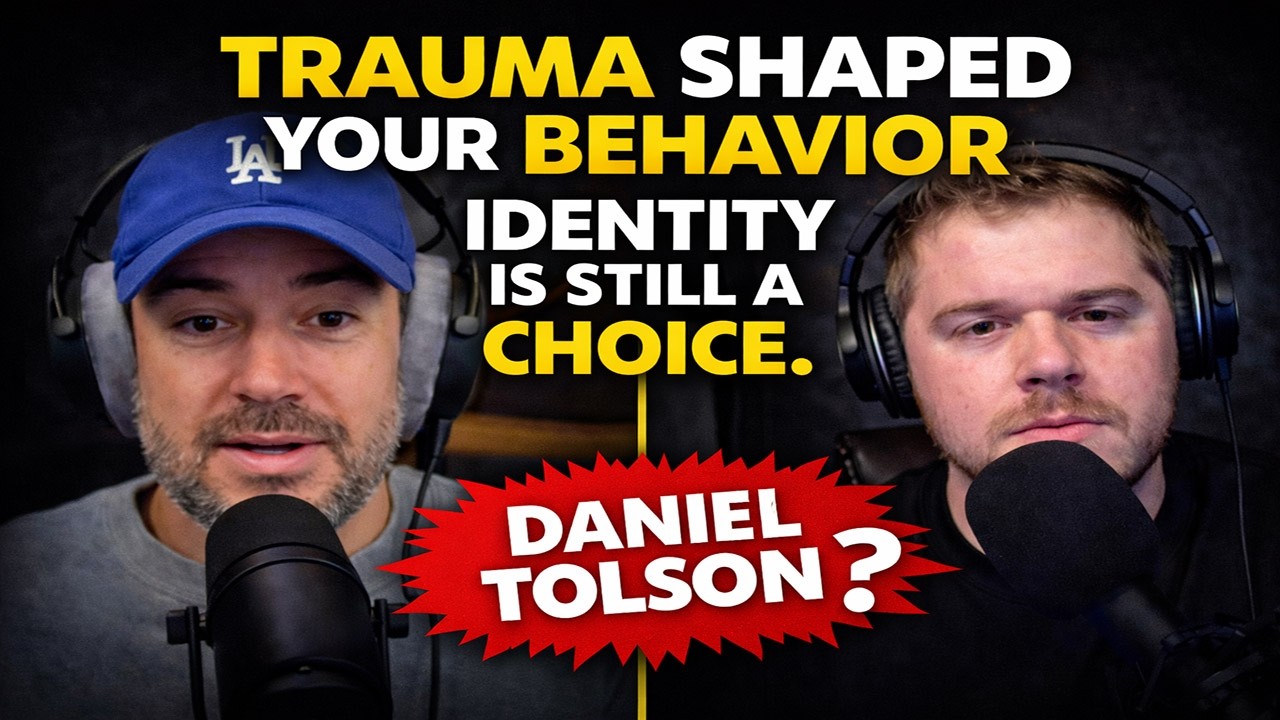
Welcome back to the blog, where we dive deeper into the topics we explore on the podcast. In our latest episode, Daniel Tolson — Trauma Explains Behavior. Identity Is Still a Choice (#79), we delved into the profound impact of past experiences on our present lives. Daniel eloquently articulated how trauma, while a powerful explanatory force for behavior, should never be allowed to define our identity. This discussion resonated deeply, and in this post, we’re going to expand on that empowering idea: that despite the shadows cast by past traumas, we possess the inherent agency to choose our responses and actively participate in our own healing and growth.
Trauma's Shadow: How Past Experiences Shape Present Behavior
It's an undeniable truth that our past experiences, particularly those that fall under the umbrella of trauma, leave an indelible mark on us. Childhood trauma, as Daniel Tolson highlighted in our recent episode, can create deeply ingrained behavioral patterns that we carry into adulthood. These patterns often operate on a subconscious level, influencing our decisions, relationships, and even our self-perception in ways we may not fully comprehend. We might find ourselves repeating destructive cycles, reacting defensively in certain situations, or struggling with intimacy, all without understanding the root cause. This isn't a conscious choice to behave this way; it's a learned response, a survival mechanism forged in the crucible of past adversity.
Think about it: a child who experiences neglect may develop an intense fear of abandonment, leading them to become overly clingy in relationships or, conversely, to push people away before they can be hurt. Someone who endured a chaotic home environment might struggle with anxiety and a constant need for control in their adult life. These are not inherent flaws in their character; they are the echoes of past experiences, shaping how they navigate the world. Daniel’s work emphasizes that understanding these connections is the first crucial step. It's about acknowledging that trauma explains *why* we might behave in certain ways, but it doesn't dictate *who* we fundamentally are.
The show notes for our episode reiterate this beautifully: "Trauma may explain behavior, but it should never define identity." This distinction is vital. It’s the foundation upon which we can begin to build a new narrative, one where we are not defined by our wounds, but by our resilience and our capacity for transformation. Recognizing the influence of trauma is not about making excuses; it's about gaining clarity. It's about understanding the "why" behind our patterns so that we can begin to address the "how" of changing them. This understanding can be incredibly freeing, as it shifts the focus from inherent brokenness to learned responses that can, with conscious effort, be unlearned and replaced.
Beyond Explanation: Why Trauma Shouldn't Define Identity
This brings us to a crucial point that Daniel Tolson passionately advocates for: the separation of trauma from identity. While trauma can undeniably shape our behaviors and thought processes, it is not the sum total of our being. Our identity is a complex tapestry woven from our experiences, our values, our beliefs, and our choices. To allow past traumas to solely define who we are is to surrender our agency and limit our potential for growth. It's akin to letting a single chapter of a book dictate the entire story. The narrative is much richer and more expansive than that.
In the context of our podcast episode, this means understanding that the actions and reactions stemming from trauma are often adaptive responses to circumstances that were far beyond our control, especially during childhood. However, as adults, we possess the cognitive and emotional resources to process these experiences and to consciously choose different responses. The show notes highlight this well: "Understanding trauma is not about denying its impact. It is about recognizing its influence while still choosing who you become." This choice is the essence of personal responsibility in transformation.
Consider the concept of "subconscious narratives" mentioned in the episode's show notes. These are the stories we tell ourselves about ourselves, often formed during childhood based on our experiences. If those experiences were traumatic, these narratives can be deeply negative, telling us we are unworthy, incapable, or destined for failure. The power lies in recognizing that these are narratives, not absolute truths. They are constructs that can be challenged and rewritten. The work of transformation involves becoming aware of these narratives and actively choosing to craft new ones that align with our desired future, rather than remaining prisoners of past scripts.
The idea that trauma shouldn't define identity is not about minimizing the suffering experienced. It’s about reclaiming power from that suffering. It's about acknowledging the scars without letting them become the defining characteristic of the person you are today. This is where the concept of agency truly shines. We may not have chosen the traumas we experienced, but we absolutely have the power to choose how we respond to them, how we integrate them into our life story, and how we move forward.
The Power of Agency: Choosing Your Response
This is where the true power of personal transformation lies: in the recognition and exercise of our agency. Daniel Tolson's core message, echoed in our podcast and expanded upon here, is that despite the profound impact of trauma, we are not passive recipients of our past. We have the capacity to choose our responses, to reframe our perspectives, and to actively participate in our own healing journey. This is not to say it's easy; healing from trauma is often a challenging and arduous process. However, the ability to *choose* our response is what empowers us to navigate that challenge.
The show notes from Episode 79 mention: "Why many people repeat destructive psychological patterns without realizing it." The critical distinction here is "without realizing it." The path to transformation begins with awareness. When we become aware of the patterns, the triggers, and the underlying beliefs that stem from our past, we gain the opportunity to intervene. Instead of automatically reacting from a place of fear or conditioning, we can pause, acknowledge the impulse, and then consciously choose a different, more constructive response. This is the essence of emotional intelligence and self-awareness in action.
For example, someone who experienced a parent who was critical and dismissive might, as an adult, find themselves constantly seeking external validation. Their automatic response might be to overwork, people-please, or take criticism very personally. However, armed with the understanding of their past, they can begin to challenge this pattern. They can choose to acknowledge the old impulse but then consciously decide to focus on their internal sense of worth, to set boundaries, and to seek validation from within rather than relying solely on external approval. This conscious choice, repeated over time, rewrites the script.
Daniel Tolson's perspective, as presented in the episode, is that even in the face of significant adversity, the human spirit has an incredible capacity for resilience, but this resilience is often activated by a conscious decision to take ownership of one's life. This ownership is what agency is all about. It's the understanding that while we cannot change the past, we can absolutely influence our present and shape our future by the choices we make today. This is a liberating perspective, one that moves us from a place of victimhood to a position of empowerment.
Rebuilding Identity: Actively Participating in Healing
The process of rebuilding our identity after trauma is not a passive one; it requires active participation. It involves consciously choosing to engage in practices and thought processes that foster healing and growth. As the show notes for our episode aptly put it, "How individuals rebuild identity without letting trauma define them." This is a powerful statement that encapsulates the journey many embark upon. It's about carefully deconstructing old narratives and meticulously building new ones.
Active participation means engaging in therapy, seeking support from trusted friends or mentors, practicing mindfulness or meditation, engaging in creative expression, and consciously choosing to engage with life in ways that feel authentic and empowering. It’s about making deliberate choices that align with the person you want to become, rather than allowing the remnants of past experiences to dictate your path. For instance, if past trauma has led to a fear of public speaking, actively participating in healing might involve joining a Toastmasters group, practicing in front of a mirror, or seeking coaching to overcome that fear. Each small step is a choice to reclaim a part of oneself.
The show notes also mention "personal responsibility in transformation and healing." This responsibility isn't about blaming oneself for the trauma experienced. Instead, it's about acknowledging that while the trauma happened to us, our healing and our future are now our responsibility. This is a profound shift in perspective. It means understanding that while external support is invaluable, the ultimate engine of change resides within us. It's about taking the reins of our own life and steering it in a direction of well-being and fulfillment, even when the terrain is challenging.
Rebuilding identity is akin to an artist restoring a damaged masterpiece. The original canvas might have tears and stains, but the artist doesn't try to erase the history. Instead, they carefully repair and, where necessary, add new strokes of color and detail to create a new, vibrant composition. Similarly, we can acknowledge the parts of our past that are scarred, but we can also choose to add new layers of strength, resilience, and self-love. This active engagement in our own restoration is the heart of transformation.
The Role of Emotional Intelligence and Awareness
Central to exercising our agency and actively participating in our healing is the development of emotional intelligence and self-awareness. Daniel Tolson, in his work and our discussion, emphasizes the critical role these skills play in breaking free from the patterns dictated by past trauma. Emotional intelligence is the ability to understand and manage our own emotions, as well as to recognize and influence the emotions of others. Self-awareness is the foundation upon which emotional intelligence is built; it's the capacity to observe our thoughts, feelings, and behaviors without judgment.
The show notes for Episode 79 touch on this directly: "The role emotional awareness plays in transformation" and "Emotional awareness is critical for breaking destructive cycles." When we are aware of our emotions, we can understand what triggers them, what they are telling us, and how they are influencing our behavior. This awareness allows us to pause before reacting impulsively from a place of ingrained trauma response. For example, if we feel an overwhelming sense of anxiety when a loved one expresses disappointment, self-awareness allows us to recognize that this anxiety might be rooted in a past fear of abandonment, rather than being a direct reflection of the current situation. This recognition provides an opportunity to respond differently.
Developing emotional intelligence also involves learning to regulate our emotions. This doesn't mean suppressing them, but rather learning to experience them without being overwhelmed. Techniques like deep breathing, mindfulness, and journaling can be incredibly effective tools for emotional regulation. By developing these skills, we gain a greater sense of control over our internal state, which in turn allows us to make more conscious and deliberate choices about our actions. The show notes also highlight "conscious coping mechanisms and awareness," which is precisely what emotional intelligence fosters.
Furthermore, emotional intelligence helps us to understand how past experiences have shaped our core beliefs about ourselves and the world. When we become aware of these often-unconscious beliefs, we can begin to challenge their validity and replace them with more empowering and realistic ones. This internal work is essential for true transformation, as it addresses the root causes of our patterned behaviors and allows us to build a more resilient and authentic sense of self.
Breaking the Cycle: Taking Personal Responsibility
The ultimate goal of understanding the impact of trauma and cultivating our agency is to break the cycle of destructive patterns. This requires a deep commitment to taking personal responsibility for our transformation. As the show notes so powerfully state, "Trauma can explain behavior but should never define identity," and "Personal transformation requires confronting internal beliefs and patterns." This confrontation is where personal responsibility truly comes into play.
Taking personal responsibility means acknowledging that while we may not have been responsible for the initial trauma, we are responsible for how we choose to move forward. It's about shifting from a mindset of "this happened to me" to "this happened, and now I am choosing how to respond and heal." This shift is crucial. It empowers us to take active steps towards healing, rather than passively waiting for external circumstances to change or for someone else to fix us.
This responsibility involves several key actions: seeking professional help when needed, actively engaging in therapeutic exercises, practicing self-compassion, setting boundaries, and making conscious choices that align with our values and our vision for the future. It means being willing to do the hard work, to confront difficult emotions and memories, and to challenge ingrained beliefs that no longer serve us. As Daniel Tolson suggested in our episode, it’s about facing the truth about our experiences and our patterns, even when it's uncomfortable.
Breaking the cycle also involves understanding how we might be perpetuating similar patterns in our own relationships or with our own children. The episode touches upon "parenting influence on long term psychological development." By understanding our own journey, we can become more mindful of the impact we have on others and actively choose to create healthier dynamics. This is a powerful aspect of personal responsibility – extending the ripple effect of healing and growth beyond ourselves.
Ultimately, breaking the cycle is about reclaiming our narrative. It's about recognizing that while our past has shaped us, it does not have to dictate our future. By embracing personal responsibility, we empower ourselves to rewrite our story, to heal from our wounds, and to step into the fullness of who we are capable of becoming.
Conclusion: Embracing Transformation Through Choice
The conversation we had with Daniel Tolson on Episode 79 of Your Transformation Station was a powerful exploration of how trauma shapes our behavior, but more importantly, how our identity remains a choice. Throughout this blog post, we've expanded on the core themes: the undeniable influence of past experiences, the vital distinction between trauma's explanation and identity's definition, and the profound power we hold in choosing our responses. We've delved into the active process of rebuilding our identity, the indispensable role of emotional intelligence and awareness, and the ultimate act of liberation found in taking personal responsibility to break free from cycles of pain.
As Daniel eloquently articulated, while trauma may explain *why* we behave in certain ways, it should never serve as an excuse for who we are or who we can become. The journey of transformation is not about erasing our past, but about integrating it in a way that empowers, rather than defines us. It's about recognizing that even amidst profound adversity, we have the agency to choose our path forward. This is the essence of personal responsibility – the understanding that while we cannot change what happened to us, we can absolutely influence what happens next.
I encourage you to revisit the episode, Daniel Tolson — Trauma Explains Behavior. Identity Is Still a Choice (#79), and reflect on these powerful ideas. By embracing the power of choice, cultivating self-awareness, and taking ownership of our healing, we can break free from the shadows of the past and step into a future defined by our resilience, our growth, and our limitless potential. Thank you for joining me on this exploration. Until next time, keep choosing your transformation.
Business Development Specialist | M.S. Industrial‑Organizational Psychology | U.S. Army Veteran
I’m exhausted. Honestly, I’m just bone-deep burned out.
People love to say "just do it" or "do the work," but that’s a load of BS when your brain isn't wired that way. I’m an introvert with a relentless ambition, but being neurodivergent means I’m constantly trying to run a race on hardware that’s missing the manual. I’ve spent years masking and pretending I had it handled, while the stress just leaked out—snapping at people and hitting a wall because I never had the Executive Function systems I should’ve had from day one.
Giving up looks really tempting right now. Like, every single day.
But I’m not quitting. This is my personal laboratory for Modern Survival. I don’t have the answers, and I’m definitely not a guru. I’m just in the wreckage in real-time, trying to bring cogency and clarity to the depth of this mess.
I’m sharing my actual failures as I try to build these five pillars:
Digital: Building Productivity Systems and a Second Brain flow so my head doesn't explode from the cognitive load.
Physical: Biohacking the "dad bod" hardware and focusing on Longevity so my body actually supports my brain.
Leadership: Learning High-Stakes Communication and how to stand my ground when the pressure gets high.
Mental: Mastering Emotional Intelligence and figuring out how to actually regulate my own head.
Personal: Dropping the mask to find Authentic Leadership that doesn't feel like a 24/7 performance.
I’m building this because I wish someone had just …Read More