
Overusing and misunderstanding narcissism has to be confronted head-on, diving into the real implications of being entwined with a narcissistic individual.
















































Overusing and misunderstanding narcissism has to be confronted head-on, diving into the real implications of being entwined with a narcissistic individual. This is not a subject about vanity or mere annoyance; it's an exploration of an antisocial personality disorder that, at its worst, can threaten lives.
Website: https://www.ytspod.com
Transcripts: https://www.buzzsprout.com/2242998/14488700
EPISODE LINKS:
Dana's Website: https://danasdiaz.com/
Dana's Book: https://www.amazon.com/Gasping-Air-Stranglehold-Narcissistic-Abuse/dp/B0C6WBCWNG
OUTLINE:
The episode's timestamps are shown here. You should be able to jump to that time by clicking the timestamp on certain podcast players.
(00:00) - Overusing and Misunderstanding "Narcissism" in Society
(07:44) - Understanding Trauma and Narcissistic Relationships
(21:25) - Exploring Narcissistic Abuse and Manipulation
(33:57) - Surviving Narcissistic Abuse
(49:27) - Rebuilding Identity, Dealing With Toxic Relationships
(54:57) - Follow Your Gut, Indulge in Happiness
PODCAST INFO:
Podcast website: https://ytspod.com
Apple Podcasts: https://ytspod.com/apple
Spotify: https://ytspod.com/spotify
RSS: https://ytspod.com/rss
YouTube: https://ytspod.com/youtube
SUPPORT & CONNECT:
- Check out the sponsors below, it's the best way to support this podcast
- Outgrow: https://www.ytspod.com/outgrow
- Quillbot Flow: https://ytspod.com/quilbot
- LearnWorlds: https://ytspod.com/learnworlds
- Facebook: https://ytspod.com/facebook
- Instagram: https://ytspod.com/instagram
- TikTok: https://ytspod.com/tiktok
- Twitter: https://ytspod.com/x
00:00 - Overusing and Misunderstanding "Narcissism" in Society
07:44 - Understanding Trauma and Narcissistic Relationships
21:25 - Exploring Narcissistic Abuse and Manipulation
33:57 - Surviving Narcissistic Abuse
49:27 - Rebuilding Identity, Dealing With Toxic Relationships
54:57 - Follow Your Gut, Indulge in Happiness
Gregory Favazza:
Like with everybody that's overusing the word, it's losing its meaning and now it's almost like a form of gaslighting that we've experienced where this word that was once impactful now is oh, it's a joke. But now our experiences are becoming a joke because of what society is doing.
Announcer:
You're listening to a podcast that encourages you to embrace your vulnerabilities and authentic self. This is your transformation station and this is your host, greg Favazza.
Gregory Favazza:
I appreciate you giving me your time to kind of share your story. But also allow me to get clarity on my story and also just kind of understand the term of narcissism and why is it being thrown around like a witch hunt in today's society?
Dana Diaz:
Yeah, and it is definitely a problem. I will definitely clear that all up for everybody because, yeah, it's getting silly how the word is used. But those of us who have experienced the really, really terrible side of it, it's not just something you would loosely throw around or call somebody. But now we will dive, definitely dive, right into that.
Gregory Favazza:
Yes, because, like when I think about it, like with everybody that's overusing the word, it's losing its meaning and now it's almost like a form of gaslighting that we've experienced where this word that was once impactful now is oh, it's a joke. But now our experiences are becoming a joke because of what society is doing.
Dana Diaz:
Oh, absolutely, I'm sorry. Are we recording? I mean, I know we're recording, but are we going to just go right into it, because I don't know if I should hold back or just go for it.
Gregory Favazza:
Go for it. Yeah, we're just recording.
Dana Diaz:
Okay, yeah, the problem with society not taking it seriously absolutely does directly relate to how loosely the term is used, because the problem is, I mean, typically. It's even sad for me to think that typically people think it's women that are being victimized by men, but the reality is it's going both ways. Women are using what they can to manipulate, and I mean they can be violent with men just as well. But let's dive right into this narcissism. So I don't think people understand really what it means At this point. When I hear it and I hear it a lot it's just like somebody annoys you or says something you don't like and you're like oh, they're a narcissist. No, they might not actually be. The term narcissist actually comes from the name of the Greek god narcissist, who used to look and admire his reflection in the water, so it really was meant as a term to refer to somebody that liked the way they looked, and certainly we know those people. Those are the people on social media the women with the fake lashes and the bikinis and taken selfies, and the guys with abs, and all these people really do look as good as they think they do. We cannot hate on that, but that doesn't make them bad people, though. That's the thing about it. It doesn't make them bad, and when you call somebody a narcissist, there's absolutely a negative stigma that goes along with it. So what I tell people that just throw their word around is two things. Number one it is an actual psychotic, antisocial personality disorder. It is a very serious thing. This is not just somebody who likes the way they look and in fact I would argue that I'm like the narcissist magnet. So I've had 45 years of experience with them, multiples of them, different genders, different relationships but none of them actually looks that good and none of them actually thought they looked that good. So the narcissists that we're talking about are these antisocial, psychotic people. So on the one hand, there's a spectrum. I liken them to tumors and forgive me, but it's the best symbolism I could come up with. But you have your benign tumors, that they're there. They're not causing you problems, no worries, you can take it or leave it, they're just there. And there are narcissists that are like that. These are people that might brag a lot or kind of bait you into giving them compliments, those kinds of things. It might be annoying, but they're just there. They're not bothering anybody. On the very opposite end of that spectrum are the malignant narcissists, which are like malignant tumors. They cause you problems, they're going to keep causing you problems and they might even kill you unless you cut them out, which means cutting them out of your life. No contact, no relationship, no, nothing. And we'll get into this later. But I would argue with the people that say, oh, but we have children together. We have to know we don't have to have contact.
Gregory Favazza:
No more, nothing further. I want to unpack. So what about have you heard of histrionic personality disorder and also high conflict personality disorder?
Dana Diaz:
I have heard of both and I have not really dived too much into the details of them, but I certainly think that those can participate. Because here's the thing about all of it I always tell people, I don't care what you call it, take the label off the person. If somebody mistreats you, if they are intentionally causing you harm, intentionally ruining your reputation, intentionally causing trouble in your life, that's abuse. That is even. You don't have to call it abuse. It's wrong. It is wrong to purposefully and intentionally cause trouble for another human being and God forbid they're causing you harm. But definitely these are high conflict people and they are looking for a fight and they are looking for it with their you know, whatever you want to call it their victim or their prey.
Gregory Favazza:
So before we go a little bit further, I wanted to just address a couple more things. With just getting like being a magnet for these type, I can definitely agree but I didn't know what to call it at a point in time in my life to what I've experienced a full on complete experience that I never, that I will, I have to relive because I want to heal from it, and that's the next 2040 is all about to my birthday is. I'm trying to get my birthday back because that's when I fully experience the chaos of what this individual has caused and that's where to learning experience. But yeah, do you think it has to relate with our own social upbringing and our parents? Do they have traits that exhibit that we have taken in subconsciously and we kind of look for in seeking a partner?
Dana Diaz:
I think that, yeah, that absolutely has something to do with it. I mean, I don't think a lot of people realize that even if you haven't come from a traumatic childhood and even if you had a perfect beaver-cleaver life by the time you're seven years old, you're basically wired to understand relationships and dynamics and behaviors and your brain has made connections between if this, then that, and that's where stereotypes and judgments and opinions and your own behaviors and your own reactions come into play. And then they're furthered along as you get older and from the own experiences you develop. And I know for me, yeah, I mean, my mother didn't even want me, but here I am, and so I had detachment and definitely rejection from her. And then she married a man who was not my biological father and wanted me even less than she did, and he did physically and verbally abuse me. But that verbal abuse, honestly, I mean being told every day since I was what, four or five years old nobody wanted you, you're nothing, I shouldn't have to pay for another man's child, you should be more grateful that we're feeding you, et cetera, et cetera. And if I stood up for myself, I was slapped around, I was beaten with the phone when I tried to call for help, child services didn't believe me when they got involved. So you know what happened to me when I, even though I walked out at 18 years old and said, ah, no more, nobody's ever going to treat me this way. You know I had already been wired to feel comfortable, unfortunately, in situations where there was conflict and there was chaos. I learned to think that that was love, because these same people that were doing these things for me were saying I love you, and I was getting cards that said I love you, happy birthday, we love you, mom and dad, and it was all a farce. But you know, try telling that to my brain. Even though my gut was telling me differently, my heart was telling me differently. You know people don't realize too. This isn't just. You know, thoughts or the ability to control what you're doing. Your brain actually changes in the course of trauma, and you know we can get into a whole scientific discussion about that that I'm not prepared to have because, I'm not a scientist but you know, people don't realize even cortisol levels. Cortisol is a stress hormone that a lot of people feel in high conflict situations and you know, your body even becomes addicted to that. To that would have been dating, let's say. I mean there was actually, I can recall, a nice boy in high school. I mean he was as nice as could be and he asked me out and I wanted to say yes but I said no because I honestly didn't know what to do with that and I just assumed he wouldn't like me any more than I was liked at home or anywhere else, and I had internalized this feeling of I am deficient, there is something wrong with me, I should be ashamed and I don't want to get too close to anybody because, you know, god forbid. But that was setting me up for I mean it was literally like handing me on a silver platter to the narcissist I ended up marrying and spending 25 years with, because of course they need praise and admiration and servitude and all these things and they give you treats of affection and love in return for your servitude. So I mean it was literally the perfect storm.
Gregory Favazza:
OK. So with my experience and also my research, the term narcissist or the individual that you are with, once you start to almost mirror the very image that they are trying to run from. That's essentially the point when the relationship is done for us, and I've seen this in dating through just conversation, that some people will say well, my ex was a narcissist, and now who is the real narcissist? If we were to look at two people and why the relationship failed, I'd definitely take ownership in my. What I brought to the table that did not help the relationship, why it failed. But why is? Why is the both pointing at each other, saying that they're both narcissists? I don't get it. That doesn't make any sense to me.
Dana Diaz:
Well, I'll clear that up real quick for you. So narcissists will never take accountability for anything. It's always somebody else's fault. But the reality is and I don't care what the relationship is good, bad, family, work, friend, whatever it absolutely takes two people to tango. Those two people create that dynamic and participate in it. And I will say that, having been the victim in most of those cases and that's a whole other thing about realizing that you are participating in letting the cycle continue. But when you're in it and somebody is saying you're a narcissist, those of us that are not narcissists if we are the ones that really aren't that impacts us. We worry about that because we don't want. We actually understand empathy and we have feelings of remorse and we don't want to cause any harm to anybody else. So we are the ones Googling what's narcissists? How do I know if I'm a narcissist? So my answer is very simple. If you're asking yourself if you're a narcissist, that alone is your answer. That means you're not, because a true narcissist will just immediately negate that and say it's not me, it's you. They're just going to bounce it right back off. They don't care, they don't want to know, they can't even face the possibility, because a real narcissist has no concept of accountability. It is always somebody else's fault, specifically yours. Even if you weren't there, had no participation in whatever it is that, take them off. It's your fault, it is not them, so they will not. They will not be Googling it. They don't even know what a narcissist is. They're just going to point the finger at you and if you're worried about it, you're not a narcissist.
Gregory Favazza:
But the healing process for getting once you just going to no contact and then healing. There is a strong urge to want to go back into the relationship, even when you were treated like shit, when you were cheated on, when you were point to blame, when your identity got stolen. When you get hit by a car, when you lose your child, your house, your first house, you're pushed back into the basement where you were sexually abused as a child. You haven't been there in over 12 years and you are reliving that moment with boxes. You still have to stay away, but somehow you fall back in. Why?
Dana Diaz:
It goes back to those chemical connections we have to people. Again, it's not a logical thing and that's what makes me mad when people say, oh, just get over it. Or why are you even thinking about it? It's not Let it go. I always wanted to carry this trauma with me the rest of my life. I'm holding onto it on purpose. Are you kidding me? No, your brain. People really just don't understand how much your body physically I mean, there is a very real mind of body connection. They have created what I'm sure people have heard the term trauma bond. This is literally like so they've created in the relationship. This is a narcissistic thing. This is a selfish and pole love, hate, whatever you want to call it.
Gregory Favazza:
Tip for 10.
Dana Diaz:
Yeah, exactly so when something bad happens somehow in the process, they're going to come back and in many ways they know you, they know how to work you. They're going to say you're the only one for me, I'm so sorry, I hurt you, I'll never do it again. All the false promises For me, I got the flowers and I got really sweet treatment, treated like Princess and the P for maybe a week, if he could stand to do it that long, and I would go to thinking, okay, I've given this relationship investment, especially after you're married and have a kid, like I mean, you're in it. You're not just trying to walk away and get. You want to give them that opportunity, you want to resolve things, you want to get better. I even thought maybe, if I'm better, let me read self-help books, let me try to work on being more patient, being more understanding. Just in that you think maybe then things will work. And then something bad happens and then you know they feel you pull away and then they do all the stuff to bring you back in. So it's this constant push, pull, push, pull and that creates in your brain these neural connections that actually make you associate this constant love and hate with that person and your body becomes physically dependent. You know, again, for me I had very high levels of cortisol that actually made me physically ill and autoimmune. But these chemicals in your body, it literally becomes an addiction, just like alcohol or drugs or anything else. Your body is so used to it that you actually go through this withdrawal when you cut that person off Because, even though they have treated you like crap, your body is like where's this conflict, where's this stress hormones, like it's, like you're crawling out of your skin, like I need that person. It was so hard for me to understand after the fact that, you know, when I was trying to explain things to other people, like therapists didn't even understand. You know, here's a man who swung a crowbar at my head. He shot a gun outside my window. I mean, he put me through awful torment. You know, yet safe I strangely. I feared for my life but also felt completely at home and safe in his arms. That is so mind blowing and nonsensical that it's hard to even get people to understand that. But that is that bond that they create with you and you can't resist your body's urge. I mean, there are almost no jokes. Should be some kind of a rehab facility for withdrawal from these people, because you do also realize that once you are out of it and once you are no contact and you feel safe and secure in a new place, a new environment, you know, your mind kind of your central nervous system relaxes and sort of resets and it's kind of like establishing new patterns that instead of constantly thinking about that person, need that person, need that person, you start relying on yourself a little more and less so on other things. So it is a true addiction withdrawal situation that people just don't comprehend because they're just seeing it, as you know, a disbanding of a relationship or a marriage or whatever it is, and it's so much more to that when you've actually had trauma in the marriage.
Gregory Favazza:
Yes, okay, there's a lot there.
Dana Diaz:
Yes.
Gregory Favazza:
So with people that have experienced it, have experienced a relationship with a narcissist. Now there is tendencies that you have adapted if you have not already adapted from your parents. These tendencies could be illustrated as you being the narcissist when you are clearly not, or you could be pulling, like magnetizing, an even worse kind, like a higher level severity of narcissism towards you. How would you recognize that you're just experiencing traits and you're not the real narcissist? And how do you recognize that there's actually any narcissistic friends in your social circle? Yes, in your social circle already?
Dana Diaz:
Yeah, absolutely so the thing about that and it's something that I didn't even realize for a long time you can have narcissistic qualities and not be a narcissist. And it might be because, I mean, like for me, my stepfather growing up oh my gosh, he is the king of all narcissists and I have found myself acting in certain ways Like sometimes I've been told I can be a little bit of a know-it-all or be a little bossy, and it's not that I'm trying to control anything or trying to represent myself as like I'm the be-all, end-all. It's just because that's the behavior that I saw in kids tend to model what they see. So where you distinguish that, where you create that distinguish, is in intention and impact. Actually, if I think about it a little further, I always go back to intentional harm. If you are using any tactic, whatever it is, if there is a characteristic about you that intentionally harms another human being, if you are controlling because you have to dominate that person and diminish their self-worth and everything about them in order to feel strong and powerful and secure yourself and make you feel better about yourself and make you feel superior, that is wrong, that is intentional harm and obviously any kind of physical harm that people don't realize too. Narcissistic abuse. There's legal abuse involved in that, where they threaten. For me it was constantly threatening that he was going to take our son away and I was never going to see our son. There's financial abuse where they restrict assets or control assets. Or in my case, my ex drained the 401k completely, squandered it all on booze and nonsense, didn't even tell me and I found out a year later and then found out I also had to pay $27,000 of taxes on it that I didn't have and he didn't care. And guess who ended up having to pay that in the end. And then there's sexual abuse, which is a whole other thing that people will debate with me. Well, if you're married, yeah, but if I'm married, I don't care. That marriage, forgive me, it's sacred in a way, but when you are not consenting to having to participate in certain sexual acts, married or not, that is sexual abuse and it's violating and it's just wrong. That's a whole other thing too. So it goes back to the intention and the impact, because you can go to the doctor, right, and you can say I have a sore throat, so do you have strep throat? You might have COVID, you might have the flu, you might have bronchitis, right, it is one little thing. So even if you have a narcissist equality, you might even have a few it doesn't mean you're actually a narcissist. It's just a symptom of something else, and oftentimes I mean going back to the childhood that I had. They say that often if you were abused in childhood, you will either become a narcissist or develop narcissistic qualities. But again, it's in the intention and impact. So are there times where I might seem a little needy and I might say something to my current husband because I need to kind of I mean, I hate to call it baiting but where I need some reassurance or I need some attention on me because I'm feeling deficient and lowly and all these things my stepfather said are coming back. Yes, that absolutely has happened. Does that make me a narcissist, is it? Oh, it's all about Dana? No, absolutely not. It's just because the little girl in me is like screaming out and feeling the things that you know. She has somehow overcome, but sometimes resurface. So it's just a question of the intention. Was it meant to hurt you? Because we all make mistakes too. I mean, we've all said and done things. Good people do bad things, bad people do good things. We've all said and done things. We regret, you know, for whatever reason, but it's in the intention and how the person, the other person, receives it.
Gregory Favazza:
Wow, okay. So with understanding the gender roles from your experience, how would a male I don't wanna say manipulate, but yes, it's like the forms of manipulation where I can see coercion with something I never understood in a relationship until what I've experienced. You wanna help me explain that a little bit.
Dana Diaz:
Men and women both participate in all of it and you know, the problem is that they will use any tactic, whether it's a form of abuse or just a simple form I hate to say, simple form of manipulation, coercion. I didn't experience as much, so you might have more examples to share on that, but what I experienced from my stepfather and my former husband and from you know. I have a friend 16 years. We were friends and you would have thought I would have seen it coming and I didn't no longer friends with her. But the one thing that they did to me every one of them is that when I caught onto them, just like you said, they know, when you've seen behind the mask, the silent treatment, it's like a method of disapproval, but people don't get that. I'm not talking about a few hours or a few days. My mother and stepfather would sometimes ignore me and I mean like not even look at me. If I was in the room for sometimes a month, I remember as a girl, especially when I was a teenager, because I got bigger and louder and I was a little more emboldened than I would scream in their face and I would cuss, like you know, just trying to like see me, I'm right in front of you, like what the you know? Why can't you? And it was like they just looked like right through me and acted like I wasn't there, would not react, would not respond, just stone faced. That is a military tactic. I mean, you're a veteran, you know this. I mean, didn't they do this in Guantanamo Bay back in the Cold War with war hostages? They isolated them typical narcissistic move and they ignored them. They broke them down mentally by doing this. You don't do this to a little girl. You don't do this to the person you married. You don't do this to people in a household. So, again, it's intention and impact. It's just cruel. But anytime you're manipulated, that is somebody trying to dominate you and that's not right. Either we are, unless you actually have some mental or you know disability that disallows you from making your own decisions. If you are of sound mind and you are an adult human being I'd even argue even in teenagers, if you're over, like 12 or 13, you can pretty much make okay decisions. Just find your own. I don't need to be told what to wear and who I can be friends with and where I can go and how my money that I earned can be spent. I mean reasonably, in a marriage particularly. Yes, of course you want to make those united decisions you know, together as a household, as a family. But you know when these people are trying to completely manipulate you to do whatever it is to you know, achieve their goal and enact the end that serves them the best. You know you have to see it for what it is, but you have to be ready for the. You know what they're going to retaliate with as well.
Gregory Favazza:
So another way to look at it, it's like weaponized incompetence. So, like individuals in the workplace, when they're hired to do a job, they understand the job description. However, they're moving without a sense of purpose. They have to double check and triple check and take the longest way, longest route possible, to get back to you with information on completing the day's work. Now, with relating that over to relationships, it's exactly the same thing, almost a form of skilled incompetence or strategic incompetence applied to the loved one, and usually the partners will put something that one partner beans away from, whether it's financial management or other. They'll paint the picture of this is a really big task and you don't need to do it. Don't worry, I got it and all of a sudden you have no control over that specific task. But if we were to backtrack a little bit, how does this manipulation take the effect on an individual? It doesn't happen immediately, overnight.
Dana Diaz:
It's not overnight at all, I mean, I certainly you know. By the end I looked back and said how the hell did I get here? Yes how did I get from point A to point B? Like I mean, we went from okay, three things were being thrown across the room and I didn't like some of the things he said to now I've got guns and knives and the police are at my house. That does not happen overnight at all. I mean for some maybe, but not usually. But I think that's the insidious nature of narcissism. The way I describe it to people in my experience was that they cross a line. You know everybody's got boundaries and I think we all have a pretty okay moral compass to know when you're crossing somebody else's boundary. You know, and so they cross it and they know they've crossed it. It's kind of like you know, anyone who has kids knows that if a kid knows they're not supposed to have that cookie, but they open the cookie jar and they're looking at you, then they're still staring at you with a little smile and dip in their hand in there. You know they might eat the cookie, they might not. That's kind of what it's like to be with a narcissist, Like they kind of put their toe across the line and says here I am, I've crossed your boundary, what you're going to do about it? But here's the thing. It does start out at the little stuff and you think, being the other person, like, okay, I don't like that, but it's not enough to let go of the time I've been with this person or whatever we've built or whatever we have, or you know, in my case I remember the first time was like, oh well, maybe he had a bad day we all have bad days, you know. We start excusing it, enabling it, tolerating it. So every time they try to do the same thing and cross your boundary, they're going a little further over, a little further over. And the next thing, you know that boundaries that you can't even see the end of it, because they have crossed it so many times, knowing they can get away with it, that they're just far out and left, feel like you don't even know where the line is drawn anymore.
Gregory Favazza:
And essentially, you lose the identity that you have spent your entire life creating. I mean with me. I mean I had the military reinforce, a sound system and to this day I'm grateful that I've joined and did five and a half years, because that's the one thing that she is obsessed about is my resilience to keep moving forward. I just this understanding that she wants that. That's what it, that's what she's after, that's what she wants. So she's essentially trying to take it. But it started off with having the sound system and the next thing, you know I'm making immature child decisions that you would think of a as a peaked teenager doing in an adult form. Yes, Absolutely.
Dana Diaz:
I actually I think I said it in my book about my former marriage that I didn't like him, but I really hated the person that he was turning me into. Yes, because I was starting to. It almost became like a game because for me to survive I had to start playing it just as nasty and dirty as he was playing it, and I didn't like that. That wasn't who I was. But I will say this it is very commonly thought, and I have seen it even in my own life, that oftentimes their targets or you know, you, me, whoever has some quality about them that they want to they do, they envy that, they are jealous that you are that way because they're not. And I think they do feel like, if they overpower you, that they can somehow, like you know, like through some osmosis, like gain the certain quality into themselves. But if nothing else, if they can take that, if they can take it away from you, you know, and make you feel like you're not that person and you don't have that anymore, they still feel like they won.
Gregory Favazza:
It's almost like they're flip flopping the identities, where the you, she, he or she, the partner, who is the narcissist, takes your identity and you take their isn't that funny yeah yeah.
Dana Diaz:
I've never actually thought about it that way, but now that I think about it, that was the irony in my marriage. I can relate to that because I was the one with the education. I was the smart, resourceful, career driven, successful outgoing. You know, I was the girl everybody liked and by the end, oh, he was Mr. Look at me, I'm charming and funny. I'm Mr Party man. Everybody was inviting him everywhere and I had almost. I was like Wednesday Adams. I was like withdrawn and resentful and bitter and you know I kind of think my anger and resentment was coming off, whereas people were kind of looking at me like, look at her, what's wrong with her, what's her problem? And it was so not that way. It was not that way at all. It literally was the other way around. But thank God we find our way back to ourselves. Hopefully we do.
Gregory Favazza:
That's very interesting. In the beginning it was effortless. It's almost like it's too good to be true, but then you start to recognize. What I've noticed was this it's like a spinning spear, that everything is good, we're in sync. I feel this constant connection, but then I pick up this intuitive thought where her insecurity is affecting her judgment about me, whether it's oh, you're talking to other people, you're cheating? No, I'm not. I'm literally producing content. I'm getting hearts from people within my vicinity that likes what I created. Now this judgment is affecting her perception, which is affecting my perception that something's off when nothing is off. And then it comes back around, and this is where it starts to teeter totter and that's where the fun begins, essentially.
Dana Diaz:
Yeah, absolutely. And I mean people call it. I mean there's some gaslighting in there, there's what they call crazy making because it, I mean. I remember saying to somebody like it, I can't even make sense of it because it is so nonsensical, like I can't, even I don't even know what we're arguing about anymore because he keeps, like you say, spinning it into something else, it's twisting into something else. I remember catching him in a lie where he had to Facebook accounts that I didn't even know he had one, and I found out he had two different ones and somehow, by the end of that, it turned into I didn't want him to make money or have a job and I didn't want him to have friends. And how did this happen? But he got nasty about it and then it, yeah, and then I'm thinking, okay, what is he hiding? Because, okay, you want to be on Facebook, fine, but why the two pages? What's with that? You know, like you know, but I lost track of that because he kept turning things around on me. And then they say but you and you, you know, for me it was well, you go to church every Sunday. It's church, it's on Sunday, it's one hour, you know, and it was. While you love God more than you love me, I it's one hour a week. I'm standing next to you like a loyal frickin. Servants ready to bow at your command All the other days of the week. You know it's so frustrating, but that's the thing about it is. And you even think about the verbiage. You were in the military and, by the way, thank you for your service. Yes, tremendous thanks. But the look at the verbiage in narcissism it's all I mean. Before I even knew what narcissism was, the way I kept telling people it's like I'm in a battle, it's like I'm trying to survive, I'm trying to strategize and I mean the verbiage we're using in this is military, tactical verbiage, but that's what it feels like. I even posted something on Facebook yesterday. People keep saying oh, when you're with the narcissist, you're walking on eggshells. I'm like I wasn't walking on eggshells. I was walking through a damn minefield and anything could blow up at any time, but before I could go get my leg, that blew off of me over there. I'm over here trying to get my arm because that just blew off everything. Bullets are flying every which way. I didn't know if I was coming or going half the time. I was just trying to survive and get through every day somehow. Okay, and get my kid through it with me.
Gregory Favazza:
It's almost like manifesting this feeling of uncertainty and making you experience that feeling at any point. You are constantly expecting it, like if somebody is like gonna act, like they're gonna hit you, like you wanna flinch, like, but that flinch doesn't stop. It's like that flinch will continue and it'll go for years. That feeling of just like, oh, am I gonna get hit? No, no, I'm not gonna get hit. And that's where there's a point. You have to get past that. And how I have overcame that was I mean, fortunately I'm stubborn. I had to learn the hard way, over and over, and my parents, I mean they're old school and they told me never to quit on anybody that I'm with, especially have a child with. So it's like I'm gonna give it my all to fix whatever address, whatever. But that is part of the tactic is that you are being challenged to get a baseline on how you react to a situation. Are you proactive or are you not? And then, if that's okay, if you do have this critical sound judgment, then they're going to use sleep deprivation to slowly take away your sleep and then, from there, once you don't have an adequate sleep and this takes days, like if you lose five minutes a night and you're doing this for probably three years. The next thing you know you are fucking sleep depriving. You're doing things you wouldn't even have thought you would do.
Dana Diaz:
Yes, I experienced that to such an extreme level, and that's another thing people don't understand sleep deprivation. You can actually die from a lack of sleep. I was getting like these terrible. They weren't even headaches or migraines, I can't. It was like my head was in a vice, like I would cry some days because I just wanted to sleep. But I had to be so hyper-vigilant at night because that's when I was vulnerable and I didn't trust him and there was always physical threat. So I mean, I had actually moved myself down to the basement and I was sleeping down there but I still couldn't sleep because I was afraid. I was so afraid. Every tiny little thing I heard would wake me up because I was like, is that him? Is he around the corner? Is he sitting next to me? Is he upstairs? Is he asleep? I don't know. You know, and how can you sleep? In that I ended up putting a two by four under the basement door knob because I thought, okay, well, if he tries to get down here and he can break the door enough for the knob that the wood falls down the stairs, that will at least give me a little time. It will give buy me a few seconds, you know to try to save myself or defend myself. And lo and behold, the first night I did that, the first night I did that, there went that two by four, tumbling down the stairs and I ran and picked it up and put it up like a bat, like I'm ready, and he looked down the stairs at me, just glared at me and he called me names and I'm crazy, and this and that. And then he. But but all the other nights, because obviously I kept that two by four, it was stomping up and down the stairs at random hours or I'd hear him. He'd get up to go to the bathroom but instead of just using the bathroom he had to slam the door, slam a cabinet. Boom, boom, boom, just on purpose to wake me up. Nevermind, we have a son that's sleeping in the same house hearing all this. But you know, you want to talk about cortisol running through your body. I'm in fight or flight mode 24, seven, every single day, even going to work. It was the constant text messages accusing me of I'm sleeping with people that I'm not. I don't even see like I'm alone at work. Or if I was working with one of the girls that worked with me, then I'm screwing her If I went to the Dollar General for cat food after work. I was too long. Who was I screwing in the alley? It was just. It just was so exhausting that by the end of 2018, I'll never forget the night my body just snapped. It snapped. I dropped down to 93 skeletal pounds. I ended up with a backpack oxygen machine. I had neurological, cardiovascular, muscular, digestive, you name it. I had so many issues. I created a spreadsheet because I'm a type A, I'm a Capricorn what can I say? But I wanted to be able to give doctors factual information, because the doctors didn't know what the hell was wrong with me. They're like they didn't know what to do with me but throw a pill at every symptom. But I didn't need 24 pills. I needed somebody to tell me what was wrong. And when they finally figured it out, you want to know what was wrong. It was a sleep neurologist that figured it out. With Mayo Clinic. I had a. This is actually strange. So I ended up having so much cortisol run through my body for so long from living in fight or flight that it gave me a lung disease that is classified as a sleep disorder. Now, what's not strange about this for somebody that has had been you know, that's been in a narcissistic of relationship. It is considered a sleep disorder because sleep deprivation is part of it, but the lung syndrome itself is the doctor says it's like having COPD and fibromyalgia all at once, which explains all these random crazy symptoms that I was experiencing. But it also was shutting my body down, and that was the point that I just said enough, like you could have not told me that. You know, there's nothing anybody could say to get me out of that relationship, because I had a kid and I had to try for him and I had to do the noble thing, maybe if I was better or different or whatever. But when my life is on the line, not just at his hands, but my own body turned against me, that was when I said enough, I'm done, I'm out of here.
Gregory Favazza:
Well, so COPD, and what was the other?
Dana Diaz:
And fibromyalgia. So the lung syndrome is called upper airway resistance syndrome and not too many doctors understand what it is. The only reason the sleep neurologist knew what it was was that he had diagnosed somebody else with it. It was somebody in his family that was also in an abusive situation, and it is very common in people that experience abuse and depression and irritability and you know, there's mental health stuff that are actually part of that, but definitely sleep issues, the central nervous system is definitely a part of this. It's a very complex thing to try to explain to people, but symptomatically it presents like having COPD and fibromyalgia, and I did turn autoimmune because all this cortisol that was running through my body made my white blood cells say what is this? We got to get rid of it. It must be a virus, like a cancer or something. They ended up killing themselves off. So then I became autoimmune as well, and so when people say let it go, I can't let it go because I live with it every day. But I am also here to say that since I divorced my ex and even though there were two of the most violent domestic situations after the divorce, almost instantly once there was no contact he was gone. That was it. No symptoms.
Gregory Favazza:
The scariest thing right here is that their actions, their behaviors, affect everybody around them, I mean the children. They're picking up on these cues and this is how your own personal trauma was created when you were a child, and now it's happening to your own child right now, in real time, and we don't even see that. At least the individual doesn't recognize their behavior, because they only see themselves and what they can gain in their life at that moment in time.
Dana Diaz:
Absolutely. But this is also this is where it gets tricky using the word narcissist, because it does. It's used to refer to somebody that's self-absorbed Again, that their origination is an appearance, but self-absorption in whatever way. But what people don't get is a true narcissist like these that we've dealt with. They I mean to say they don't care, is an understatement. There is zero empathy, zero remorse. I even had my most recent one, when I very calmly approached her and said we were friends for 16 years. Why are you doing this to me? What did I do? I mean, that was a thing, it was a thing. But at the very end of her very vicious and ridiculous claims, she screamed in my face and I don't even care that I hurt you. And I thought well, there it is. That's the thing about them. They don't care about you, they don't care about your kids, they don't care about anything but achieving what it is, and if it makes them feel good, they're gonna do it. And the rules don't apply to them. Fyi, the law does not apply to them. They think they are above it all.
Gregory Favazza:
Yes, my God, if we're gonna talk about friends, no, I had. I talked with a few friends that were in the military to this day, and one that I thought was considered a good friend. He had similar traits that I didn't connect the dots to with my ex and I kind of leaned on him for support and I was going to move out in Colorado to rediscover myself. That's where I Fort Carson, Colorado. That's where I served in the military and I wanted to regain my identity. That was solid and it was built. Just being out there I started to become myself again. But he said come on out, you can stay out for a month. And I'm like that's great. So I'm on my way out there and he just disappears and I'm like, hey, I drove all this way, I got a trailer. Where are you? Nothing? And I'm like, yep, I know. And then he tries to talk to me like a couple of months later. I'm like, no, no, you turned your back on me. After everything we've been through in the military, Then you do that. You truly disgust me.
Dana Diaz:
And good for you. Good for you for recognizing it, because I had a very similar experience with this friend that I was for 16 years. She also knew I was in a bad situation. She offered me a room in her home. Her kids were even very vocal about we're gonna stand by you and we're not gonna let him do these things to you. And my son grew up with her youngest since they were what Like three years old, I think. They knew each other. I knew most of her family and when I got out of my marriage and, yeah, at the point where I was rediscovering myself and I was actually able to, like, achieve the things that I was prevented from achieving and the joys in life no-transcript, it's like she only and I found this with a few people I was only good to them as long as I was down there, because they could look down on me, they could be up here and see that I was like below them in some way, and it made her feel good to be like oh, you need a room in my house, I'll protect you, we'll take you in. Your son can. Because then she was right, she's a good person. It made her look really good. But the second that I was rising and rising and, like you said, realizing who I was and that it was so much more than I had been allowed to be and I was going up. She didn't like looking at me from down there. Now, now my thing is in my life there's room for everybody. Let's all lift each other up. There's room for everybody at the top right, or at least while we're rising. Like you know, I'm not one of those people that's going to play Queen of the Mountain and kick everybody down. I'll be like reaching and that's what I'm trying to do now in my mission with my books and being on podcasts and creating awareness is let me take my hand, let me get you here where I am. It's great up here, the view is incredible and the air is much better than it is down there. But some people cannot stand it. So you were rediscovering yourself, I realized who I was, and those people, those narcissistic friends that we hadn't recognized before, couldn't stand seeing us in a better situation. We were only good to them as long as we were suffering, so that they could feel good, that they were helping us in some way.
Gregory Favazza:
Yes, from what I've been told, they're passing the time. They're looking at you and trying to see what you're going through and essentially laughing behind your back.
Dana Diaz:
Oh, absolutely yeah. And the irony in my case is that I'm now remarried. I've known that family, my friend's family, for 18 years, I want to say maybe 20. I'm now married to her husband's brother and well, she rallied and turned most of the family against me and it's really, really sad that I went from having, you know, a family that I'd always wanted and a family that liked me just fine and had rallied to protect me when I was married to the other guy. But then I marry one of them and she completely destroyed. She told vicious, nasty lies about me to make everybody hate me and she got her way because she said that she actually told me that is her family, not mine. I'm like I'm just here, exactly, and she was probably afraid of, you know, me exposing her for who she was and exposing all the nasty things she had said about all of them over all the years we were friends. You know, at the same time, I have to just go on with my life and you know I'm not going to ever diminish myself or subdue myself in any way for somebody else, because it makes them feel better. Because, like I said, I believe that if you want to be better, if you want more, whatever it is, there's room for everybody. There's room for everybody and we're all going to do it, and we're going to do it a little differently. And I'm unique and you're unique and we can all be who we are. We can all bloom in the garden, but there's going to be those weeds that come in and want to block us from the sunshine and take away our water, and that's fine. But I'm not going to have it. I will pull them out myself. I'm going to be that flower from what's that movie? I just remember it Screamin' Maurice, you know, and it ate people and everything. Oh man, I don't know. Yeah, I know I'm going off on a weird tangent here, but I'm just going to go be that flower and pull all the weeds out for all of us, so we can all bloom. That's all I'm trying to get at.
Gregory Favazza:
I like that. Now let's transition to wrap up here. Sure, so we have some actionable advice for our audience with reconnecting with our former selves and allow us to drive a line towards our future selves. What is some information, action, piece of advice you can tell them that would help us start reconnecting with ourselves right now?
Dana Diaz:
Absolutely. I know everybody says go to therapy, I'm not going to be that person. Therapy is helpful when you're ready for it, but you got to be in the good mind space for it and not everybody can afford it. It's not definitely the right thing for everybody either. So I say two things. Number one, first and foremost just ask yourself a simple question, and that question is what do I want? What do I want? And I don't want people to say, well, I'll never be able to this and well, I don't have enough money to go to school for that, or take all that out of it. Take all of that out of it in your heart, in your soul. What do you want? Because when I asked myself that question, I immediately knew well, I went to school for journalism, I went to school for psychology. I always knew I wanted to do something in the realm of helping people who have been abused and helping them get out of those situations or whatever. I wanted to travel. I even wanted to be married, just not to somebody who wanted to kill me minor details. So once I saw this and really felt it in the core of my being, I couldn't unsee it and I think even unconsciously I started enacting towards those goals and I'm standing here, three years and four months since my divorce from that man. I have published a book. I have two more coming out this year. I have been on podcasts all over the world. I have been helping people in various situations heal and overcome and understand, and it's so. I can't even describe how liberating it is to be living in my truth, living the true purpose. And what makes my soul happy and that goes to my second piece of advice is put a little deposit in your happy jar every day, and what I mean by that is indulge yourself. You know what? If you want to have lobster for dinner, lord, go to the meat store, go wherever seafood store, get yourself a damn lobster, cook it up. You know, for us women, you want to paint your nails. Paint your nails, put on red lipstick, put on a dress to vacuum your house. Who cares? Stop worrying about being judged or this is weird, or I shouldn't Even just little things, like if you're really that tired, or like the other day. Honestly, I just I needed a break from being who everybody expects me to be. I just I needed one day to go by that I wasn't talking about narcissism. Like I just felt like I needed a moment to myself and so, yeah, I took the day. I went to bed, I took a nap, I played some candy crush, like I just needed a minute. But I think that we forget to do those things that we really want to do. Like it's kind of I don't know if you, some people call it inner child stuff, I just say it's indulging. You know, call that friend you haven't called in a while, go to that restaurant you've been wanting to try just do something that's going to fill your soul, because I think in doing things that you know that make you happy for lack of better words, it reminds you of who you are and it fulfills those things that you want to do. You know you want to take that trip. Okay, like I'm not going to make it to Italy right now, but I can certainly go to Florida and be on a beach and have a pina colada for a couple of days. You know, like you can do small things, though, even just at home, little things, and you know, start with just dancing in the kitchen belt, that song out on the radio in your car. Just do you, be you and don't be ashamed of it.
Gregory Favazza:
And that comes with accepting the situation that you were in, with going to that dinner, with going to a movie, my boss which is weird to say he's not my boss anymore, but he was for like more than half my military career. He was actually the one that gave me a place. When my friend bailed on me and I was very, very grateful because I was lost. I literally hit rock bottom on every level lost everything, was essentially homeless. And he helped me get back on my feet and he tells me you don't need to have a date to go out, you can just go there. And I was just like, well, no, you've, you can, you can bring a book, you can literally just go there and be there. I'm like so what do I? Do? You eat, yeah.
Dana Diaz:
I've done it. I've got in the movies a few times all by myself. Try watching insidious three all by yourself in a movie theater. Not one other person was in there. It was terrifying, but it was a good deal. I'll never forget that day, obviously. But you do, you just have to do things yourself. You know you want to go somewhere. Go experience it. I promise you there are people there that will sit there and talk to you or invite you to their table or have a conversation with you and, even if not just enjoy it, be present in it. You wanted to go, you wanted to do whatever it was. Do it, who cares?
Gregory Favazza:
the moment you start actually saying yourself like I look like this creeper guy watching this movie. What is the moment you start to represent what a creeper guy is, then people are looking at you and then that starts messing with your head. More like I knew it. It's like this is me, and then people are looking at you like we found him, this is, he shouldn't be here and then you have to leave Like you don't want to do that, because that will take you into a dark spiral.
Dana Diaz:
Don't be the creeper. And I understand, and there are things, unfortunately, but you know what the beautiful thing about life is that nobody's perfect and we are all deserving and worthy of whatever we want our life experience to be. So even if you go to the movies and you look like the creeper, you just have to stop yourself when, when you have that moment where you remember those feelings of being made to feel that way and you know take a nap, you know have a drink, whatever it is for people, and then move on. Life will go on. I promise that. I always tell people the worst things that can happen is somebody says no to you or somebody dies. In an either situation. There's not much you can do about it. You can only control yourself, not others, so you'll find another way.
Gregory Favazza:
Dana, I really do appreciate you coming on the show. How can our audience get in touch with you if they want to learn more and discover your book?
Dana Diaz:
Absolutely, dana sdscom. My links for Facebook and Instagram are on there. I do love to hear from people and I do post content on both every day to help people laugh, understand, unite, whatever it is, and definitely check out my book gasping for air the stranglehold of narcissistic abuse, and I have two more coming out later this year, so do make sure to follow me or subscribe to my email.
Gregory Favazza:
Yes, ma'am, I'll be sure to link that in the show notes, and would you like to leave our audience with any last words before I let you go?
Dana Diaz:
Yeah, follow your gut. That's the best advice I can give you. Your gut will usually tell you right on what, what, what is resonating and what's not. You'll feel somebody's energy right away and if they're not for you, don't try to force it. Listen to your guts telling you to walk, walk.
Gregory Favazza:
Yeah, I mean, they all told me the red flags don't know them. No, I appreciate it. Were you able to get everything you wanted to say, dana?
Dana Diaz:
Yeah, absolutely, absolutely. It was a pleasure and thank you so much for having me on.
Gregory Favazza:
Definitely I will get it chopped up, get it ready and pushed out as quickly as I can and I will email you when it's all done.
Dana Diaz:
Sounds good and if you need anything or have any questions because believe me, I know I've been there and it's a nasty thing to try to figure out and understand, but just don't be a stranger. If there's ever anything that I can shed light on for you or relate to, just reach out, you know where to find me.
Gregory Favazza:
I like that, thank you.
Dana Diaz:
You're very welcome.
Gregory Favazza:
All right, have a good one, bye, bye.
Announcer:
Thanks for joining us on this adventure of growth and discovery. If you're ready to achieve a sustainable transformation, don't forget to hit that subscribe button so you never miss an episode. And hey, if you've enjoyed the show and want to support it, take a moment to leave a podcast review on Apple or your favorite podcast platform. Stay connected with us on social media for behind the scenes, sneak peeks, inspiring quotes and the latest updates. You can find us on Facebook, instagram, tiktok and YouTube. Just search for YTS, the podcast. Until next time, remember change is constant and transformation is inevitable. Embrace the journey and keep rocking your way towards a better you. Stay bold, stay curious and stay true to yourself. See you next time on your transformation station.


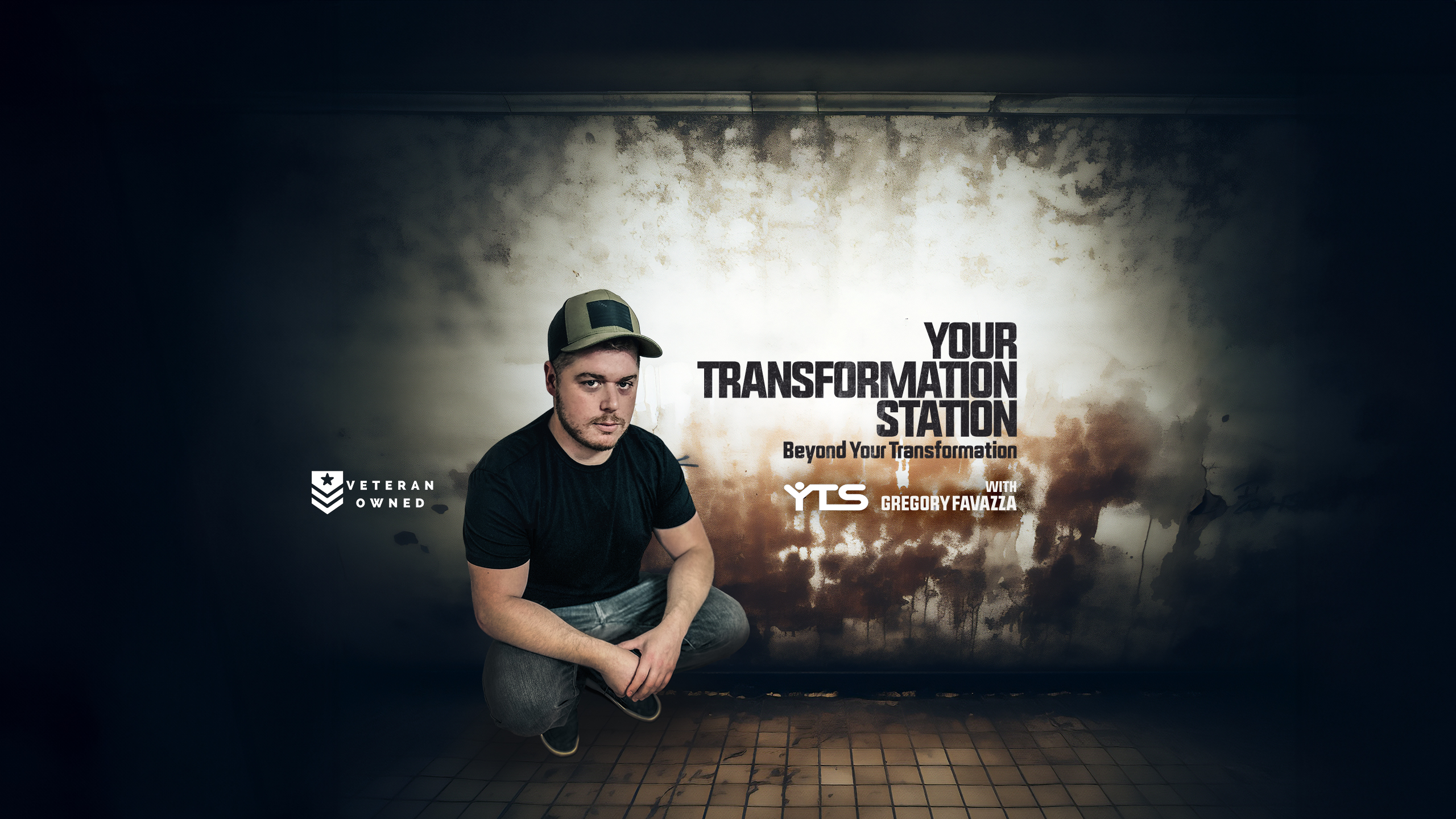
Gregory Favazza: Veteran, Host, Leadership Expert
Gregory Favazza is the host of Your Transformation Station, a podcast focused on clarity, discipline, and the psychological mechanics behind real change.
He holds a Master’s degree in Industrial Organizational Psychology and a Bachelor’s degree in Organizational Leadership. His academic training is paired with lived experience as a military veteran who has operated inside high pressure systems where performance, morale, and accountability are not theoretical concepts. They are survival skills.
Gregory approaches transformation clinically rather than motivationally. His conversations cut through surface level advice and expose the systems beneath behavior. Power dynamics. Incentives. Identity. Emotional regulation. Accountability. He challenges guests and listeners to stop reacting, start reading situations accurately, and lead themselves with precision.
His style is direct, controlled, and intentionally uncomfortable for anyone addicted to excuses or performance based confidence. Your Transformation Station attracts leaders, creators, and thinkers who value depth over hype and self control over noise. People who understand that change is not inspirational. It is operational. #podcasts #yourtransformationstation #leadership