Nathen Stuck — What Is a B Corp? Ethical Business, Leadership, and the Future of Corporate Accountability (#98)
What is a B Corp and why are companies pursuing certification? Gregory Favazza and Nathan Stuck explore ethical business, stakeholder capitalism, and the future of leadership.


What is a B Corp? | Ethical Business, Leadership, and the Future of Corporate Accountability
Your Transformation Station with Greg Favazza | Episode 98
Facebook | Instagram | TikTok | X | Linkedin | Youtube
What does it mean for a company to operate with purpose — not as a marketing slogan, but as a measurable standard?
In this episode of Your Transformation Station, Gregory Favazza sits down with Nathan Stuck, Director of Culture & Impact and a leader in the B Corp movement, to explore how modern businesses are redefining success beyond profit alone.
Nathan explains what B Corp certification actually measures and why more companies are pursuing it as a way to demonstrate transparency, ethical leadership, and long-term societal impact. Gregory pushes the discussion deeper, examining the cultural forces behind this shift — including generational expectations, corporate accountability, and the growing tension between profit-driven systems and purpose-driven leadership.
The conversation also explores real-world ethical dilemmas facing modern organizations, from greenwashing in sustainability claims to the role of data and transparency in tech companies like Facebook.
Together, they highlight how business is evolving toward a model that values stakeholders, accountability, and measurable impact.
Episode Overview
B Corp certification is a rapidly growing global standard that evaluates how businesses operate across key areas including governance, workers, community impact, environmental responsibility, and customer transparency.
Unlike traditional corporate models focused primarily on shareholder profit, B Corps adopt a stakeholder-driven approach, measuring how business decisions affect employees, communities, and the environment.
Nathan Stuck shares how organizations can begin this process through the B Impact Assessment, and how leadership culture plays a crucial role in whether companies pursue authentic impact or simply engage in greenwashing.
Gregory connects these ideas to broader questions about corporate ethics, generational expectations, and the psychology of decision-making, revealing why purpose-driven leadership is becoming a competitive advantage in modern business.
Topics Discussed
• What a B Corp certification is — and what it is not
• The shift from shareholder capitalism to stakeholder capitalism
• Why Millennials and Gen Z expect more transparency from employers
• How companies can measure their environmental and social impact
• The difference between greenwashing and genuine sustainability
• The role of corporate culture and leadership ethics
• How organizations can start the B Impact Assessment process
• Why purpose-driven businesses often outperform outdated leadership models
• Ethical challenges in tech companies and the Facebook transparency debate
• How poker psychology and human behavior relate to leadership decision-making
What does it mean for a company to operate with purpose — not as a marketing slogan, but as a measurable standard? In this episode, Gregory Favazza and Nathan Stuck explore the world of B Corps, ethical business, and the generational shift redefining leadership.
Nathan breaks down what a B Corp actually is, how companies earn the certification, and why younger generations are demanding more than profit‑first thinking. Gregory pushes the conversation into the deeper implications: greenwashing, corporate responsibility, nonprofit integration, and the ethical dilemmas facing tech giants like Facebook.
Together, they highlight how business is evolving into something more human, more accountable, and more aligned with long‑term societal impact.
Key Quotes
“My mission is to create jobs that don’t suck.”
— Nathan Stuck
“You can’t improve what you don’t measure.”
— Nathan Stuck
“If companies want the next generation of talent, they have to be about more than profit.”
“Transparency is no longer optional in modern business — it’s expected.”
Key Takeaways:
- What is a B Corp? (15:00): It is a comprehensive certification evaluating a company's impact on workers, community, environment, and customers. It represents a shift from shareholder capitalism to stakeholder capitalism (21:00).
- Why Companies Pursue It (00:00): Beyond ethics, certification offers a competitive advantage by driving transparency, attracting younger talent, and enhancing brand reputation (37:00).
- How to Get Certified (26:00): Companies must complete an impact assessment to identify strengths and opportunities for improvement. The process requires a coalition within the organization, particularly involving marketing and HR teams (31:30).
- Leadership and Culture (44:00): True transformation requires leadership transparency and making ethical decisions, even when they challenge traditional profit-maximization models (50:00).
- Consumer/Employee Role (1:03:00): Individuals can drive change by voting with their dollars or advocating for better practices within their companies.
Guest Links
Nathen Stuck: Director of Culture & Impact
LinkedIn | Instagram | X | Facebook | Website
References
Milton Friedman - Shareholder Theory (1970)
Research on Stakeholder capitalism and corporate social responsibility
Navigating Ethical Dilemmas: Lessons from Tech and Beyond
This blog post expands on those crucial conversations, examining the complex ethical challenges facing modern businesses today, from the intricacies of data privacy to the often-murky waters of greenwashing.
What This Analysis Explores
In the full blog analysis linked below, Gregory explores:
• What a B Corp certification actually measures and why it represents a shift from shareholder capitalism to stakeholder accountability
• How Millennials and Gen Z are reshaping expectations for corporate transparency, leadership ethics, and workplace culture
• The difference between genuine sustainability and greenwashing, and why measurable standards are becoming essential for credibility
• How purpose-driven organizations build long-term trust with employees, consumers, and communities
• Why modern leadership requires balancing profit, responsibility, and societal impact
👉 Read the full analysis:
Navigating Ethical Dilemmas
Share This Episode:
X | Facebook | LinkedIn | Email
We’re just 16 reviews away from hitting Milestone 50! 🎙️ If you’ve ever learned something from the pod, would you mind taking a minute to rate us?
Related Episodes
Tags
b corp certification, b corp business, ethical business, stakeholder capitalism, corporate transparency, business ethics, sustainable leadership, corporate social responsibility, b impact assessment, purpose driven business, organizational culture, leadership psychology, modern business strategy, ethical leadership, responsible business, future of business, sustainable business practices, gen z workplace expectations, millennial leadership values, business leadership podcast, leadership and management development, your transformation station podcast, gregory favazza, nathan stuck
Interview Transcript
Gregory Favazza with Nathan Stuck
Your Transformation Station
Approximate video length: 1:14:34
Gregory Favazza:
All right, I’m going to have this running in the background here. So it’s Nathan Stuck, correct?
Nathan Stuck:
Yep.
Gregory Favazza:
Okay, just wanted to make sure we’re on the same page. Nathan Stuck, welcome to Your Transformation Station. How are you doing?
Nathan Stuck:
I am doing fantastic. How are you, dude?
Gregory Favazza:
I feel great that I got my camera working because this thing is hit or miss. I was also dealing with the neighbors because they’re moving in and making a lot of noise, but they said they were wrapping things up. I’m just thinking, let’s not be too loud because I can hear you all the way up here and everything’s soundproofed, so you guys are definitely being too loud.
Nathan Stuck:
Luckily, we’re making this work today with a computer that won’t let me log in, so I’m doing it from the cell phone. First world problems, right? My MacBook isn’t letting me log in. The good news is my old MacBook is ready for pickup from the office because they fixed the screen. So maybe I don’t wait until tomorrow. Maybe I finish this podcast and drive up to Atlanta today and get that computer back.
Gregory Favazza:
Hell yes. I love Mac just because of how easily it integrates into the daily stuff I’m using it for with podcasting. I always had Windows, and they were constantly hitting me with updates. Then when it updates, it doesn’t really update. It’s like, why do you have to update again? What do you mean you just updated?
Nathan Stuck:
Right. Or you download the update on Windows, it makes you restart, and then it goes, “Hey, there are updates available too,” and you’re just like, wow, we literally just did this. I switched to Mac when I was doing my MBA. I actually took a sabbatical year and drove for Uber. I think they realized, oh my God, this guy’s getting his MBA, and they were trying to launch the Athens market, so I started doing driver signups and office hours. They gave me a MacBook.
The first day with a MacBook, you’re like, what is going on with the trackpad? How do I scroll? You’re reading an article thinking, how do I get to the bottom of the page? Then I accepted the offer to work for AdVictoriam, and they gave me a MacBook too. For a while I had two MacBooks in my backpack.
Then I had to borrow my wife’s Windows computer and I didn’t know how to use the trackpad anymore. I was so frustrated. I don’t think you can ever go back.
Gregory Favazza:
Agreed. You’re like a baby boomer trying to operate a DVD player. It’s just a pain in the ass.
We’re going to transition into what to expect from today’s episode. When I have a guest on, I like to have an authentic, raw conversation. I don’t like to read from a script unless it’s very specific questions I want to address, which we’ll get into later. I always want it to feel real, like there’s a connection.
When people start to monologue, I’ll stop them. I’ll be like, whoa dude, calm down, you’re reading from a script and that’s boring the hell out of everybody. Let’s shift the dynamic. Let’s keep it like we’re having coffee, hanging out, chilling, like we’re best friends. All that good jazz.
Nathan Stuck:
I’m good with that. I like the conversational format better than the scripted format.
Gregory Favazza:
Beautiful.
Nathan Stuck:
I do enough of these that if I sound scripted, it’s probably because I’ve given the answer before. Just yell at me.
Gregory Favazza:
It happens. You just go into autopilot.
Nathan Stuck:
Exactly. “Well, you see, back when I was a kid…” and suddenly I’m off somewhere else entirely. I went to an event yesterday and one of the panelists reminded me of that old Saturday Night Live skit with the public radio ladies. Every time she spoke, it was like, “Oh, and I have a fun story for you.” I was sitting in the back of the room thinking, this is basically NPR. I may need to find a quiet spot and take a nap.
Gregory Favazza:
All right, we’re going to get this interview kicked off here.
You have a unique perspective. You’re in the B Corp movement. I have no clue what the hell that’s all about. I’m aware of LLCs, S corps, and everything else, so there’s definitely a lot to unpack there.
I’ll let you give a snapshot of yourself and kick us off.
Nathan Stuck:
Yeah, absolutely. I’ll talk all about the B Corp movement.
The big thing is that while there is public benefit corporation status, so you can incorporate in I think 39 states as a PBC instead of an LLC, S corp, or C corp, B Corporation is more of a certification you can get for your business.
Basically, just like LEED is to a building or Certified Organic is to milk, this is a holistic certification of how well you treat your workers, how transparent you are, how ethical you are, what your environmental footprint looks like, and whether you’re working to reduce it. It also looks at how you treat customers. Do you tell them you don’t sell their data and then sell their data anyway? Those types of things.
It’s really a stakeholder-driven principle that flips the script on Milton Friedman and the old idea that businesses exist solely to maximize shareholder value.
As for how I stumbled into this world, I’ll spare you the long version. I did undergrad at UGA, followed a girl back to Athens, that didn’t work out, and suddenly I’m dispatching chicken trucks wondering why I took that job. The answer was, because she was here, and there wasn’t a lot in Athens.
I rose through the ranks pretty quickly, but I didn’t find any purpose in it. I didn’t really like getting out of bed in the morning. So I moved to Las Vegas in 2006 and played poker for a little while. I literally hustled out there. I was 23. I reffed hockey, made some money at the rink, then took that money and bought into poker tournaments. Hopefully I’d come out with six or seven hundred dollars, pay a few bills, and repeat the cycle.
Eventually I got a job with Enterprise Rent-A-Car because at some point you realize benefits and steady income are nice. I was working there when Step Brothers came out and we all loved that line, “Probably get a job at Enterprise. They have a wonderful corporate structure.”
But again, even there, I didn’t really find purpose.
Gregory Favazza:
Let me stop you. You said some interesting stuff there.
You did poker for a little while. Tell me about that. I find it fascinating, sitting at the table trying to call somebody’s bluff. Can you share some insight into behavior recognition or little patterns that tell you this guy has a shitty hand?
Nathan Stuck:
Honestly, it’s one of the best skills I ever picked up because as you get older, you learn to trust your gut.
There are a lot of times in poker when you know somebody has it, your gut tells you they have it, but you still pay them anyway. You think, I’m pretty sure you turned a straight, and then you pay off a bunch of money and find out you were right. You pay enough for that experience and eventually you learn.
That’s kind of how poker works. Sometimes your gut just tells you something is off. You start picking up on betting patterns. That’s why you should never really show your hand, though sometimes there are strategic reasons to do it. If I bluff and know I’ve already got the table on tilt, I might show my hand to make them think I’m bluffing more often than I really am. Then later, when I actually have a monster hand, they get sick of you bullying the table and end up calling you. So there are competitive advantages to that.
A lot of it is breathing, stress, confidence, and betting patterns. A lot of people like to bluff, but they don’t have the fortitude to see a bluff through. Sometimes you have to keep firing.
You’re really playing the person more than the cards.
Gregory Favazza:
If you and I were playing digital poker right now, what would you look for in me?
Nathan Stuck:
I’d be watching your breathing. Are you obviously breathing heavier because you’re nervous? That could mean one of two things. Either you have a really good hand and don’t want to screw it up, or you’re trying to bluff.
I’d also watch whether you keep looking at your cards. How many times do you check them? That matters. Say the flop comes with a heart and I see you look at your hand again. I’m probably assuming you’re checking whether you had a heart.
If you sit at a table long enough, it becomes a matter of betting patterns, confidence, and knowing how willing somebody is to follow through.
Gregory Favazza:
Let’s rewind a little.
If somebody keeps looking at their cards six or seven times to reassure themselves, what I interpret from that is they’re attempting to bluff.
Nathan Stuck:
Sometimes. But a lot of times it’s the opposite. Sometimes they’re so shocked at how good their hand is that they keep looking at it. They’re thinking, do I really have that? Did I really flop a flush? Did I really flop trips?
And if they’re not looking at their cards at all, sometimes that means they’ve got nothing.
The average casual player is pretty bad at poker.
Gregory Favazza:
Let’s give the audience a snapshot.
You’re helping students find their path to purpose, inspiring executives to bring their businesses into the 21st century, and you’re an engaging speaker who keeps the audience laughing and motivated. That’s a nice description, and I can already see that with just our introduction.
What is your background, and how would somebody get started with B Corp certification for their business?
Nathan Stuck:
A lot of my path to purpose came out of those random jobs I mentioned. Dispatching chicken trucks, renting cars, all that.
My mission is to create jobs that don’t suck. That’s really what drives me. I want to help other people find cool jobs. I think B Corps create cool jobs, even if the company itself does something very traditional. For example, our company does Salesforce consulting. It’s a traditional business, but can you make a traditional job more meaningful? More fun?
That’s the important part for business owners. Can you instill purpose into the work through volunteerism, through what the company cares about, and through company actions?
Every company pretends to care about things now. Everybody’s got a corporate social responsibility mission, a commitment to DEI, a net-zero pledge by 2030, and then they’re still cranking out plastic bottles.
For most companies, the easiest way to get started is just by taking the assessment. Go to bimpactassessment.net. It’s free. Set up your company details and take the assessment.
It’s adaptive, so depending on your industry, your number of employees, and your revenue, some questions will vary. As you answer questions, other questions unlock.
That’s step one. Figure out where you are, what you say you are, and what your score is telling you that maybe you aren’t. Then identify the areas of opportunity and start chunking it out.
I like to say it’s how you take a good company and make it great.
Gregory Favazza:
I like that.
What is the B Corp way of business?
Nathan Stuck:
I think it’s transparency, honesty, and doing what you say you’re doing. It’s walking the walk.
That’s where the “gold standard of CSR” idea comes in. It verifies your claims. It verifies that you’re a good place to work, that you actually care about your community, and that you’re giving back.
It also quantifies things. You can say, “We care about the community,” but if between volunteer time, pro bono services, and cash donations you gave about 0.25% of revenue last year, then maybe you don’t care as much as you say you do.
So the B Corp way is measuring what matters, setting goals, reverse engineering them into strategy, and demonstrating to stakeholders that you’re serious about business as a force for good.
Gregory Favazza:
Could I caveat that by saying they are annotating and being transparent about their numbers and what their culture actually is?
Nathan Stuck:
Yeah. That’s one of the reasons we put out an annual impact report. We didn’t used to. We had eight employees when we started this process and thought, yeah, we’ll do an annual impact report. Now we’re at 150 employees and still doing it.
Gregory Favazza:
Is this for specific types of companies, or does it vary across industries?
Nathan Stuck:
Honestly, it’s for all industries.
A lot of people think it’s mainly for social enterprises, and there are plenty of those, but again, we do Salesforce consulting. I know a wealth management firm in Georgia that’s certified. There’s a landscaping firm that’s certified. There’s a company using technology to reduce food waste and connect surplus food to people who need it.
So yes, there are social enterprises, but there are also very traditional business models using their market power, revenue, profit, and job creation for good in society.
Gregory Favazza:
If a company is not B Corp certified and I wanted to establish a coalition to inspire leadership to move in that direction, how would I do that? Who would I bring into that coalition?
Nathan Stuck:
Internally, it works best when it’s top down. For us, it was the CEO and his wife who wanted to do it.
But if you have the right person of influence, that matters too. My title is Director of Culture and Impact, and I also have an MBA, so I know how to make the business case.
If I were building a coalition, I’d recruit HR, especially recruiters who are out at college job fairs trying to attract Gen Z. They’re going to get it.
I’d also include managers who work closely with that younger generation. They’ll see the need.
Then I’d bring in someone from the operational or delivery side with enough authority to make a case.
And honestly, marketing is probably number one. There’s a lot of storytelling involved, and right now every marketing department is trying to break through the greenwashing clutter.
Everybody says they care. Every Super Bowl commercial is full of diversity, climate pledges, and purpose language. I’d love to read their annual impact report.
Marketing can help make the ROI case. Recruitment, retention, brand differentiation, storytelling, and cutting through noise all matter.
A lot of B Corps shy away from talking about ROI, and I think that’s a mistake. It’s still capitalism. You still have to make payroll. If you’re not making money, you don’t have a business. And if you don’t have a business, you don’t have a purpose anymore.
Gregory Favazza:
If somebody is tuning in right now and they see one company without B Corp certification and another one with it, what’s the line in the sand that would make them say, okay, I’m going with this company?
Nathan Stuck:
I can’t say the other company isn’t great, but I don’t know.
And I won’t tell you that the B Corp is perfect either. But I know how much work goes into certification. It is not easy.
You go through the assessment, upload verifying documents, go through an audit, and sometimes someone from the nonprofit parent organization actually comes out or spends hours on a call going question by question asking why you answered the way you did.
Then every three years you have to recertify.
So it’s ongoing accountability. You can’t just take a victory lap. You have to keep your foot on the pedal.
That’s the difference. I know the B Corp has been through a rigorous process and is still being held accountable.
Gregory Favazza:
Do you see a lot of pushback when you try to persuade businesses to get B Corp certified? Is it possibly because they’re uncomfortable with transparency?
Nathan Stuck:
The biggest pushback I get is around ROI.
A lot of people want to know, what are our sales numbers going to do? What’s the measurable return? And that’s harder to quantify than a traditional marketing campaign where you can track clicks and conversions.
There’s also still skepticism from what I’d call Milton Friedman holdouts who think this is a fad.
But at the same time, I’m seeing it become a competitive advantage, especially in consumer packaged goods. Companies are filling out supplier questionnaires for large retailers, and those forms now ask if they have any third-party certifications. One of the options is B Corp.
So a lot of younger companies are scrambling because they know they need that box checked and that logo on their packaging.
Gregory Favazza:
Could that scramble be due to millennials and Gen Z finding that certification appealing?
Nathan Stuck:
Absolutely.
Millennials never really liked the status quo, but we were still close enough to Gen X that we were taught to keep our heads down, work hard, and move up. We knew the status quo sucked, but we didn’t push back much.
Then Gen Z showed up and basically said, forget this. They started flipping over desks, metaphorically speaking. And I think that helped millennials find their voice.
People don’t want to work at crappy jobs anymore. If you roll out a policy or make a change, they want to know why. They want to understand the business case.
The oldest Gen Z members are in their mid to late twenties now. They have money, they’re entering the workforce, and millennials are now directors, VPs, and executives. These generations have spending power and decision-making power.
If you want to recruit, attract, retain, and sell to them, you better actually stand for something.
Gregory Favazza:
What might organizational leadership look like inside a B Corp versus a regular corporation?
Nathan Stuck:
The biggest difference is transparency.
You’ll see more effort to help people understand why decisions are being made. It’s not some drum circle where everybody gets a vote, but there is still an executive suite that makes decisions. The difference is that people are brought into the thinking more often.
At our company, I say on every onboarding call that we’re an eight-year-old company, we’ve grown, we’ve been successful, but we don’t claim to be perfect and we don’t have all the answers. We’re in the IT space, so we’re very iterative. What works, works. What doesn’t, we scrap and move on.
If somebody joins us from another company and says, “Here’s a problem you’re still having, and here’s how we solved it at my old company,” I don’t care if it’s their first day. We want to hear that.
We literally had somebody start on day one and tell us our onboarding was terrible. Then she said the magic words every executive wants to hear: “Can I be part of helping you fix it?” So we worked together and improved the process.
That’s the kind of culture you want. One where even a new employee feels empowered to speak up and be part of the solution.
Gregory Favazza:
What you’re describing sounds like a change agent team. You and another individual were essentially working as change agents to recalibrate the onboarding system so it flowed more evenly.
Nathan Stuck:
Yeah, that’s fair. We do a lot of that.
If you can make a good business case to our executive team and explain what you’re doing and why, they get it. They understand the assumptions and the value. If someone billable wants to work on an internal issue and there’s a good reason for it, we’ll make time for that.
Gregory Favazza:
With making a case to leadership, is that based on drawing out emotion from whoever you’re presenting to? Different stakeholders may respond to different things.
Nathan Stuck:
Yes and no. Presenting to a CFO is different from presenting to a COO or president. You need to know what matters to that person and tailor the case accordingly.
Emotion can be part of it, but for the most part you’re making a business case.
For example, right now we’re redoing our intranet because survey feedback told us it looked outdated, like a website your friend built in 2002. People wanted to improve it, so we empowered them to own the project, define the timeline, identify other stakeholders, and move it forward.
That’s how we operate when something needs improving.
Gregory Favazza:
I really like that.
Now let me ask you this. Say you’re in charge of hiring an ethics officer. What would you look for? Where would you place that person, and why would that be important?
Nathan Stuck:
That’s a good one.
Honestly, I’d want to be involved in the interview because a lot of what I do overlaps with that role. I’d probably throw out some hypotheticals.
More than anything, they need to be a culture fit and demonstrate high character. I’d want to know how they serve their community. Are they on nonprofit boards? Are they in leadership roles? How long have they been doing that? How long were they at their last company?
I’d want them to tell me their story. What’s their why? What guides their decision-making?
Because the B Corp thing goes beyond legality. It asks whether something may be technically legal but still shady. That matters.
Gregory Favazza:
When I think of an ethics officer, I imagine them as a silent partner along with the board of directors. They’re sitting in the corner with a notepad, and when something is off, they slam the gavel and say, no, don’t do that. That’s wrong.
Nathan Stuck:
That’s funny because in a weird way, that’s a lot of what my role has become.
I used to be super hands-on in operations. I ran financial operations, invoicing, audits, checking whether we overbilled or underbilled clients. Now in culture and impact, I’m more of a silent observer and sounding board.
Sometimes the issue isn’t even ethical, but it’s about how something lands when it’s rolled out. So I sit there and ask, what are we doing, why are we doing it, and what’s the goal?
An ethics-type role also needs to understand culture, but it also has to understand business. Otherwise that person just becomes the “no” person.
Gregory Favazza:
What do you do in the face of an ethical issue that comes to light?
Let’s look at Facebook and Frances Haugen. She brought attention to all the unethical things Facebook was doing and its lack of transparency. If you were in her position, how would you handle that?
Nathan Stuck:
Honestly, my first answer is I probably wouldn’t work for Facebook.
I’ve had jobs where I didn’t feel good about how things were being done, and eventually I left. But I know that’s hard when you have a family to feed.
The reason I love the B Corp movement is that it tries to prevent shady behavior in the first place.
I remember a case study from my MBA. It was about a bottled water company with a contaminated aquifer. A baby had died, and the company had still been selling the water. The whole exercise was about how to handle the public relations nightmare.
And I was just sitting there thinking, how about you just don’t do shady shit in the first place?
Why do we even have entire disciplines built around corporate crisis strategy instead of building companies that don’t need one?
Gregory Favazza:
You were about to start monologuing. I cut you off there.
But I like what you said. I feel like preventing shady shit from happening can be done at the corporate level if the company is transparent from the start. One way or another, the truth is going to come out, so you might as well take the little steps and do it right the first time.
If transparency and authenticity became the standard, companies would adapt or they’d be gone.
Nathan Stuck:
Yes, exactly.
So I guess my answer would be that I would put my foot down before the shady thing happened. That’s what’s missing in corporate America. Who is the voice saying, “Whoa, are we really tweaking this algorithm to keep people trapped in a self-reinforcing bubble just to make more money? Is there not another way to make money?”
At what point does someone in that boardroom raise their hand and say, “This can’t be the answer”?
Gregory Favazza:
Now let’s flip it.
Say you were Mark Zuckerberg in that same scenario. What are some ways you might build trust with the public and stakeholders after getting caught like that?
Nathan Stuck:
Honestly, I think that ship sailed a long time ago.
Once you burn my trust, why should I ever trust you again? You’ve shown your ethical compass. All the congressional hearings, apologies, and legal language don’t change that.
People deserve grace for mistakes, but if your mistake was letting greed override ethics, that’s a different story.
If I were him, I would have stepped down. Take the billions and disappear. I think the brave thing would have been to say, “I don’t know what got into me, but this isn’t healthy, it’s not good for the legacy of the company, and it’s time for new leadership.”
That might have restored some trust.
Gregory Favazza:
I feel like he thinks he’s untouchable.
Now what if Facebook had come out before Frances Haugen did and said, “Hey, we are using your data and we are controlling the algorithm to benefit us. How do you feel about that? Do you like that or not?”
Nathan Stuck:
If it hadn’t been buried on page 22 of some agreement nobody reads, maybe that would have been better.
There’s something powerful about being transparent about how you make money. I remember showing clients, “We make a little money here on the front end, a little here, and a little here on the back end.” That builds trust.
The bigger issue is whether consumers can actually understand what a company is doing and what the ethical concerns are.
We’ve gotten to a point where if it’s legal, companies do it. And I hate that. I hate the old-school mindset of asking, “Is it legal?” instead of “Is it ethical?”
But I’ll also say this. Consumers have power too. If you really care, delete your account. Most people know what Facebook is doing and still use it.
I know what LinkedIn is doing with its algorithm. I know why it suppresses external links. They don’t want people leaving the platform. But as a consumer, I still use it.
So at some point, consumers are voting with their attention and behavior too.
Gregory Favazza:
That brings up a good point. Even with Apple iPhones, if you don’t go into your privacy settings and turn things off, you’re allowing some of that. When you enter websites, you accept cookies. When people download this podcast, I get analytics. I can see data about the listeners so I can better tailor content to them.
We all know this is happening. I feel like if transparency were much more open, we could better see through a company’s intentions and get a real understanding of its culture and the individual behind it.
Nathan Stuck:
Exactly.
And a lot of those questions are in the customer section of the B Impact Assessment. Do you disclose what you’re using data for?
Some of this is actually really cool. I did a lot of market research during my MBA and fell in love with it. If you can understand that your audience is, say, 35 to 49-year-old married men who listen while exercising or driving their kids to school, you can give them a better product.
So the issue is whether you’re willing to do things on the up and up or whether you’re trying to hide behind vague language.
What I love about the B Corp movement is that the answer isn’t just more regulation. Government doesn’t seem to do much these days besides obstruct depending on which party is in power.
I think part of the solution is business self-regulating, but for that to happen, it has to be in the business’s best interest. Consumers have to care. Employees have to care. They have to demand more.
That’s why I’m in this movement. That’s why I’m doing a podcast at two o’clock on a Wednesday. I don’t know if B Corps are the full solution, but they’re part of it.
Gregory Favazza:
I feel like real organizational change can’t happen without the right leadership in place. What might be one key action item for leaders to initiate this kind of change?
Nathan Stuck:
Lead by example.
Ethics is doing the right thing when nobody’s looking, so do that.
I’ve worked jobs where I’ve seen how companies treat frontline workers. During a gap year, I drove Uber and worked part-time shifts at the convention center in Athens. I’d never really seen how the other half lives.
I’d never worked a minimum wage job before. In high school I reffed hockey and made good cash, paid my way through college, went to Europe every summer. Then suddenly I saw people working multiple part-time jobs because companies didn’t want to give them benefits.
So now when I’m in a position to decide where to put conference business, I want to know how you treat your frontline workers. I want to know how you treat the custodial staff when the office is closed and they’re emptying your trash.
Somebody has to do that work. Not everyone can be the CEO.
I wish more leaders valued those people, paid living wages, and thought about the broader good instead of just the bottom line. Maybe your margin is 9% instead of 10%, but what is retention worth? What is loyalty worth? What is going above and beyond worth?
That’s what leaders need to ask.
Gregory Favazza:
I feel like a company becomes tainted by its own actions when leadership starts taking shortcuts. Maybe it’s Friday, maybe the data says 9%, and they round it to 10%. Those little actions end up strangling the company’s identity until the mission statement no longer matches reality.
When an employee recognizes that, how can they step up and be heard so they can realign what others may not even recognize is happening?
Nathan Stuck:
It comes back to building a culture where people feel empowered to speak up.
We use surveys and keep them anonymous. Every quantitative question has a qualitative follow-up so people can explain more if they want.
You also need leaders below the C-suite who model that behavior. People need to see someone raise a concern and have it actually matter.
And honestly, if you’re in a company where you see unethical or shady behavior, and your feedback isn’t heard, and you get labeled a complainer or a whiner, send your resume to a trusted friend, get it polished up, and get out.
That’s how some companies learn. Their top talent starts leaving.
We as employees also have to take some accountability for what we put up with. There’s a talent gap right now. We have more power than we used to. If it’s bad, get out.
Gregory Favazza:
I should have prefaced that with the idea of a psychologically safe workplace, but you hit the nail on the head.
For those who want to become a better individual right now, what is one key action item they can take? Maybe it’s an employee who doesn’t like their job, or a business leader considering B Corp certification. What’s one thing they should do?
Nathan Stuck:
Put your keys in the ignition, turn the car on, and back out of the parking space.
You can’t drive 500 miles if you don’t start driving.
Just start taking action.
On an individual level, sign up for a volunteer event. Give back to the community and see how you feel afterwards. Mentor a student. Figure out what your passion is.
I really believe one of the secrets to life and happiness is service to others. The more I give back, the more good things come in return. That’s not why I do it, but I’ve noticed the connection.
Volunteering led me to nonprofit boards. Serving on boards led me to chairing boards. That all started with simply showing up.
For organizations, same thing. Go to bimpactassessment.net and take the assessment. If you’re a CEO or executive and you’re curious, just start quantifying what you care about.
If you value diversity and inclusion, look at your numbers. What percentage of promotions went to women? To people of color? Don’t panic if the number is bad. You can’t improve what you don’t measure.
Measure what matters.
Gregory Favazza:
I really like what you said about volunteering. Giving allows you to discover things that make you feel good that you may not have recognized before. Then you can pivot toward opportunities you didn’t see before.
Nathan Stuck:
Exactly.
It’s about momentum. An object in motion stays in motion.
I literally keep trash grabbers in my garage. Sometimes I’ll put in my earbuds, listen to an audiobook or podcast, grab a bag, and walk around the neighborhood picking up trash. I’m exercising, listening, and giving back all at once.
The hardest part is just starting. It’s like a New Year’s resolution. If you keep saying, “Next week I’m going to start going to the gym,” then just go to the gym.
Gregory Favazza:
I like that. An object in motion stays in motion.
Nathan, first, how can our audience get in touch with you if they want to learn more?
Nathan Stuck:
You heard my Facebook rant, so the only social I’m really on is LinkedIn. It’s linkedin.com/in/nathanstuck. Feel free to connect or follow.
I don’t post anything world-changing, but I try to inspire. You’ll see a lot of pictures of me picking up trash. Around Christmas, you’ll probably see me dressed as Santa picking up trash because Santa hates litterbugs.
And if you’re near Georgia, come out to a B Local Georgia event. You can follow us on LinkedIn at linkedin.com/company/belocalga.
We also have a website: belocal.com.
Gregory Favazza:
Beautiful.
Is there anything else you’d like to share with the audience before I let you go?
Nathan Stuck:
That last question set me up perfectly.
I had T-shirts made last year that said, “Take action. Make progress.”
You and I are not going to solve climate change or unethical business by ourselves. But we can be part of the groundswell. We can create our own ripple in the ocean that builds into a wave and eventually into a tsunami of change.
Don’t be overwhelmed by the amount of problems facing society or the climate. Just get involved.
And honestly, I don’t have much time for people who only want to complain. Same as the onboarding example. It’s one thing to say it’s broken. It’s another to say, “I want to help make it better.”
I respect people who are actually out there doing the work.
So go do the work.
Gregory Favazza:
I like that. The ripple in the wave.
I was doing some oceanography research a few years ago, and it can take something like a thousand miles for the wind on one side of the ocean to turn into a decent-sized wave crashing into a sandbar. It seems useless, but it comes in handy right now.
You’re right though. If you’re standing where the wind is blowing, it looks like it’s doing nothing. Then somewhere far away, you see the waves crashing and realize it all started way back there.
It’s a cumulative effort that we all need to be a part of.
Nathan Stuck, I appreciate you coming on Your Transformation Station.
Nathan Stuck:
Yeah, man. My pleasure. Thanks for having me.
Gregory Favazza:
Now Nathan, did you get everything you wanted to share with the audience?
Nathan Stuck:
Yeah. Absolutely.
Gregory Favazza:
Awesome. I really enjoyed our conversation. Is there anything I can do to improve my conversation skills or communication?
Nathan Stuck:
No, and I’m glad you cut me off because I was about to tell a story that would have given me anxiety later. I didn’t need to tell that one publicly, and I would have gotten way too into detail.
When you said, “You’re monologuing,” I was like, thank God.
Sometimes you get so caught up in the moment that you think, oh shit, he’s not saying anything, I’ll just keep talking.
Gregory Favazza:
Yeah.
Nathan Stuck:
It was about somebody who does nothing but hurl insults from behind a keyboard, so I’m glad I didn’t go there. It would have been easily identifiable.
Gregory Favazza:
I’ll jump on this right now, get it edited, and get it out as quick as I can.
Are there any resources or links I should put in the show notes?
Nathan Stuck:
Yeah, the assessment link, bimpactassessment.net, then belocal.com, and the LinkedIns. That should do it.
Gregory Favazza:
Okay. I’ll look that up and put it in there. Then I’ll let you know when it comes out. If you can share it on your end, I’d appreciate it. I’ll also reach out and add you on LinkedIn.
Nathan Stuck:
Yeah, just let me know on LinkedIn when it’s ready and I’ll promote it.
Gregory Favazza:
Beautiful. Thank you, sir. I really enjoyed today.
Nathan Stuck:
Yeah, and sorry about the phone setup, but it worked.
Gregory Favazza:
It did.
Nathan Stuck:
Now I’m going to go see if my administrative assistant’s password suggestion works, because I’ve had this computer for two weeks and the password worked every time until now.
Gregory Favazza:
Hell yeah. All right, you take care.
Nathan Stuck:
Awesome. You too. Good talking to you.
Gregory Favazza:
Yes. Be in touch.
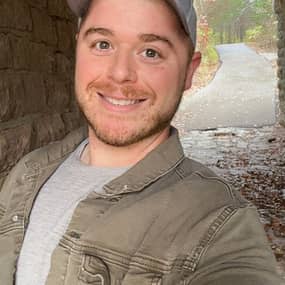
Gregory Favazza: Veteran, Host, Leadership Expert
Gregory Favazza is the host of Your Transformation Station, a podcast focused on clarity, discipline, and the psychological mechanics behind real change.
He holds a Master’s degree in Industrial Organizational Psychology and a Bachelor’s degree in Organizational Leadership. His academic training is paired with lived experience as a military veteran who has operated inside high pressure systems where performance, morale, and accountability are not theoretical concepts. They are survival skills.
Gregory approaches transformation clinically rather than motivationally. His conversations cut through surface level advice and expose the systems beneath behavior. Power dynamics. Incentives. Identity. Emotional regulation. Accountability. He challenges guests and listeners to stop reacting, start reading situations accurately, and lead themselves with precision.
His style is direct, controlled, and intentionally uncomfortable for anyone addicted to excuses or performance based confidence. Your Transformation Station attracts leaders, creators, and thinkers who value depth over hype and self control over noise. People who understand that change is not inspirational. It is operational. #podcasts #yourtransformationstation #leadership
