Grant Harris — Fix the System, Not the People (#138)
Many neurodistinct employees aren’t struggling because of ability — they’re struggling because workplace systems create friction they were never designed to navigate. In this episode, we examine why traditional performance models fail cognitive diversity, how high‑friction environments drive burnout and disengagement, and why surface‑level inclusion efforts rarely improve retention. The conversation focuses on system‑level redesign as the path to healthier cultures, clearer expectations, and workplaces where every brain can thrive.


Grant Harris — Fix the System, Not the People (#138)
Neuroinclusive Workplace Design
Your Transformation Station with Greg Favazza | Episode 138
Facebook | Instagram | TikTok | X | Linkedin | Youtube
Why Workplace Systems Create Barriers
They’re caused by systems that create unnecessary friction and environments that were never designed for cognitive diversity.
In this episode of Your Transformation Station Grant Harris, MBA, CDE, examines why neurodiverse employees often face preventable barriers, how traditional performance models fail them, and the measurable organizational costs of burnout, disengagement, and turnover.
Accommodating Individuals vs Redesigning Systems
The conversation clarifies the critical difference between accommodating individuals and redesigning systems, showing why training, perks, and surface‑level inclusion efforts often fail to improve engagement or retention. When workflows are misaligned, expectations unclear, or environments overloaded with friction, employees disengage — even in high‑performing teams.
Listen to the episode on Apple Podcasts, Spotify, Overcast,
Stitcher, Castbox, Google Podcasts, or on your favorite podcast platform.
You can find the transcript of this episode here.
Key themes include:
Why neurodistinct employees feel overwhelmed in high‑friction environments
How outdated performance models fail to support cognitive diversity
The link between poor workplace design, burnout, and turnover
How system‑level redesign improves culture, retention, and performance
This episode takes a diagnostic approach to neuroinclusive workplace strategy, focusing on outcomes, not sentiment. It’s for leaders, managers, and organizations serious about reducing burnout, improving retention, and building workplaces where every brain can thrive.
Selected Links From The Episode
- Connect with Grant Harris
- GTH Consulting
- Neurodiversity in the Workplace
- Compliance to Community
- Rocket Reach
- Diversiology
- Disability Solutions
- Mitchell Hub
- Hubspot
- G.A. Harris Fellowship
Share This:
X | Facebook | LinkedIn | Email
We’re just 19 reviews away from hitting Milestone 50! 🎙️ If you’ve ever learned something from the pod, would you mind taking a minute to rate us?
Related Episodes
What We Got Wong Empathic Leadership
A discussion on how empathy is often misunderstood in leadership and why effective leaders balance emotional awareness with accountability and structure.
Great Leaders Aren't Born, They're Pressured Tested
Exploring how adversity, responsibility, and real-world pressure shape leadership far more than titles or credentials ever will.
Why recognition programs often fail when the underlying systems creating burnout and disengagement are never addressed.
#neuroinclusive #grantharris #gregfavazza #yourtransformationstation
Grant Harris — Fix the System, Not the People (#138)
Full Transcript
Gregory Favazza 0:00
Being very clear with shifting from people to fixing systems, I was going to ask, why is that mindset shift so uncomfortable for the leaders that you've encountered?
Grant Harris 0:16
Clarity.
Grant Harris 0:19
Clarity requires clarity. Exactly.
Intro 0:23
You're listening to a podcast that encourages you to embrace your vulnerabilities and authentic self. This is Your Transformation Station, and this is your host, Greg Favazza.
Gregory Favazza 0:40
Yep, I can hear you. Can you hear me?
Grant Harris 0:42
Yep, I can hear you now.
Gregory Favazza 0:45
Awesome. Got you.
Grant Harris 0:47
Appreciate this. How are you today?
Gregory Favazza 0:49
I'm doing alright. Yourself?
Gregory Favazza 0:50
Looking forward to the conversation. Let's dive into it a little bit. One thing I want to get out of the way first.
Gregory Favazza 1:00
I'm autistic myself. So when I saw in your bio that you're an autistic writer and author, it made me laugh. Not in a bad way. It was more like that's exactly what someone would do. Just frame it and own it. I like that.
Grant Harris 1:21
I was late diagnosed about four years ago, and it was only two years ago that I came out publicly.
Grant Harris 1:31
We've really been having the conversation for a couple of years and I've been very blessed to be on many podcasts and have conversations with people like yourself, being on stages both virtual and in person across the country and around the world.
Grant Harris 1:50
Not just talking about me as I identify, but about people who think differently and process information differently.
Grant Harris 1:58
My wife is ADHD.
Grant Harris 2:00
So it's an interesting mix and an interesting matchup. But it's always good to meet another one.
Grant Harris 2:18
Before we get started, I just want to make sure your microphone is coming in a little broken. If you're using an aftermarket microphone or the computer microphone, if not it's no big deal. I can edit it to the best of my ability to give you a clear voice.
But help me understand something.
Is this a pre interview for the podcast or is this the actual show?
Gregory Favazza 2:52
This is the actual show right now.
Grant Harris 2:54
Got it. I appreciate the clarification. My understanding was this was a pre interview.
Gregory Favazza 3:06
I'm happy to have the conversation. Happy to roll with it.
Grant, your work focuses on redesigning how work actually works. Help our listeners separate that idea from normal conventional wisdom and put your perspective on what that actually means.
Grant Harris 3:29
My name is Grant Harris. I am a consultant and keynote speaker on neuro inclusive performance and the future of work. I help enterprises and public sector organizations save time, keep talent, and deliver value.
Grant Harris 3:50
Ultimately the work that I do is about helping organizations fix processes and not people.
People aren't broken, although we all have our problems and reputations. But really in the workplace, systems are broken.
Grant Harris 4:12
Traditional and linear systems that people have inherited from past eras simply don't fit the mold anymore.
Organizations who continue doing things the same way, getting the same result, and blaming it on their people, that's a systems issue.
Grant Harris 4:37
So what we do in redesigning work is not look at the individual as the problem. Identifying as individuals is all well and good, but the real focus is identifying the systems and processes where they are broken and fixing those.
Not fixing the people tied to them.
Grant Harris 5:10
When we talk about redesigning how work gets done, it is about designing work not just for the few but for the majority.
Ultimately we want happier, healthier, and more profitable workplaces so that we don't have the levels of disengagement we see today.
Grant Harris 5:29
So we don't have the levels of turnover and burnout that we do now.
And we don't have the level of stress on the talent pipeline.
Many leaders operate under the impression that there is no talent out there, or that the talent doesn't want to work, or that the talent that is out there is somehow broken.
That simply is not the case.
Grant Harris 6:00
What's broken is the system and process by which we evaluate that talent.
For example, 80 to 85 percent of autistic people in this country are either underemployed or unemployed.
That is not an autistic people problem.
That is an organizational hiring problem.
Organizations are interviewing the same way, asking the same questions, looking for performance theater instead of capability and competency.
Gregory Favazza 6:46
Okay, there is a lot to unpack there.
One question that came to mind is looking at it from a consulting perspective.
As someone outside the chaos, it takes a certain individual to look at the system and ask the question:
Is the system capable of meeting what leadership expects it to produce?
Have you encountered situations where what leadership expects is simply unrealistic?
Grant Harris 7:36
There are lots of problems both big and small.
But the real question is not how big the problem is. It is where to apply the pressure.
Where is the pressure point?
Like they say, you eat an elephant one bite at a time.
So the size of the problem isn't the focus.
It is identifying where to apply pressure at the right time.
Grant Harris 8:05
This is where diagnostics come in.
I run a diagnostic based on five metrics that pinpoint exactly where systemic failure is happening.
It tells me where the organization is doing well and where leakage is occurring.
The question is not how to change leadership's mind.
You cannot change someone's mind.
But you can change behavior.
And when behavior changes, results change.
Grant Harris 8:40
So I don't operate in a space of trying to change people's thinking.
Instead I show them the system and the result that system produces.
If you do not like that result, then the system must change.
It is a diagnostic process verified through data.
This is not an emotional conversation.
Grant Harris 9:15
When organizations see turnover rising, labor costs rising, medical premiums rising because people are sick more often, and disengagement costing nine trillion dollars in global GDP annually, those are system problems.
You cannot fix those issues by fixing one person.
But you can alleviate pressure when you diagnose the system properly.
My process is diagnose, activate, and engage.
Grant Harris 9:58
I call it the T Factor.
Time. Talent. Treasure.
How are we using time?
How are we using the talent we already have?
And how are financial resources being used?
These diagnostics show whether the system needs to shift left, right, up, or down.
Gregory Favazza 10:44
Interesting.
For those who don't know what leakage is, can you give us an example?
And how do neurodiversity and the future of work intersect in ways leaders still do not see?
Grant Harris 11:04
Leakage refers to the underutilization of capability.
It means someone is not being utilized to their highest performance level.
So the organization pays them but does not receive the full output.
I'm not an advocate for productivity for productivity's sake.
Many people are productive and burn themselves out.
Productivity is a result of effective and efficient processes.
Grant Harris 11:50
Outputs are not outcomes.
A report is an output.
The outcome is what that report enables.
If meetings, miscommunication, or unclear expectations create rework, that is leakage.
Time leaks.
Money leaks.
Talent leaks.
And that is what shows up on the balance sheet.
Grant Harris 14:48
When we redesign work, we must identify where systems cause people to lose time, capability, and opportunity.
That is how organizations regain efficiency and competitive advantage.
Grant Harris 25:56
I'll give you an example of burnout from poor system design.
People like me can absorb large amounts of information quickly.
But organizations often take advantage of that ability.
They say give it to Grant, he will get it done fast.
But if someone operates at that level nonstop without recovery, burnout happens.
Grant Harris 27:40
That is similar to fight or flight in the human body.
If the body stays in that state constantly, it eventually breaks down.
The same happens in workplaces.
If people are used only for their productivity and not managed effectively, burnout becomes inevitable.
Grant Harris 29:30
Productivity leads to burnout.
Effective and efficient systems do not.

Gregory Favazza: Veteran, Host, Leadership Expert
Gregory Favazza is the host of Your Transformation Station, a podcast focused on clarity, discipline, and the psychological mechanics behind real change.
He holds a Master’s degree in Industrial Organizational Psychology and a Bachelor’s degree in Organizational Leadership. His academic training is paired with lived experience as a military veteran who has operated inside high pressure systems where performance, morale, and accountability are not theoretical concepts. They are survival skills.
Gregory approaches transformation clinically rather than motivationally. His conversations cut through surface level advice and expose the systems beneath behavior. Power dynamics. Incentives. Identity. Emotional regulation. Accountability. He challenges guests and listeners to stop reacting, start reading situations accurately, and lead themselves with precision.
His style is direct, controlled, and intentionally uncomfortable for anyone addicted to excuses or performance based confidence. Your Transformation Station attracts leaders, creators, and thinkers who value depth over hype and self control over noise. People who understand that change is not inspirational. It is operational. #podcasts #yourtransformationstation #leadership
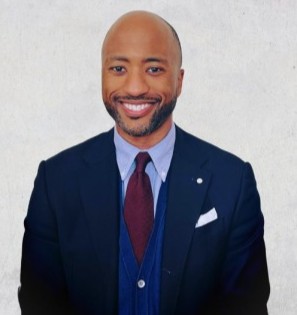
Neurodiversity Champion & Organizational Culture Specialist
About Grant Harris
Grant Harris, MBA, CDE®, is a keynote speaker on neurodiversity, performance, and the future of work. He helps organizations save time, keep talent, and grow treasure by redesigning how work actually works—so more people can succeed without burnout or unnecessary friction.
As an autistic author and certified diversity executive, Grant brings both lived experience and organizational expertise to the stage. His work translates neurodiversity and inclusive workplace principles into practical, execution-ready insights leaders can apply immediately. Rather than motivating from the sidelines, Grant challenges how leaders think about performance, talent, and culture—shifting the focus from fixing people to fixing systems.
Grant is the founder and president of GTH Consulting, a minority- and disability-owned management consultancy serving public and private sector clients. His experience spans federal government, higher education, global corporations, and nonprofit organizations.
Selected clients include The Washington Post, the Federal Railroad Administration, the U.S. Department of Agriculture, Loudoun County Government, Leadership Snohomish County, ASICS, and First Place Arizona.
Grant holds a BA in Psychology, an MBA in Organizational Psychology & Development, and a post-master’s certificate in Educational Leadership & Administration. He is a three-time published author, a corporate board member, a Hall of Fame athlete, and an award-recognized neurodiversity advocate.
His keynotes are known for being cl…Read More